Explore by topic, question, or idea. Find articles, reflections, videos, puzzles, and curiosity pathways gathered across the site.
Press Enter or select Search. A newly typed query starts globally; filters are applied only through the visible rail.
25 results for “the hidden palette of plant pigments”
- The Perpetually Curious! › Canonical › Botanical WondersArticle
🌿 When One Tree Remembered a Greener Sahara: The Quiet Story of the Tree of Ténéré
From section: Frequently Asked Questions+How did the tree survive without visible water nearby? The tree survived by extending its roots deep into the ground, reaching hidden groundwater about 108 to 118 feet (33 to 36 meters) below the surface. …
- The Perpetually Curious! › Archives › Botanical WondersArticle
🌱 Grafting: Where Science and Art Take Root
🌿 What is grafting? Grafting is the practice of joining two plants so they grow as one. The upper part, the scion, carries buds or shoots, and the lower part, the rootstock, provides the foundation and root system. When their tissues align and heal, the two plants merge into a single organism.
- The Perpetually Curious! › Archives › Botanical WondersArticle
🎍 Rising Fast: The Skyward Wonder of Asian Bamboo
🌱 A Botanical Marvel Bamboo has long been celebrated as a symbol of strength and flexibility, but it also holds a rare distinction in the plant kingdom: it is among the fastest-growing land plants.
- The Perpetually Curious! › Archives › Botanical WondersArticle
From Garden to Glass: The Five Transformations of Tea 🍃
In the misty mountains of Asia, a single species of plant undergoes a remarkable metamorphosis. Camellia sinensis, the tea plant, holds within its emerald leaves the potential for countless flavors.
- The Perpetually Curious! › Archives › Botanical WondersArticle
Golden, Red, and Blue: A Journey Through the Many Lives of Bananas 🍌
A banana often appears simple at first glance, a familiar curve of yellow fruit resting quietly on a kitchen counter. Yet this everyday presence conceals a world of colors, histories, and cultural meanings that stretch across continents and centuries.
- The Perpetually Curious! › Archives › Botanical WondersArticle
🌿 How Plants Tell Time: The Quiet Clocks That Shape the Living World
Imagine a morning glory on a warm summer morning. Long before the first direct sunlight reaches its petals, the bud begins to loosen, cells take up water, and the flower slowly unfurls. Even when light conditions vary, it tends to follow a familiar daily rhythm for some time.
- The Perpetually Curious! › Canonical › Botanical WondersArticle
🍃 Bael Tree: Ecology, Sacred Groves, and Cultural History
From section: 💡 Did You Know🌱 Bael is sometimes cultivated in dry regions because of its ability to withstand limited water, and readers who are curious about how plant form and structure can be shaped over time may find interest in the practice of bonsai cultivation, which explores growth and architecture on a miniature scale.
- The Perpetually Curious! › Canonical › Botanical WondersArticle
🌿 Where Roots Become Roads: How Meghalaya’s Living Root Bridges Grow
From section: 🔗 When separate roots grow togetherThis is related to plant grafting, although a root bridge is not assembled like an orchard tree with a selected shoot inserted onto a rootstock. Bridge-makers encourage connections within a growing network, using the plant’s capacity to form unions.
- The Perpetually Curious! › Canonical › Botanical WondersArticle
🌱 Why Leaves Have Different Shapes: The Science Behind Nature’s Geometry
From section: 🌿 Function, trade-offs, and the daily work of a leafEvery leaf must capture light, exchange gases, regulate temperature, conserve water, and resist mechanical damage and herbivory. Leaf shape is one of the ways a plant balances these tasks.
- The Perpetually Curious! › Archives › Botanical WondersArticle
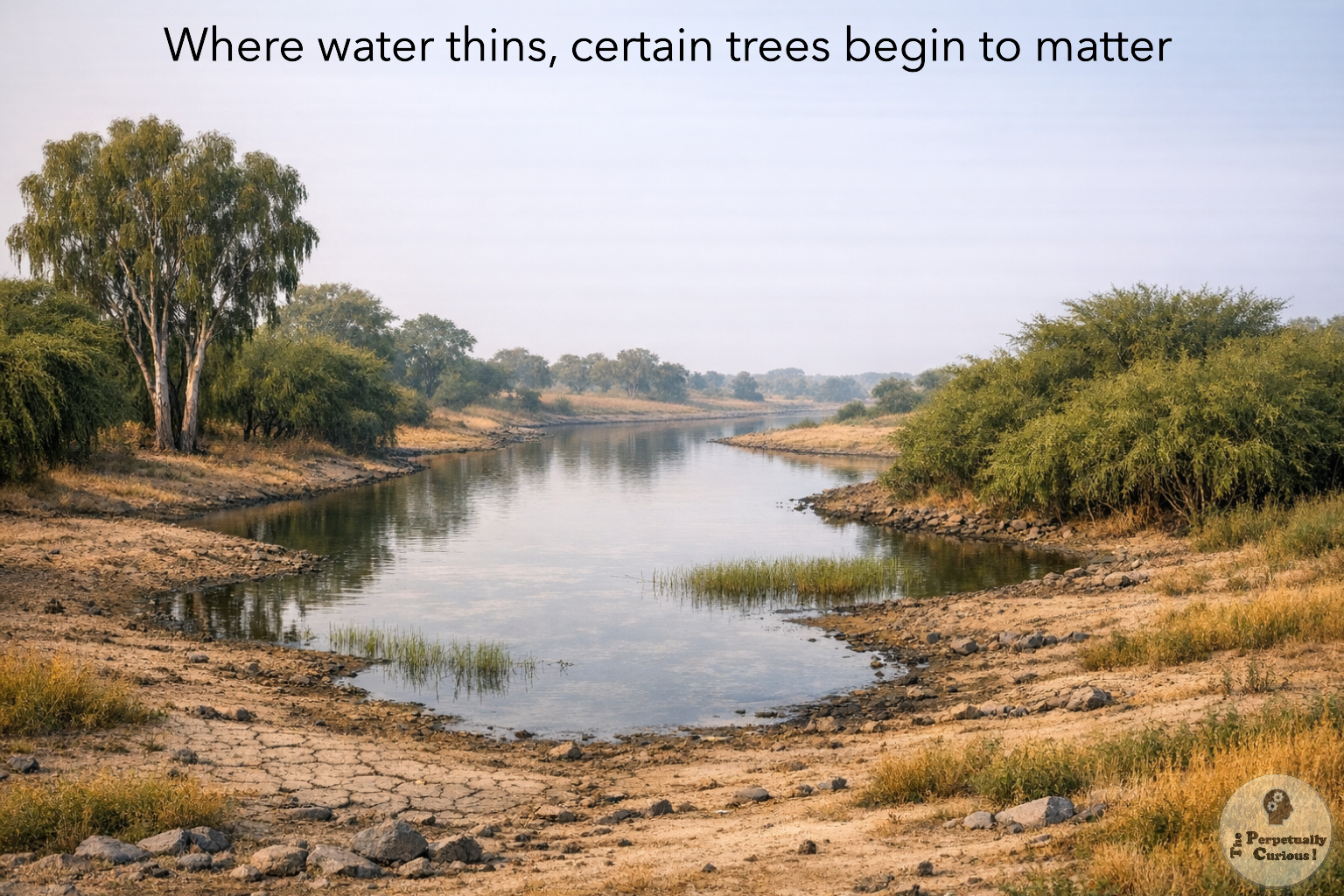
💧 Seasonal Ponds and Root Depth in South India
Seasonal ponds often look still from a distance, yet their edges can hold some of the most active negotiations in a dry landscape. In parts of South India, stored rainwater, shallow aquifers, dry soil, and plant roots meet in a narrow zone where each season leaves its mark.