Explore by topic, question, or idea. Find articles, reflections, videos, puzzles, and curiosity pathways gathered across the site.
Press Enter or select Search. A newly typed query starts globally; filters are applied only through the visible rail.
132 results for “water softening”
- The Perpetually Curious! › Archives › ChemistryArticle
🌸⚗️ Esterification: The Everyday Chemistry Behind Fruity Scents, Perfumes, and Plastics
Ever wondered how your favorite fruity scents or perfumes are created? At the heart of these scents is the esterification reaction, a cornerstone of organic chemistry. This reaction combines a carboxylic acid with an alcohol to form an ester and water.
- The Perpetually Curious! › CanonicalGateway
🪐 K2-18 b: The Ocean World We Have Not Seen
The planet also orbits within its star’s habitable zone. That term describes a range of distances where liquid water could exist at a planet’s surface under suitable conditions. It does not establish that water is present, that the surface is accessible beneath the atmosphere, or that the planet can support life.
- The Perpetually Curious! › Archives › Planet EarthArticle
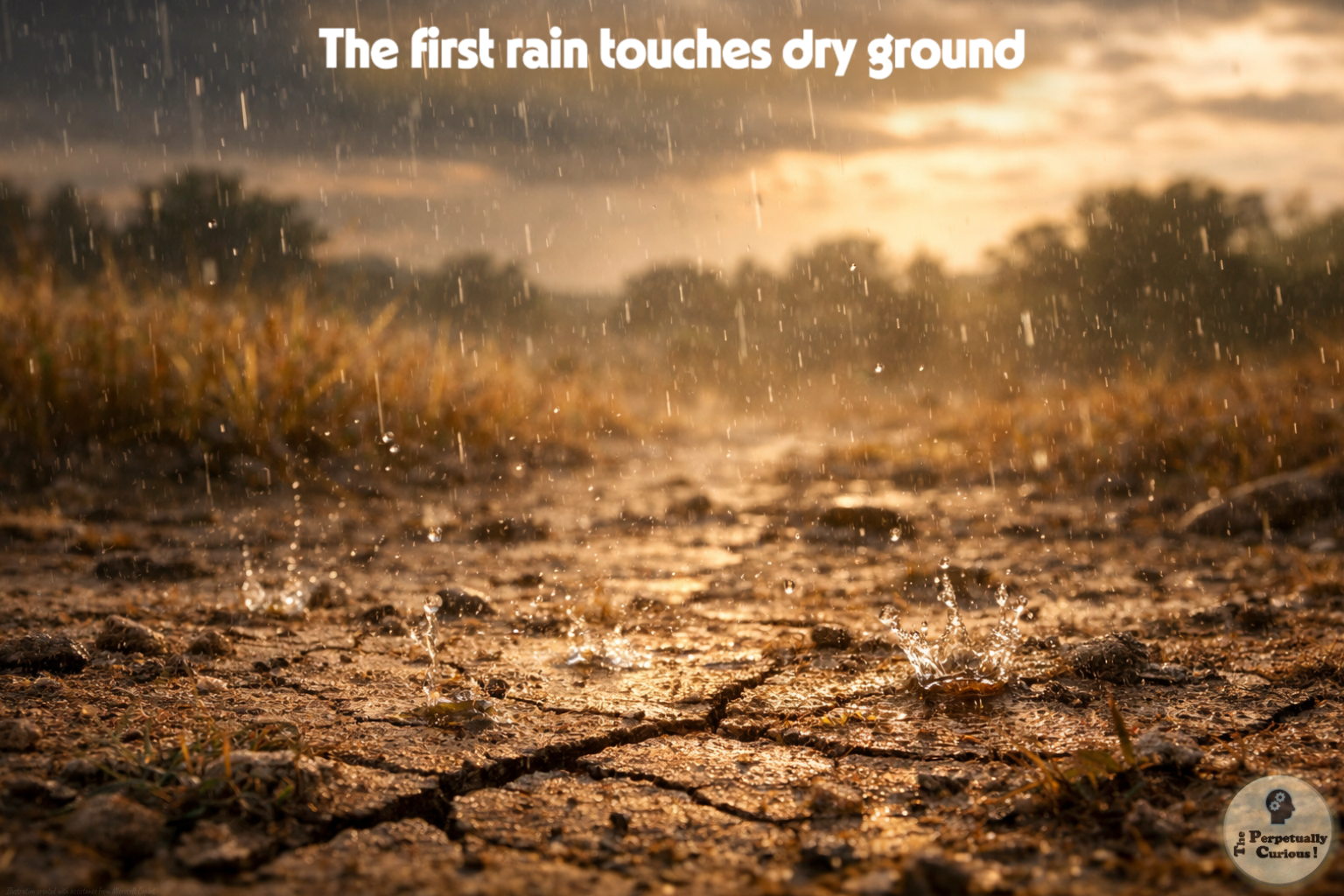
🌧️ Petrichor: How First Rain Lifts Earth’s Hidden Scent
From section: A meeting of water, ground, and memoryA meeting of water, ground, and memory The scent of rain feels powerful because it reaches more than the nose.
- The Perpetually Curious! › Canonical › Environment & SustainabilityArticle
🕸️ Ghost Nets, Silent Drifters: How Lost Fishing Gear Haunts the Ocean
… They drift without purpose, yet they continue to behave as if they still serve one. These are ghost nets, abandoned or lost fishing nets that remain in the water and continue to interact with marine life long after their intended use has ended.
- The Perpetually Curious! › Canonical › Planet EarthArticle
🌇 When the Sky Becomes a Painting: Why Clouds Glow Red and Orange at Sunset on Earth
From section: Frequently Asked Questions+Why do sunsets sometimes look hazy or muted? Because aerosols scatter light in all directions, reducing contrast and softening colors.
- The Perpetually Curious! › Archives › Planet EarthArticle
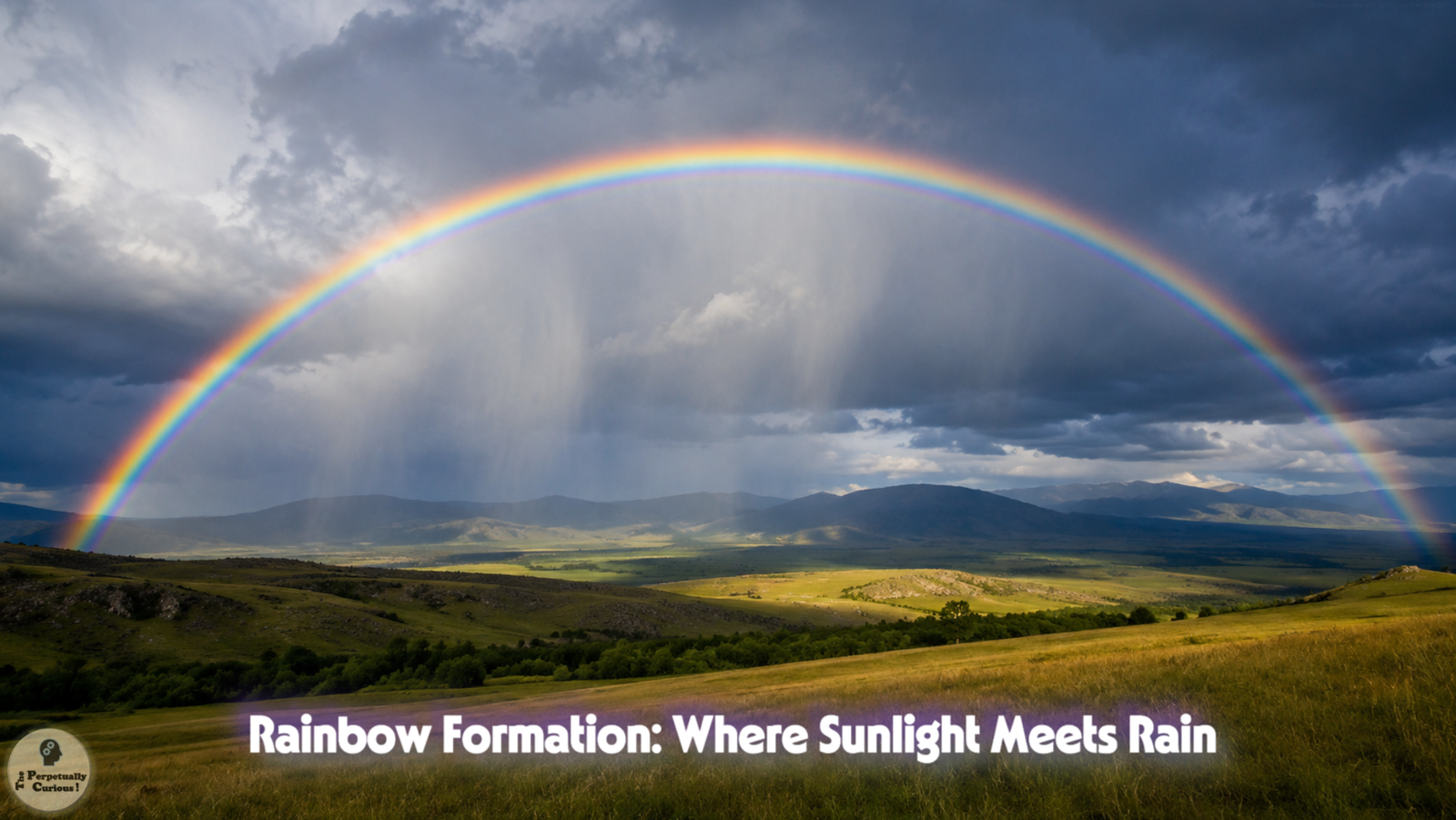
🌈 Rainbow Formation: Why Every Observer Sees a Different Arc
A rainbow can look like a colored bridge resting on a distant valley, field, or line of trees. Yet the arc is not anchored to that landscape. It is assembled for a particular observer by a particular set of illuminated water droplets.
- The Perpetually Curious! › Archives › Wilderness & Homestead CreaturesArticle
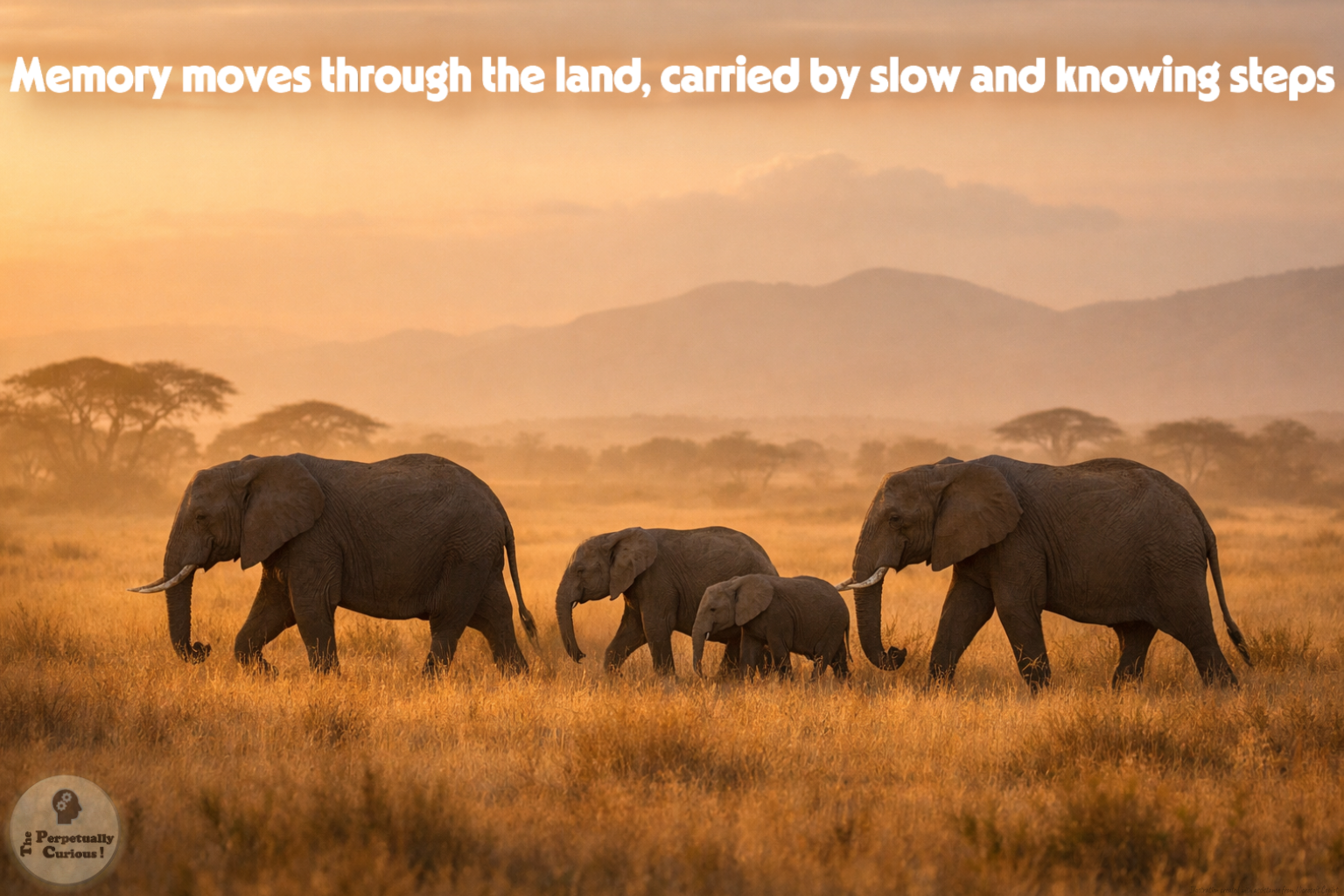
🐘 Elephant Intelligence: How Memory Becomes a Family Inheritance
At the edge of a difficult season, an elephant family may leave familiar ground and follow an older female toward water remembered from years before. No map is carried, and no route is explained aloud.
- The Perpetually Curious! › Archives › Wilderness & Homestead CreaturesArticle
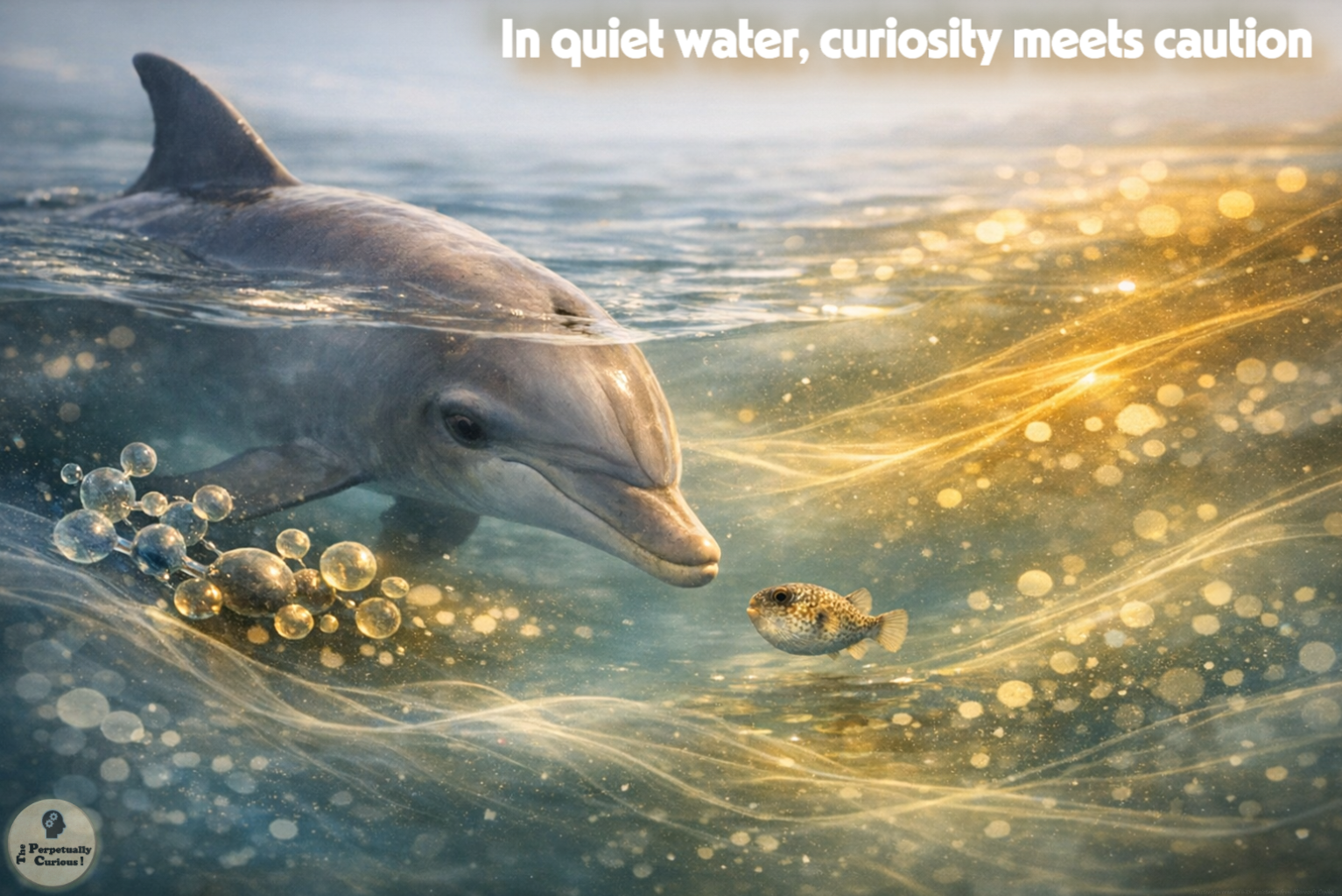
🧪 Animal Chemical Encounters: When Molecules Shape Behavior
In the sea, a chemical encounter can begin before a chase, a bite, or a sound. A molecule released from skin, mucus, food, or water can change what an animal notices, how it moves, and whether it keeps investigating. To human eyes, the moment may look like simple curiosity.
- The Perpetually Curious! › Archives › Planet EarthArticle
🌊 Underwater Sound: How Echoes Measure Distance
From the surface, the sea can look like a broad sheet of blue, but its hidden spaces are easier to sense with sound than with sight. Underwater sound moves as pressure waves, crossing water far more effectively than ordinary vision can cross depth.
- The Perpetually Curious! › Archives › Biology & HealthArticle
✋ Palm Lines Explained: The Quiet Folds That Help the Hand Move
The lines in the palm are easy to overlook because they feel so ordinary. They cross the hand quietly, deepening when the fingers curl and softening when the palm opens. Yet those familiar folds are not random marks added by years of use. They begin much earlier, when the hand…