Explore by topic, question, or idea. Find articles, reflections, videos, puzzles, and curiosity pathways gathered across the site.
Press Enter or select Search. A newly typed query starts globally; filters are applied only through the visible rail.
19 results for “why beaches carry sand”
- The Perpetually Curious! › Canonical › Planet EarthArticle
🌊 Where the Waves Leave Their Footprints: Why Beaches Carry Sand
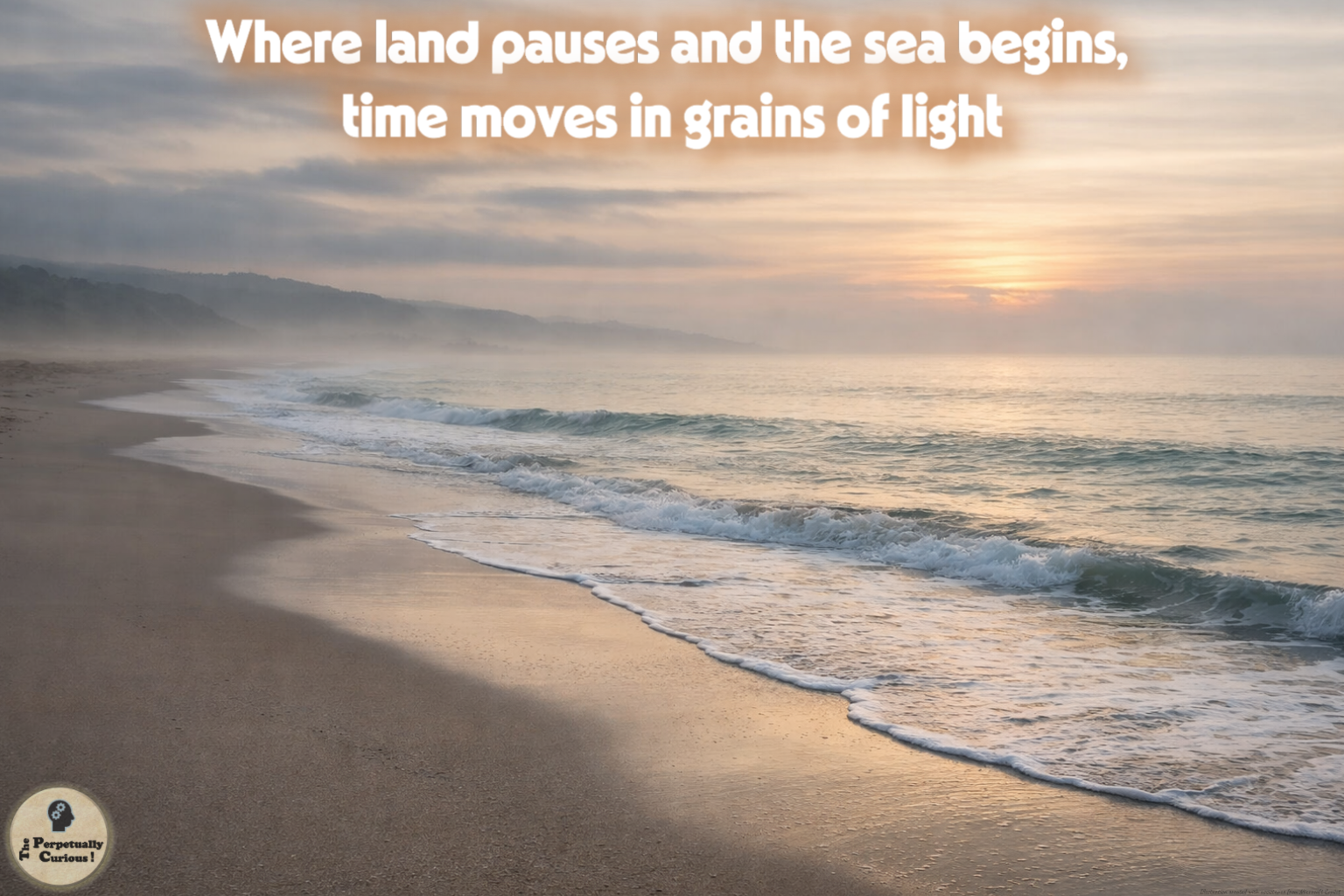
… Waves arrive in steady succession, each one shaping the edge of the land as if writing and rewriting a story that has no final draft. Many visitors feel the softness of sand beneath their feet and wonder why beaches carry sand at all. …
- The Perpetually Curious! › Archives › Planet EarthArticle
🌊 Why Beaches Have Sand
Beaches often appear simple at first glance. They seem like a narrow place where land and water meet. Yet the presence of sand along so many coastlines is the result of long journeys, slow transformations, and the combined work of rivers, weather, and waves.
- The Perpetually Curious! › Canonical › Planet EarthArticle
🌍 Why Mud Is Brown or Black: Where Earth Turns to Quiet Ink
From section: 🧪 Mud, sand, and why their colors divergeMud and sand often coexist along coasts and rivers, yet they frequently differ in color. Sandy beaches are commonly light beige or pale yellow, while nearby mudflats may appear dark brown or black. This contrast arises from differences in grain size, composition, and the ability to hold water and organic matter.
- The Perpetually Curious! › Canonical › Planet EarthArticle
🌑 How Coal Is Formed: The Slow Birth of Black Stone Across Deep Time
From section: 🌿 Ancient swamps where coal beginsEventually, changes in rivers, sea level, or local climate caused these peat-rich swamps to be buried. Sediment from nearby rivers, coastal currents, or shallow seas covered the peat with layers of sand, silt, and clay. …
- The Perpetually Curious! › Canonical › Planet EarthArticle
🌍🌑 Where Two Soils Part Ways: Earth, Moon, and the Stories Written in Dust
… The other is pale, powdery, and silent, seen mostly through photographs and the memories of a few explorers. Yet both are made from the same periodic table of elements, and both carry the memory of how their worlds were born.
- The Perpetually Curious! › Canonical › Planet EarthArticle
🌫️ Mist Over Ancient Ridges: The Great Smoky Mountains as a Living, Breathing World
From section: 🌄 Roots in deep time: how the Smokies became mountains… Some of the oldest rocks associated with the park are metamorphic and igneous rocks more than 1 billion years old, while many of the rocks that help form the Smokies began as sand, silt, mud, and gravel deposited along ancient marine margins. …
- The Perpetually Curious! › Canonical › Planet EarthArticle
🌊 Niagara Falls, Where Thundering Waters Shape Time
From section: 🎥 Niagara Falls in MotionThe short visual journey below offers a companion layer to the article’s discussion of water, mist, rock, and scale. Rather than adding another explanation, it lets the movement of the falls carry the closing impression, from falling water and rising spray to the wider atmosphere of the gorge.
- The Perpetually Curious! › Canonical › Planet EarthArticle
🌧️ When Clouds Let Go: Why It Rains and How Raindrops Are Born
From section: 🌬️ Atmospheric motions and the making of rainfallDowndrafts carry air and precipitation downward. They may be strengthened by precipitation drag and by evaporative cooling beneath the cloud. …
- The Perpetually Curious! › Canonical › Planet EarthArticle
🏔️ Mount Kailash: A Summit Where Water, Story, and Sky Converge
From section: 🌊 Where great rivers find their first pathsJust as the Great Lakes show how large water systems can shape regions beyond their immediate shores, the rivers near Mount Kailash carry water from this high plateau to plains and deltas far away.
- The Perpetually Curious! › Canonical › Planet EarthArticle
🌧️ When Earth Begins to Breathe: Why Rain Smells the Way It Does
From section: 💧 How raindrops release the scentAs these bubbles rise and burst, they release extremely fine aerosols into the surrounding air. These aerosols carry plant oils, geosmin, and other volatile compounds upward, where they can be carried by wind and inhaled by humans and other animals.