Explore by topic, question, or idea. Find articles, reflections, videos, puzzles, and curiosity pathways gathered across the site.
Press Enter or select Search. A newly typed query starts globally; filters are applied only through the visible rail.
41 results for “brain engines”
- The Perpetually Curious! › Canonical › Biology & HealthArticle
🌡️ When the Skin Remembers the Cold: Why We Get Goosebumps
From section: 🎶 Music, Stories, and the Chills of AweThe brain appears to link abstract experiences, such as art and meaning, to bodily states. Emotional chills also share features with the production of tears, which arise from similarly layered interactions between emotion and physiology. …
- The Perpetually Curious! › CanonicalReflection
The Shape of Memory
… Yet research suggests that remembering is an active process. When a memory rises again, the brain reopens the network that holds it. In that brief moment, the memory becomes responsive to the present. …
- The Perpetually Curious! › CanonicalGateway
🧠 Beyond the Fear Center: What the Amygdala Contributes to Emotion
The amygdala is often introduced as the brain’s “fear center,” as though a small switch deep in the temporal lobes turns fear on. The label points toward important biology, but it compresses several distinct processes into one place.
- The Perpetually Curious! › Archives › PhysicsArticle
⚖️ Solar Luminosity: The Universal Stellar Power Scale
Just as we instinctively understand horsepower for engines or calories for food energy, solar luminosity transforms incomprehensible stellar energies into intuitive comparisons.
- The Perpetually Curious! › Archives › Cosmic ExplorationArticle
💫 When Galaxies Feast: The Quiet Art of Cosmic Cannibalism
This phenomenon is one of the steady engines of cosmic evolution, and it has shaped the structure of galaxies across the universe.Read more »
- The Perpetually Curious! › Archives › Biology & HealthArticle
When Time Becomes the Enemy: Understanding Parkinson's and Alzheimer's Through Temporal Disruption 🕰️
James Parkinson, who in 1817 described the “shaking palsy,” a condition in which the brain’s timing and sequencing of movement becomes increasingly impaired.
- The Perpetually Curious! › Canonical › Wilderness & Homestead CreaturesArticle
🌺 Whispers of Tiny Wings: Hummingbirds, Their Lives, and the Science of Small Flight
In the quiet of early morning, when the first light touches leaves and petals, a brief glint of color may appear and vanish before the eye can settle. A hummingbird has arrived, suspended in the air with a stillness that seems to pause the world around it.
- The Perpetually Curious! › CanonicalReflection
The River of Now
From Reflections on Time ⏳ 👁️ Time is not a line we walk, but a river that carries us. Every moment is both departure and arrival, a current that never returns in the same form. A Quiet Descent into the Reflection Our language betrays a fundamental confusion about time.
- The Perpetually Curious! › Archives › Wilderness & Homestead CreaturesArticle
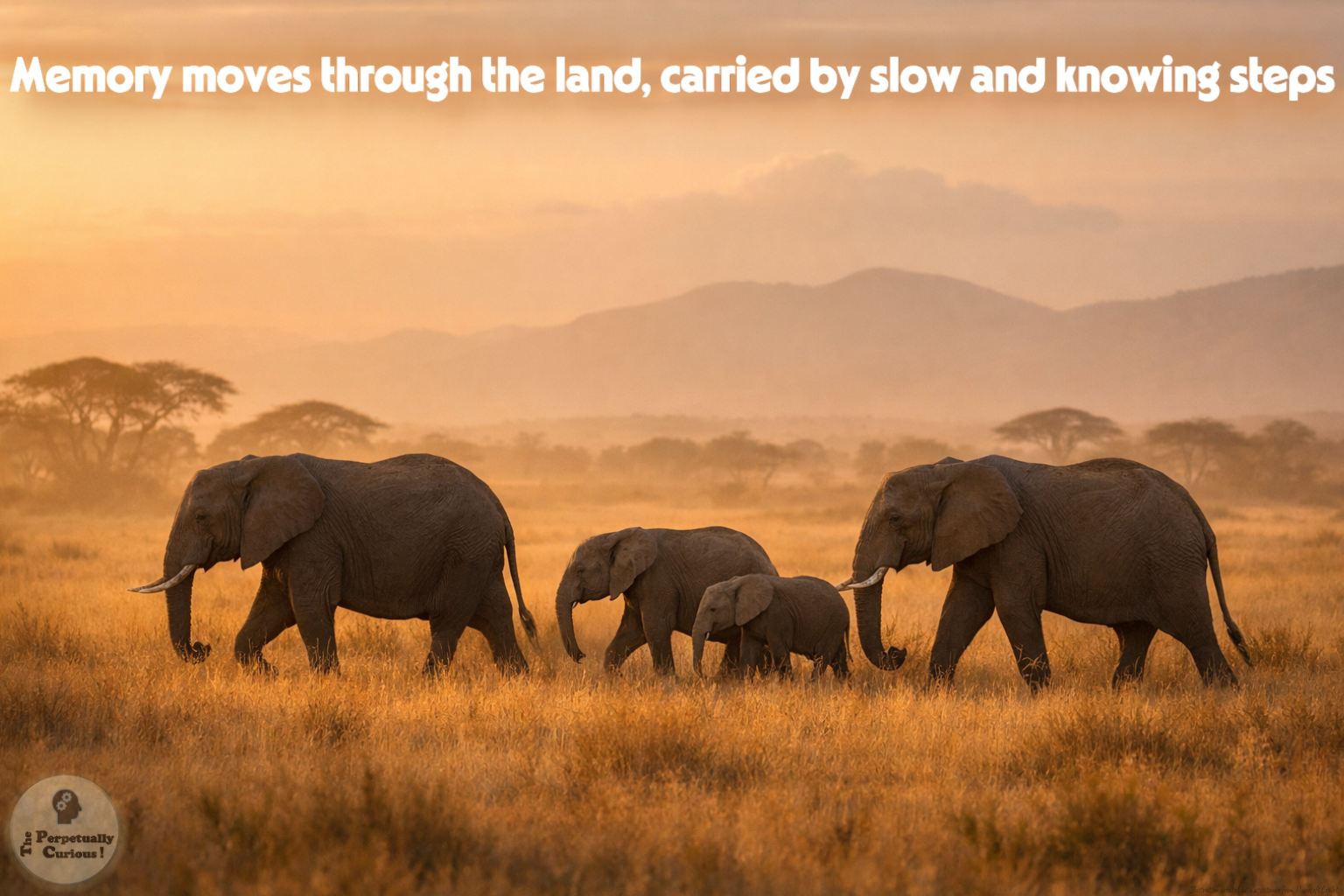
🐘 Elephant Intelligence: How Memory Becomes a Family Inheritance
From section: Knowledge Carried Without a ClassroomSeen through this lens, elephant intelligence is not defined only by brain size or isolated problem-solving feats.
- The Perpetually Curious! › Archives › Biology & HealthArticle
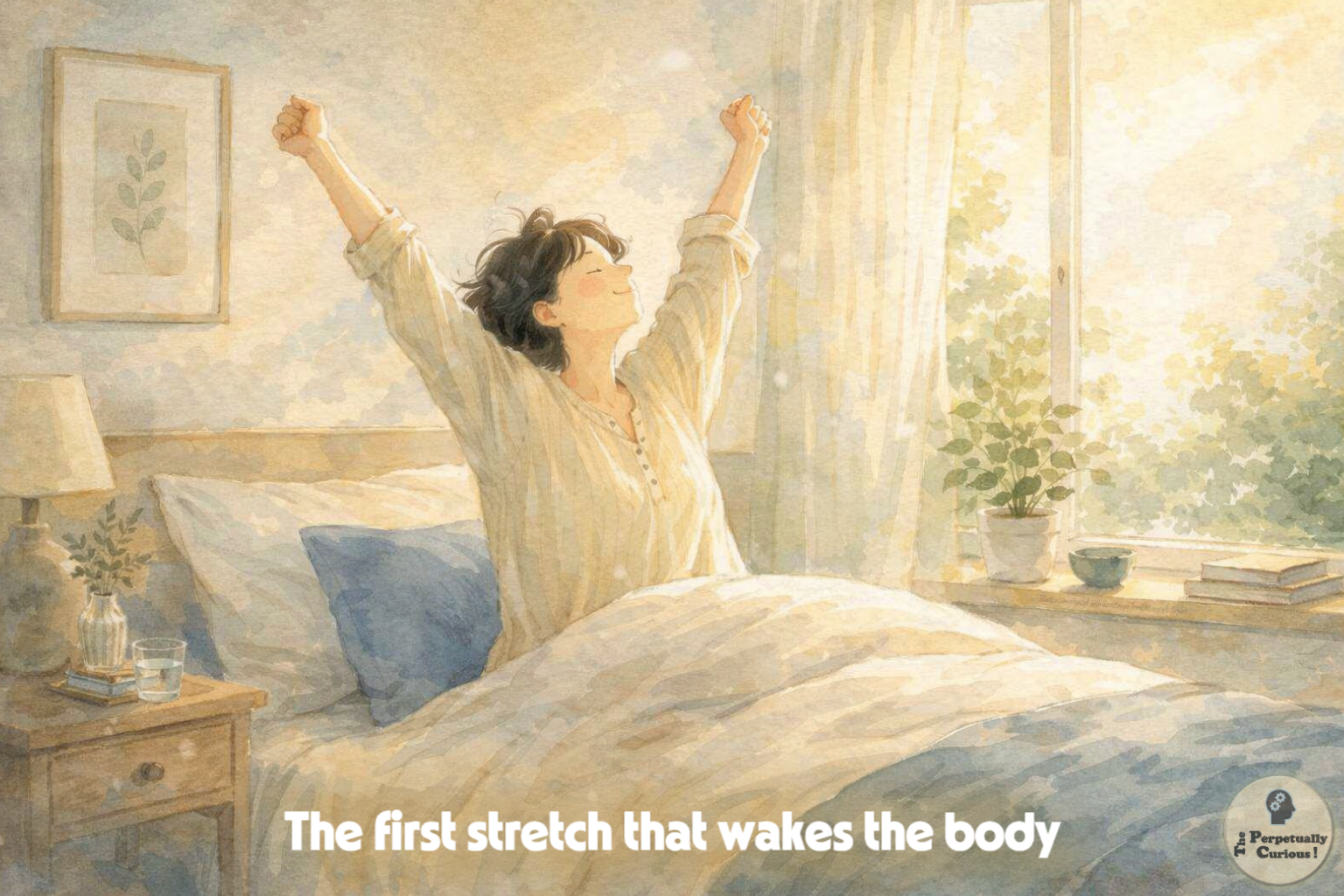
🌅 Pandiculation: How the Waking Stretch Restores Body Awareness
From section: When stillness quiets the body’s mapTheir signals travel toward the spinal cord and brain, contributing to an internal map that guides balance, posture, and voluntary motion.