Explore by topic, question, or idea. Find articles, reflections, videos, puzzles, and curiosity pathways gathered across the site.
Press Enter or select Search. A newly typed query starts globally; filters are applied only through the visible rail.
203 results for “each land”
- The Perpetually Curious! › Canonical › Wilderness & Homestead CreaturesArticle
🧫 Tides of Chemical Worlds: How Animals Meet the Molecules Around Them
From section: 🌊 Minds in a chemical worldThese encounters remind us that animals navigate not only landscapes of land and water, but also landscapes of molecules. …
- The Perpetually Curious! › CanonicalReflection
The Paradox of the Threshold
Nature speaks this same language of transformation everywhere we look. The shoreline shifts with each tide, drawing and redrawing boundaries that exist only in motion. We map coastlines as if they were fixed, but the true edge lives in perpetual negotiation between land and sea. …
- The Perpetually Curious! › Canonical › Cosmic ExplorationArticle
🌌 Borrowing the Orbits of Giants: How Gravity Assists Carry Spacecraft into the Deep
On certain nights, the planets appear as quiet lanterns suspended in the dark, drifting along their ancient paths. To the eye, they seem serene and still. Yet each one is a massive world in motion, circling the Sun with tremendous momentum. For spacecraft, these worlds are not only destinations.
- The Perpetually Curious! › Canonical › Cosmic ExplorationArticle
🌌 Why Space Looks Dark in a Universe Filled with Light: Understanding the Quiet Cosmos
On a clear night, the sky stretches overhead as a vast field of darkness, interrupted only by scattered stars and the faint glow of the Milky Way. This darkness feels puzzling when one considers that the universe contains an extraordinary number of stars, each emitting light in all directions.
- The Perpetually Curious! › Canonical › Botanical WondersArticle
🌱 Why Leaves Have Different Shapes: The Science Behind Nature’s Geometry
Leaves appear as simple silhouettes against the sky, yet each outline is the visible trace of a long conversation between genes, climate, and physics. A maple’s palmate blade, an oak lobe, a peepal heart, and the fine scales of arborvitae are not decorative accidents.
- The Perpetually Curious! › CanonicalReflection
The Practice of Seeing
From Reflections on Perception ◒ 👁️ A bird gathers its surroundings through many small turns of the head. Each shift of angle is a way of completing the world it sees, a patient method for turning fragments into clarity.
- The Perpetually Curious! › Archives › Environment & SustainabilityArticle
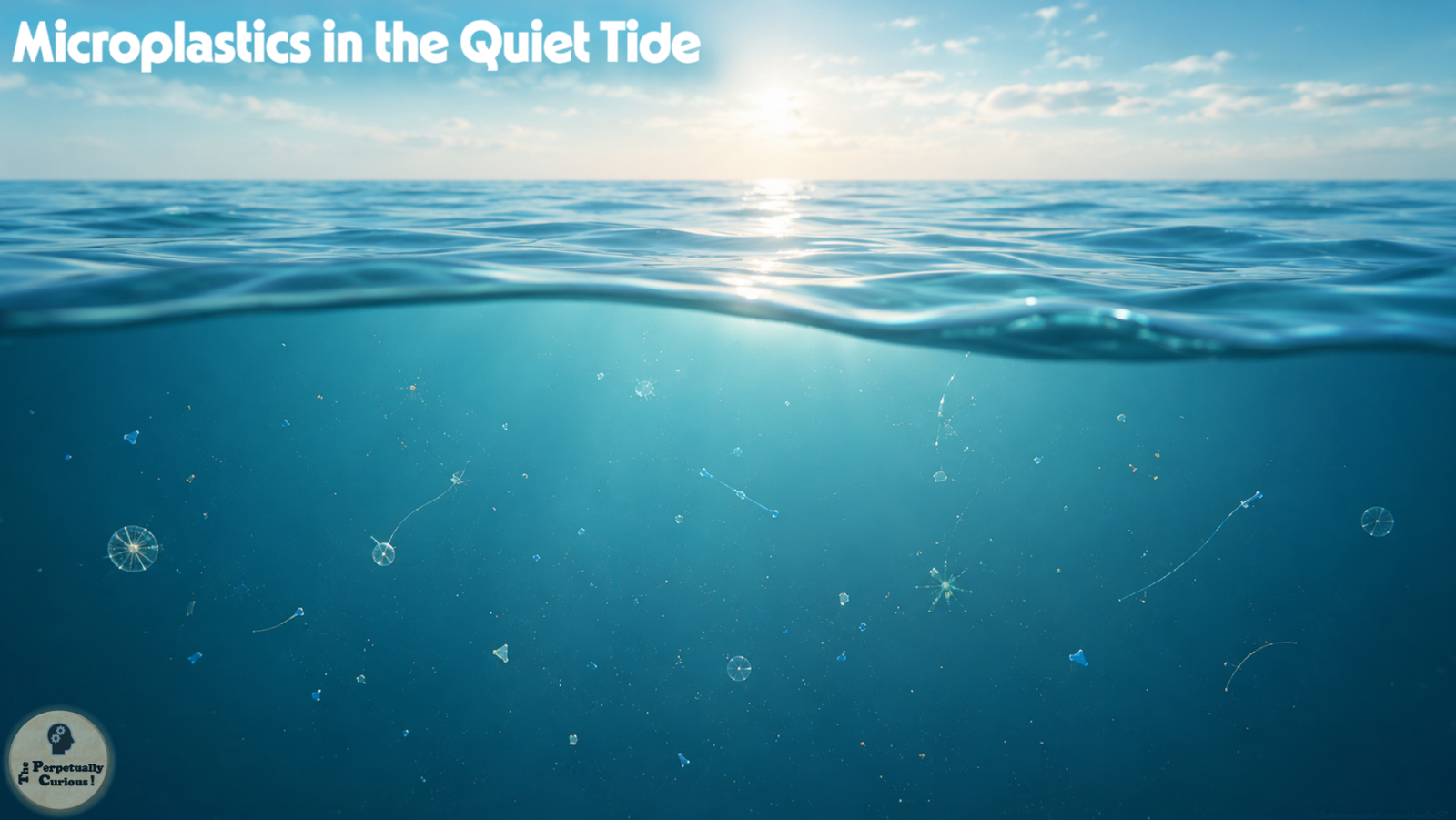
🌊 Microplastics in the Ocean: How Tiny Fragments Travel
Other particles begin even smaller, including synthetic fibers shed from fabrics or tiny material released from human activity on land and at sea.
- The Perpetually Curious! › Archives › Planet EarthArticle
❄️ Antarctica: Southernmost Continent’s Frozen Symphony of Silence and Light
From section: ❓ FAQ… The 11,000-mile (18,000-kilometer) tropical barrier prevents natural migration between poles. Each species adapted to its specific polar ecosystem, and introducing either to the opposite pole would disrupt existing ecological balances.
- The Perpetually Curious! › Archives › Botanical WondersArticle
The Coffee Odyssey: A Bean's Scientific Journey from Soil to Soul ☕
The morning ritual of brewing coffee connects us to an ancient agricultural symphony that spans continents and centuries. Each aromatic sip represents the culmination of precise botanical processes, meticulous human craftsmanship, and transformative chemistry.
- The Perpetually Curious! › Archives › Cosmic ExplorationArticle
🌌 When Worlds Shine: Why Some Planets Outglow Others in Our Night Sky
The night sky often feels calm and timeless, yet the brightness of the planets tells a dynamic story of light, distance, geometry, and illumination. When Venus blazes in the evening or morning sky, it can appear almost unreal, while Mars, Jupiter, and Saturn each take turns as…