Explore by topic, question, or idea. Find articles, reflections, videos, puzzles, and curiosity pathways gathered across the site.
Press Enter or select Search. A newly typed query starts globally; filters are applied only through the visible rail.
227 results for “each landscape”
- The Perpetually Curious! › Archives › Wilderness & Homestead CreaturesArticle
🌍 African Wildlife and Landscapes: A Heritage of Beauty and Balance
This diversity of habitats provides the foundation on which ecological relationships unfold, supporting many communities of plants and animals, each influenced by the particular conditions that define its region.Read more »
- The Perpetually Curious! › Canonical › Botanical WondersArticle
🌿 Trees That Drink the Sky: How Certain Species Shape Water and Land in South India
From section: 🌏 A landscape written in waterUnderstanding how particular species interact with water is therefore a natural next step. Once the landscape is seen as a shared reservoir, it becomes easier to ask which plants simply participate in this cycle and which may alter it in ways that matter for people, wildlife, and long-term ecological balance.
- The Perpetually Curious! › Archives › Cosmic ExplorationArticle
☀️ Solar Eclipses Explained: The Dance of Shadow and Light
Solar eclipses are among the most captivating events in the sky. They reveal how a rare alignment of Sun, Moon, and Earth can transform the ordinary daylight landscape into something unfamiliar and striking. Daylight softens, shadows sharpen, and the familiar world takes on a new character.
- The Perpetually Curious! › Canonical › Planet EarthArticle
🌧️ When Earth Begins to Breathe: Why Rain Smells the Way It Does
From section: 🌎 A planet-wide phenomenon with local variations… Iron‑rich laterite, common in some tropical regions, and soils influenced by volcanic ash can differ in texture and mineral composition, which can subtly shape how scent compounds are held and released from the surface. These differences contribute to the overall scent profile of each landscape.
- The Perpetually Curious! › CanonicalGateway
🌳 Nature | Articles
The sensory, experiential, and aesthetic side of the natural world This collection gathers landscape essays and atmospheric observations that trace how light, weather, season, texture, and place shape the experience of the outdoors.
- The Perpetually Curious! › Archives › Planet EarthArticle
❄️ Antarctica: Southernmost Continent’s Frozen Symphony of Silence and Light
From section: ❓ FAQ… The 11,000-mile (18,000-kilometer) tropical barrier prevents natural migration between poles. Each species adapted to its specific polar ecosystem, and introducing either to the opposite pole would disrupt existing ecological balances.
- The Perpetually Curious! › Canonical › Engineering & TechnologyArticle
🚂 Echoes of Steam, Currents of Steel: Train Engines and the Rise of High-Speed Motion
From section: 💡 Did You Know?🌬️ High-speed train noses are often tested and refined to manage airflow, reduce noise, and limit pressure effects when trains enter tunnels or pass each other at speed.
- The Perpetually Curious! › Canonical › Planet EarthArticle
🏔️ Mount Kailash: A Summit Where Water, Story, and Sky Converge
… Each section builds on the previous one, tracing how a single mountain becomes a point of convergence in a landscape that feels both remote and deeply connected.
- The Perpetually Curious! › Archives › Wilderness & Homestead CreaturesArticle
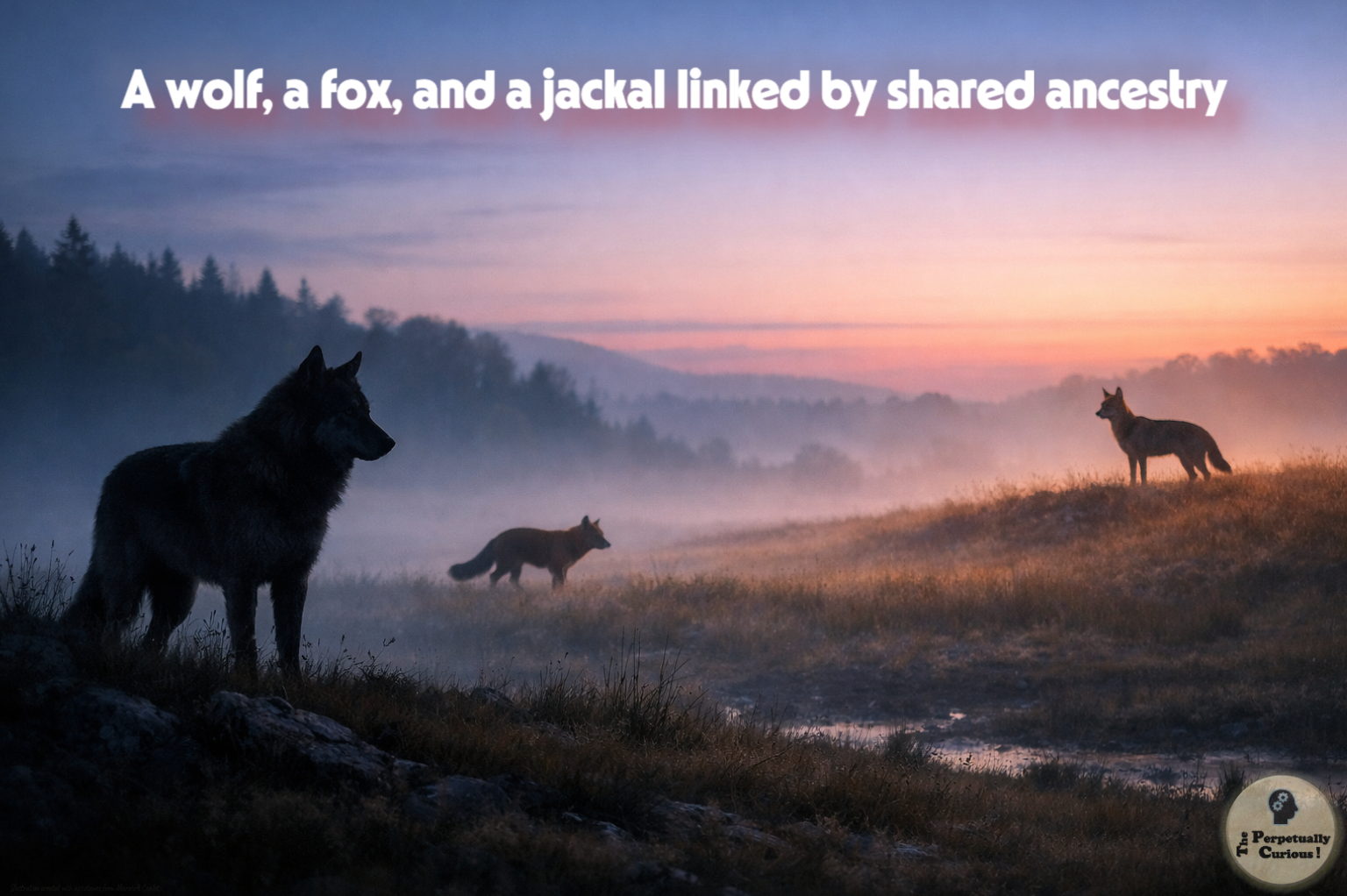
🐾 Wolves, Foxes, and Jackals: One Family, Many Survival Paths
Place a wolf, a fox, and a jackal in the same imagined landscape and the differences appear first. One seems built for distance and group movement. One carries the quick precision of a small hunter at the edge of cover. One belongs to a world of open scrub, watchful pauses, and flexible opportunity.
- The Perpetually Curious! › Canonical › Biology & HealthArticle
🦠 Listening to the Hidden City Within: Understanding the Gut Microbiome
From section: 🚶♂️ The landscape of the gut: a habitat for microbesWithin this varied landscape, microorganisms encounter different resources and constraints. The next question is how they use those conditions to transform nutrients, exchange metabolites, and carry out their biochemical work.