Explore by topic, question, or idea. Find articles, reflections, videos, puzzles, and curiosity pathways gathered across the site.
Press Enter or select Search. A newly typed query starts globally; filters are applied only through the visible rail.
11 results for “fall learning colors”
- The Perpetually Curious! › Canonical › Botanical WondersArticle
🍁 When Leaves Let Go: Why Autumn Colors Turn Red, Gold, and Brown
… Farther down the path, leaves have settled into russet brown. The same season has reached them all, yet each tree answers in its own colors. …
- The Perpetually Curious! › Archives › Botanical WondersArticle
🎨 Nature's Color Code: Decoding the Secret Language of Vegetables
This transformation from purple to orange reveals a deeper truth: vegetable colors are not random decorations but sophisticated chemical messages evolved over millions of years.
- The Perpetually Curious! › Archives › Botanical WondersArticle
Golden, Red, and Blue: A Journey Through the Many Lives of Bananas 🍌
A banana often appears simple at first glance, a familiar curve of yellow fruit resting quietly on a kitchen counter. Yet this everyday presence conceals a world of colors, histories, and cultural meanings that stretch across continents and centuries.
- The Perpetually Curious! › Archives › Botanical WondersArticle
🌳🍂 Harmony of Hues: Painting the Landscape with Crimson and Gold
🍁 Have you ever wondered why many leaves do not simply fade in autumn, but instead ignite into crimson, gold, and amber while others settle quietly into softer browns?
- The Perpetually Curious! › Archives › Botanical WondersArticle
🎨 The Colorful World of Grapes: What Makes Each Variety Unique
🍇 Red, Green, or Black: What Sets Grapes Apart? Grapes have long captured our attention with their vibrant colors and diverse flavors. Yet beyond their appearance lies a fascinating story of plant chemistry and nutrition.
- The Perpetually Curious! › Canonical › Botanical WondersArticle
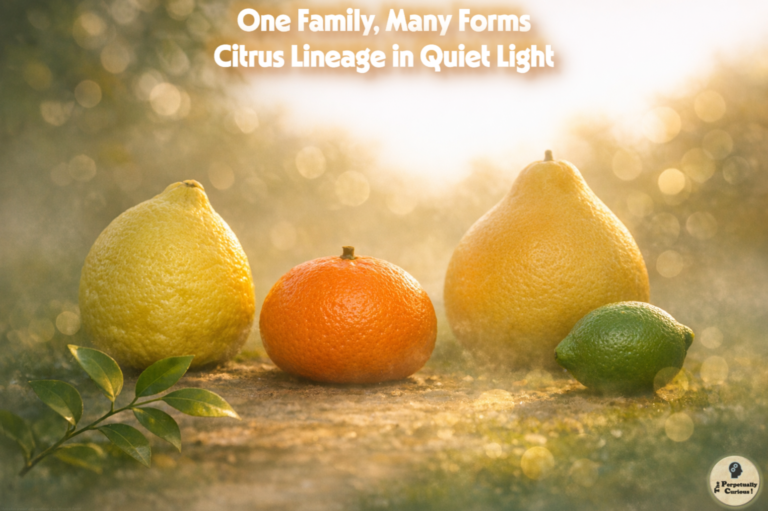
🍊 The Citrus Family Tree: Tracing the Roots of Oranges, Lemons, Limes, and Grapefruit
From section: 💡 Did You Know🍇 The interplay of climate, genetics, and cultivation that shapes citrus diversity follows patterns found across many fruit families, including the wide spectrum of grape varieties, where similar forces produce a rich range of colors, flavors, and textures.
- The Perpetually Curious! › Canonical › Botanical WondersArticle
🌱 Why Fruits Have Seeds: The Many Ways Plants Begin Again
From section: 🌬️ Other fruits travel without being eatenDiaspores may move through air, float on water, cling to feathers or fur, fall under gravity, or be thrown when a dry fruit splits suddenly. Some pass through more than one stage of movement. A seed may first drop to the ground and later be carried by an ant, a rodent, flowing water, or another agent.
- The Perpetually Curious! › Canonical › Botanical WondersArticle
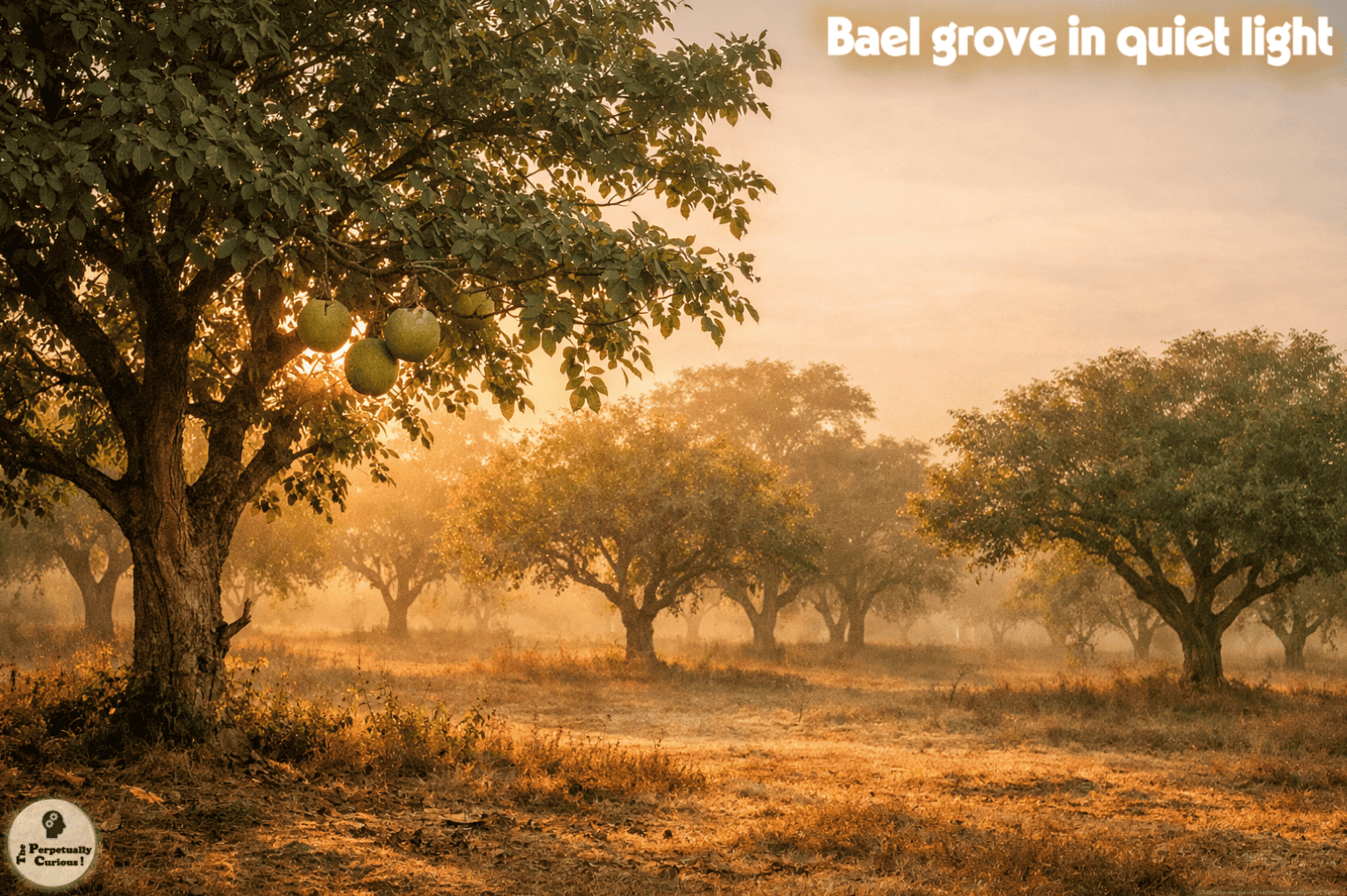
🍃 Bael Tree: Ecology, Sacred Groves, and Cultural History
From section: 🌿 A quiet companion across timeWhen one returns to the bael tree after learning about its form, habitat, fruit, cultural roles, and ecological relationships, it may appear transformed. The trifoliate leaves carry both botanical purpose and symbolic meaning. …
- The Perpetually Curious! › Archives › Botanical WondersArticle
🍊 Citrus Family Tree: How Ancient Lineages Became Familiar Fruits
A fruit bowl can make oranges, lemons, limes, mandarins, and grapefruit look like separate botanical inventions. Their colors, flavors, and shapes seem distinct enough to suggest separate origins. The citrus family is more intertwined than that.
- The Perpetually Curious! › Archives › Botanical WondersArticle
🍃 Bael Tree: Quiet Resilience in Leaf and Fruit
From section: Where ecology becomes heritage… 🍃 Bael Tree, Quiet Star of Sacred Groves: A Journey Through Aegle marmelos https://www.theperpetuallycurious.org/articles/bael-tree ↗ Share this article Pass this article along to someone curious and let the learning travel.