Explore by topic, question, or idea. Find articles, reflections, videos, puzzles, and curiosity pathways gathered across the site.
Press Enter or select Search. A newly typed query starts globally; filters are applied only through the visible rail.
174 results for “how brain form”
- The Perpetually Curious! › CanonicalReflection
The River of Now
From Reflections on Time ⏳ 👁️ Time is not a line we walk, but a river that carries us. Every moment is both departure and arrival, a current that never returns in the same form. A Quiet Descent into the Reflection Our language betrays a fundamental confusion about time.
- The Perpetually Curious! › CanonicalGateway
✦ Curiosity Vignettes
From section: A Distinct Form Within The Perpetually Curious!The Curiosity Vignettes lane belongs to the wider publishing landscape of The Perpetually Curious! while retaining a clear editorial role.
- The Perpetually Curious! › Canonical › Planet EarthArticle
🌊 Niagara Falls, Where Thundering Waters Shape Time
From section: 🏛️ From spectacle to shared landscape: Tourism, engineering, and hydropowerBy the nineteenth century, Niagara Falls had become a destination for travelers who came to witness its scale and beauty. Artists, writers, and photographers sought to capture its form, while pathways, viewing areas, and nearby accommodations developed to support growing interest.
- The Perpetually Curious! › Canonical › Planet EarthArticle
🌍🌑 Where Two Soils Part Ways: Earth, Moon, and the Stories Written in Dust
From section: 🧪 One Periodic Table, Many Pathways… Iron cycles between oxidized and reduced forms. Clay minerals form through long‑term weathering. Organic matter accumulates as plants and microbes live and die. …
- The Perpetually Curious! › Canonical › Planet EarthArticle
🌊 Where the Waves Leave Their Footprints: Why Beaches Carry Sand
From section: ⚖️ Why Sand Stays While Other Sediments Drift AwayThis distinction between sand and mud is not only a matter of size but also a reflection of the environment in which each material forms. Beaches are shaped by more active movement, while mudflats and marshes often form where water is calmer.
- The Perpetually Curious! › Archives › Biology & HealthArticle
🧬 When Proteins Forget Their Shape: The Molecular Tragedy of Neurological Disease
🧬 The Art of Molecular Origami In the vast cellular metropolis of your brain, proteins fold themselves into precise three-dimensional sculptures. This molecular origami happens continuously throughout your brain, with proteins finding their destined shapes like keys fitting into locks.
- The Perpetually Curious! › Archives › PhysicsArticle
🌌 Tuning Into the Universe: The Hidden Symphony of Radio Waves
🌌 What the name really means Radio astronomy is the study of radio waves naturally emitted by the universe. These waves are not sound but a form of light, electromagnetic radiation that travels at the same speed in vacuum as visible light. They are part of one continuous…
- The Perpetually Curious! › Archives › ChemistryArticle
🌸⚗️ Esterification: The Everyday Chemistry Behind Fruity Scents, Perfumes, and Plastics
Ever wondered how your favorite fruity scents or perfumes are created? At the heart of these scents is the esterification reaction, a cornerstone of organic chemistry. This reaction combines a carboxylic acid with an alcohol to form an ester and water.
- The Perpetually Curious! › Archives › Planet EarthArticle
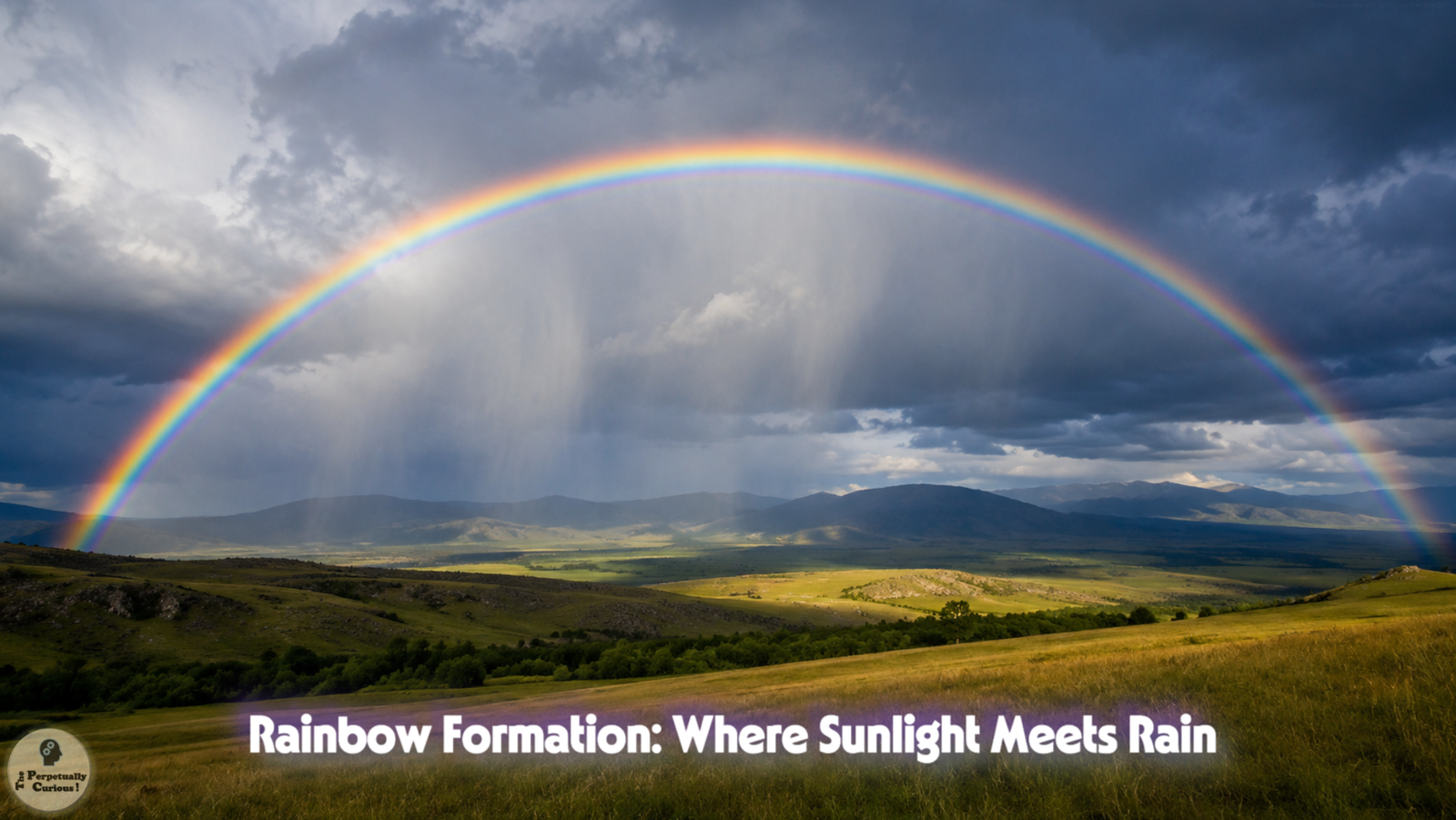
🌈 Rainbow Formation: Why Every Observer Sees a Different Arc
A rainbow can look like a colored bridge resting on a distant valley, field, or line of trees. Yet the arc is not anchored to that landscape. It is assembled for a particular observer by a particular set of illuminated water droplets.
- The Perpetually Curious! › Archives › Cosmic ExplorationArticle
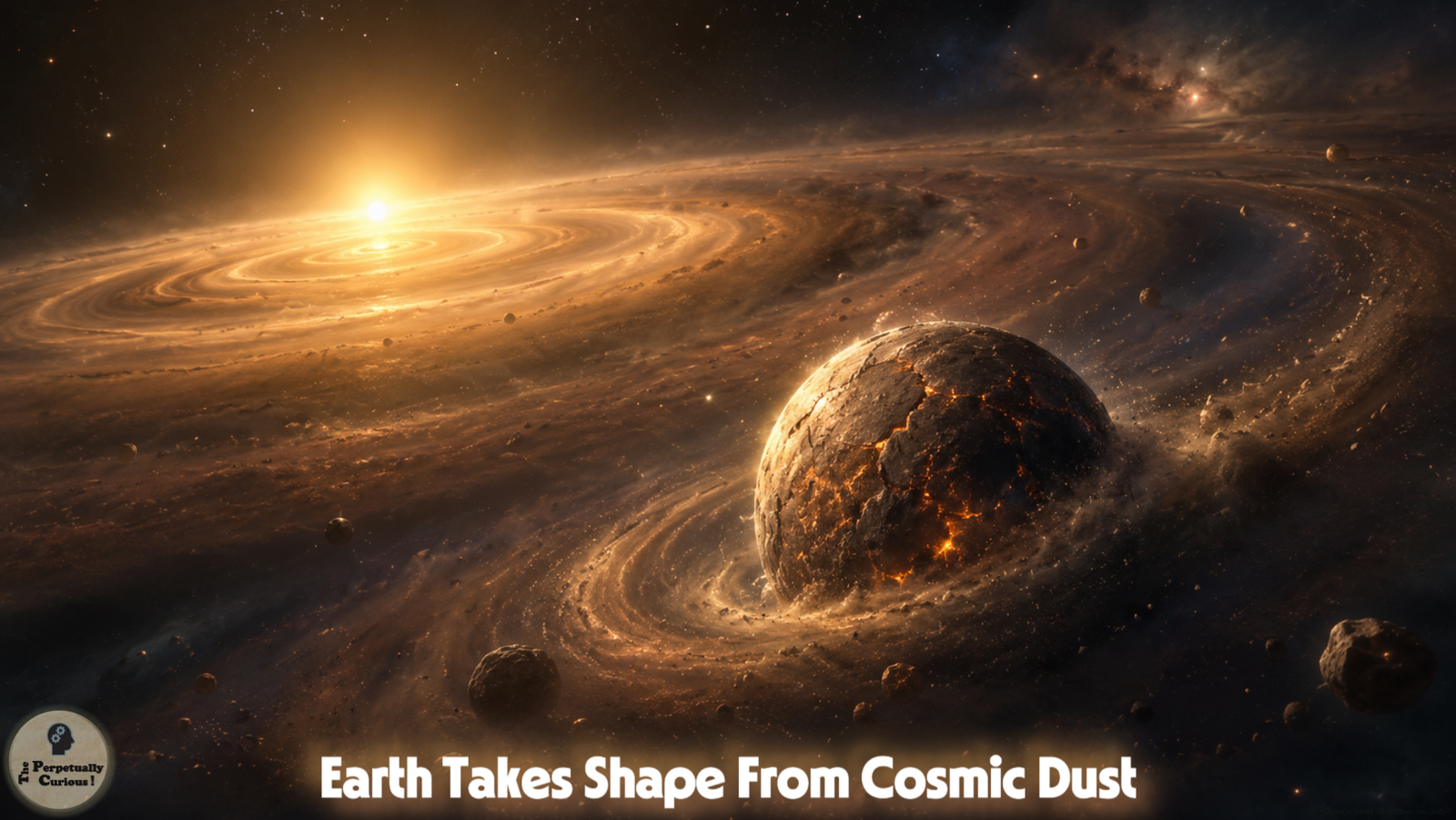
🌍 How Earth Formed: The Slow Assembly of a Young Rocky World
Earth did not appear as a finished sphere in an otherwise complete Solar System. Its beginning was distributed across a rotating disk of gas, dust, rock, and metal around the newborn Sun.