Explore by topic, question, or idea. Find articles, reflections, videos, puzzles, and curiosity pathways gathered across the site.
Press Enter or select Search. A newly typed query starts globally; filters are applied only through the visible rail.
4 results for “how brain form”
- The Perpetually Curious! › Canonical › Environment & SustainabilityArticle
🌿 Liquid Trees: Microalgae Photobioreactors and the Quiet Art of Urban Breathing
Cities often carry a subtle heaviness in their air, shaped by traffic, heating, industry, construction, and the density of human activity. Into a small number of public spaces, designers have introduced an unfamiliar form of living technology: transparent vessels filled with…
- The Perpetually Curious! › Canonical › Environment & SustainabilityArticle
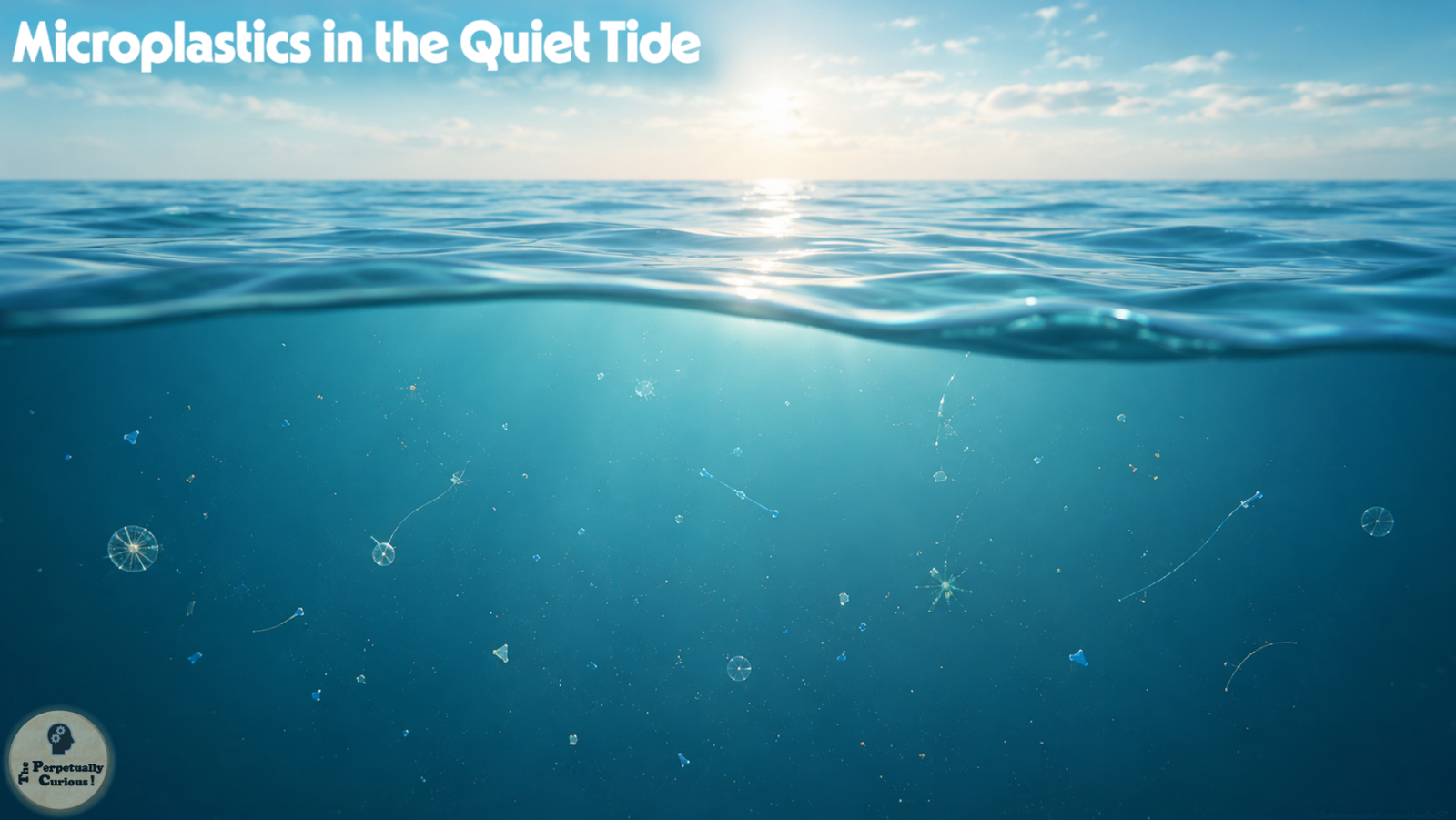
🔄 Tides of Plastic: Microplastic Pollution in the Oceans and Its Journey Back to Us
From section: 🌐 Ecosystems under quiet pressure: community and habitat level impactsIn open-water systems, microplastics can interact with plankton communities that help move energy and carbon through the ocean. Plankton form the base of many marine food webs, and some also contribute to the biological carbon pump, the process by which carbon-rich material moves from surface waters into deeper layers.
- The Perpetually Curious! › Canonical › Environment & SustainabilityArticle
🕸️ Ghost Nets, Silent Drifters: How Lost Fishing Gear Haunts the Ocean
From section: 💡 Did You Know?🧫 Microorganisms can form biofilms on ghost nets. These thin living layers may change how other organisms colonize the net’s surface, creating tiny biological microenvironments on a piece of plastic debris.
- The Perpetually Curious! › Archives › Environment & SustainabilityArticle
🌊 Microplastics in the Ocean: How Tiny Fragments Travel
From section: When the ocean sends fragments backPlastic released in one place can fragment, travel, meet living systems, and return in altered form.