Explore by topic, question, or idea. Find articles, reflections, videos, puzzles, and curiosity pathways gathered across the site.
Press Enter or select Search. A newly typed query starts globally; filters are applied only through the visible rail.
152 results for “microplastics in the ocean how tiny fragments travel”
- The Perpetually Curious! › Archives › Cosmic ExplorationArticle
🌌 The Silent Storm Above: Understanding Our Orbital Debris Challenge
The night sky appears serene and infinite, yet beyond our atmosphere swirls an invisible tempest of our own making. ESA estimates about 140 million debris fragments in the 0.04 to 0.4 inch (1 mm to 1 cm) range, plus about 1.2 million objects between 0.4 and 4 inches (1 to 10…
- The Perpetually Curious! › Archives › Wilderness & Homestead CreaturesArticle
✨ The Secret Language of Summer Nights: Decoding Firefly Bioluminescence
🌙 When Darkness Becomes a Canvas As twilight surrenders to night, tiny alchemists emerge to paint the darkness with living light. Fireflies transform summer evenings into nature's own light show, their bioluminescent displays serving as one of the most elegant examples of…
- The Perpetually Curious! › Archives › PhysicsArticle
🦈 Why Do Sharks Float? The Science Behind Their Buoyancy
🌊 Opening Dive Sharks are among the ocean’s most formidable creatures, yet they face a unique challenge: staying afloat without the gas‑filled swim bladders used by most bony fishes.
- The Perpetually Curious! › Archives › Wilderness & Homestead CreaturesArticle
🦈 Scars That Speak: Shark Survival Stories Etched in Skin
Introduction 🌊 Every scar on a shark tells a story, each a record as unique as the path that shark has traveled through its environment. These marks are not just wounds. They are survival records that reveal the hidden dramas of the ocean.
- The Perpetually Curious! › Archives › PhysicsArticle
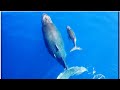
🐋 How Do Whales Float? The Science of Buoyancy Beneath the Waves
Whales are the giants of the ocean, with blue whales reaching up to 200 tons. Yet they move through the water with surprising grace. If you have ever wondered how such colossal animals manage to float, sink, and swim so smoothly, the answer lies in the fascinating blend of…
- The Perpetually Curious! › Canonical › Biology & HealthArticle
🧠 The Brain’s Guarded Border: How the Blood-Brain Barrier Protects Us and Complicates Treatment
From section: 🎯 Packaging cargo without losing the destinationWhen therapeutic cargo cannot travel alone, a protective carrier offers another negotiation with the border. Liposomes, polymer particles, lipid nanoparticles, extracellular vesicles, and viral vectors can protect a payload and influence where it travels. …
- The Perpetually Curious! › Canonical › Cosmic ExplorationArticle
🌌 The Hunt for the Invisible: Understanding Dark Matter Through Science’s Greatest Detective Story
From section: 📡 The echo of creation… This faint radiation was released when the universe became transparent about 380,000 years after the Big Bang. Tiny temperature variations across the CMB preserve a record of density differences and acoustic oscillations in the early cosmos.
- The Perpetually Curious! › Canonical › Cosmic ExplorationArticle
🌍 When Worlds Pull: Gravity Across the Planets and What It Reveals About Them
From section: 🤝 A gentle invitation to shareWe kindly invite you to share and spread the word. If you know someone who may enjoy this exploration of planetary gravity, we would be grateful if you passed it along. Your support helps curiosity travel from one mind to another.
- The Perpetually Curious! › Canonical › Cosmic ExplorationArticle
🌟 Brown Dwarfs: Between Giant Planets and the Smallest Stars
From section: ✨ Where worlds and stars almost meet… We invite you to share this exploration with readers who find wonder in the places where familiar categories begin to blur. Each shared curiosity helps the wider story of these boundary objects travel a little farther.
- The Perpetually Curious! › Canonical › Planet EarthArticle
🌈 When Sunlight Paints the Rain: The Quiet Geometry of Rainbow Formation
From section: Frequently Asked Questions+… A rainbow is produced mainly by refraction, partial internal reflection, dispersion, and the concentration of rays near particular angles. A glory is a much smaller set of colored rings centered closely around the observer’s shadow and formed through near-backscattering and wave interference in tiny droplets. …