Explore by topic, question, or idea. Find articles, reflections, videos, puzzles, and curiosity pathways gathered across the site.
Press Enter or select Search. A newly typed query starts globally; filters are applied only through the visible rail.
27 results for “origins of month names calendar story”
- The Perpetually Curious! › Archives › Cosmic ExplorationArticle
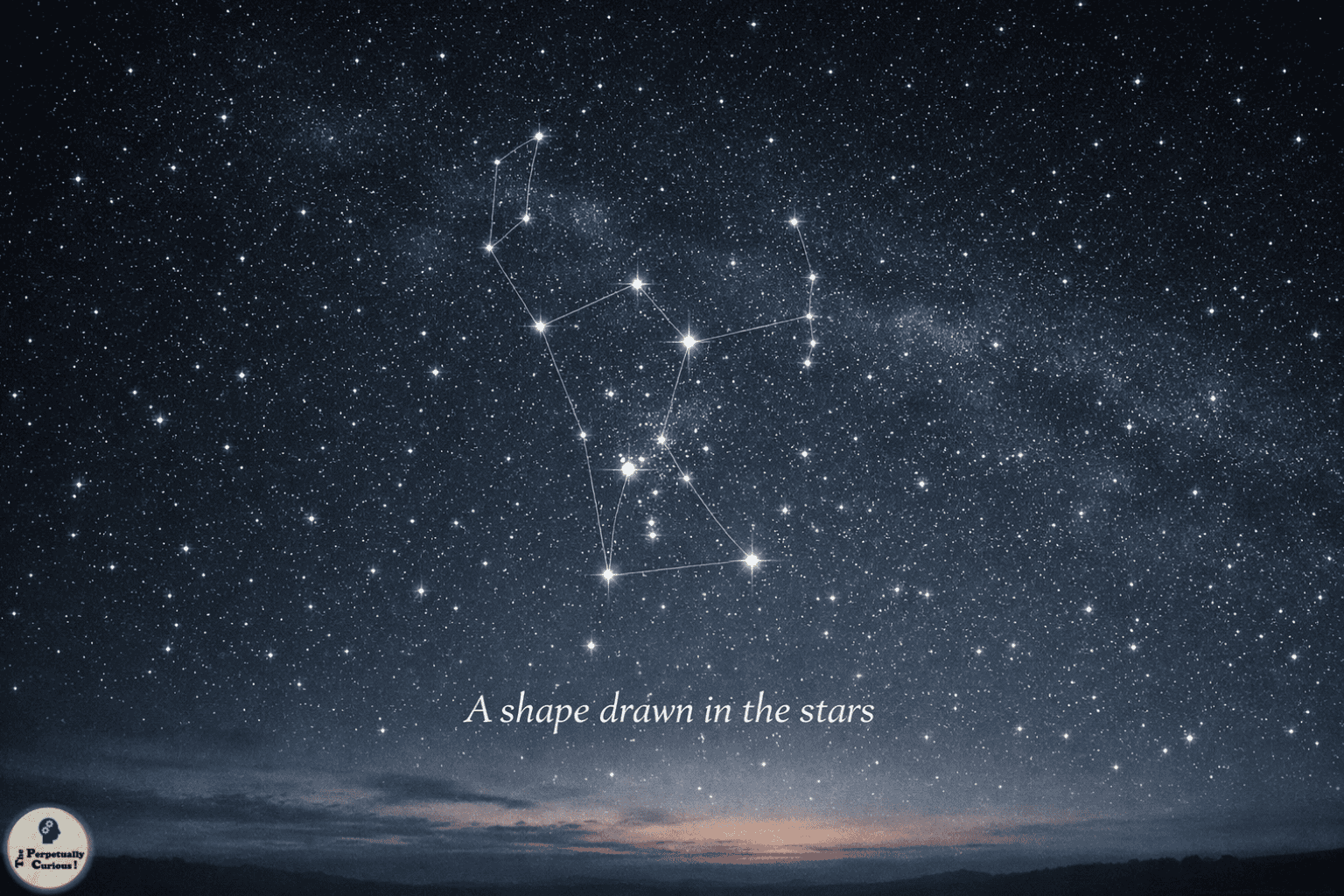
🌌 Constellations: How Star Patterns Help Us Find Our Way
From section: Why orientation needs memoryThese repeated appearances turned the heavens into a clock, calendar, and compass.
- The Perpetually Curious! › Canonical › Cosmic ExplorationArticle
🌌 The Universe’s Ancient Whisper: Decoding the Cosmic Microwave Background
A gentle shimmer still moves across the sky, carrying the memory of a young universe finding its first calm.The same ancient light drifts through every quiet night, patient and unchanged.In its faint warmth, the earliest story continues to pass over us, steady and unhurried.
- The Perpetually Curious! › Canonical › Cosmic ExplorationArticle
The Cosmic Recipe: Understanding the Physical Criteria for Star Formation 🌟
A star begins in quiet darkness, gathering its strength grain by grain until light becomes possible.The first glow rises from patience and pressure, a small promise held within the cold.In time, the universe answers, and a new point of warmth joins the long story of creation.
- The Perpetually Curious! › Archives › Cosmic ExplorationArticle
🌍 Why Earth Has a Living Atmosphere
A Cosmic Story of Gravity, Distance, and the Long Evolution of Air 🔭 Opening the Question Every planet carries a story in the sky above it. Some worlds hold thick blankets of gas, others keep only a faint whisper, and many have none at all.
- The Perpetually Curious! › Archives › Cosmic ExplorationArticle
🌌 When Worlds Shine: Why Some Planets Outglow Others in Our Night Sky
The night sky often feels calm and timeless, yet the brightness of the planets tells a dynamic story of light, distance, geometry, and illumination. When Venus blazes in the evening or morning sky, it can appear almost unreal, while Mars, Jupiter, and Saturn each take turns as…
- The Perpetually Curious! › Canonical › Cosmic ExplorationArticle
🌌 Why Space Looks Dark in a Universe Filled with Light: Understanding the Quiet Cosmos
From section: ✨ How light becomes visibleThis contrast between a room filled with air and a region of near vacuum is the first clue. It hints that the darkness of space is not an absence of light, but the beginning of a deeper story about what, if anything, occupies the vast stretches between the stars.
- The Perpetually Curious! › Canonical › Cosmic ExplorationArticle
🌟 Brown Dwarfs: Between Giant Planets and the Smallest Stars
From section: ✨ Where worlds and stars almost meet… We invite you to share this exploration with readers who find wonder in the places where familiar categories begin to blur. Each shared curiosity helps the wider story of these boundary objects travel a little farther.
- The Perpetually Curious! › Canonical › Cosmic ExplorationArticle
🛰️ When Fire Meets Air: How Spacecraft Reenter Earth’s Atmosphere
From section: 🌱 Letting the journey through fire and air travel on… A shared article can carry the story farther, inviting more readers to see Earth’s atmosphere not simply as the air above us, but as the remarkable medium through which spacecraft surrender speed, shape their descent, and find their way home.
- The Perpetually Curious! › Canonical › Cosmic ExplorationArticle
🌍 When Worlds Pull: Gravity Across the Planets and What It Reveals About Them
Gravity moves through every world with its own quiet signature, shaping how each planet holds its place in the dark.Across these distant spheres, the same pull becomes a different story.In that silent exchange, the architecture of motion reveals itself.
- The Perpetually Curious! › Canonical › Cosmic ExplorationArticle
🌑 Shadows Across the Solar System: How Eclipses Unfold Beyond Earth
From section: 🌞 Solar eclipses across the Solar System… Multiple shadows can appear at once, creating a dynamic and visually striking scene. Double shadow transits occur roughly once or twice per month, and single shadow transits from individual moons are visible at least once a week. Triple transits are rare, with only a handful occurring each decade.