Explore by topic, question, or idea. Find articles, reflections, videos, puzzles, and curiosity pathways gathered across the site.
Press Enter or select Search. A newly typed query starts globally; filters are applied only through the visible rail.
17 results for “rainbow engines”
- The Perpetually Curious! › Canonical › Engineering & TechnologyArticle
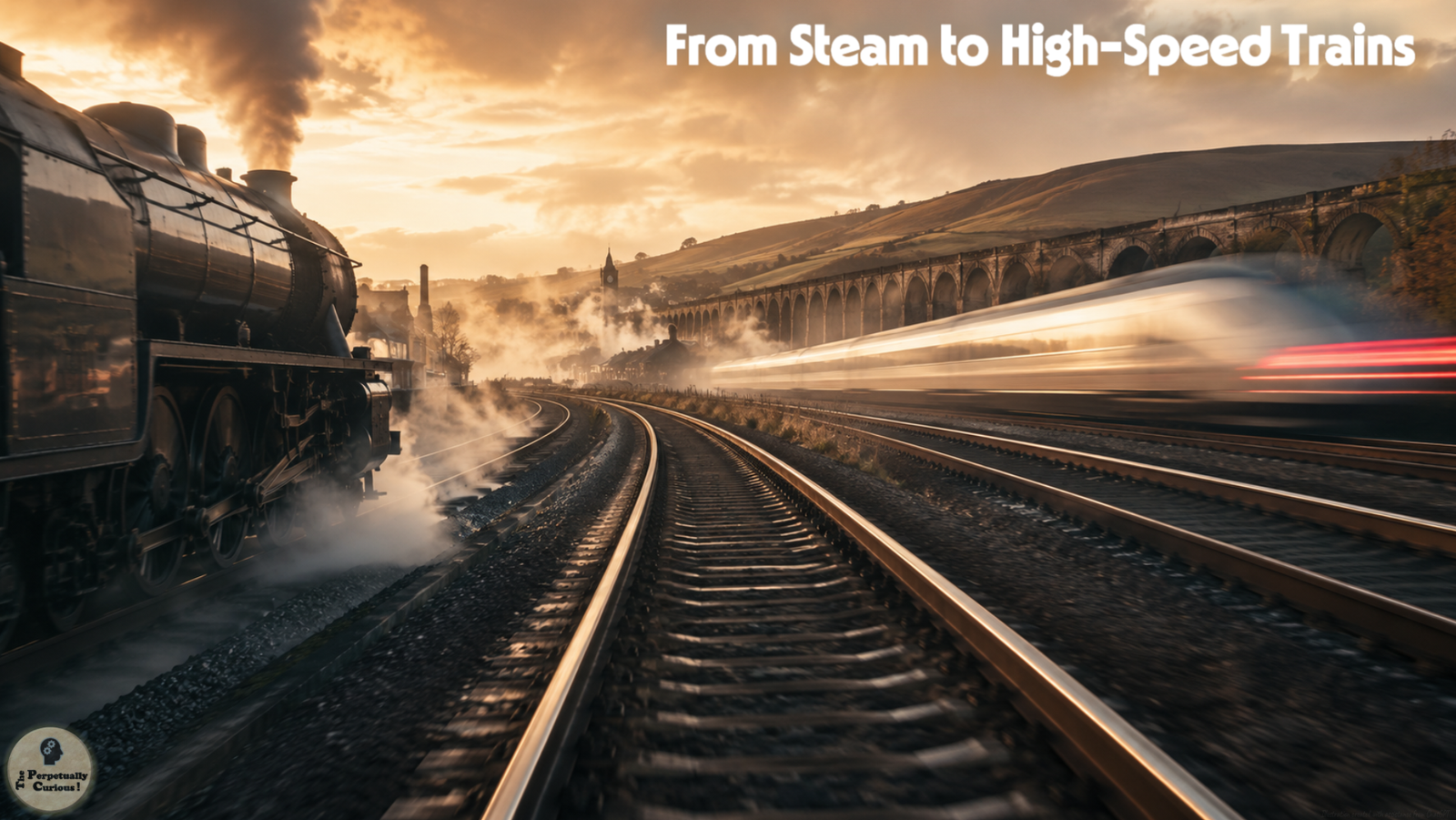
🚂 Echoes of Steam, Currents of Steel: Train Engines and the Rise of High-Speed Motion
The story of train engines is a story of how societies learned to move people and goods across landscapes that once felt impossibly vast. It begins with wooden rails, gravity, and horses, then grows into the thunderous age of steam, the practical reach of diesel power, and the…
- The Perpetually Curious! › Canonical › Planet EarthArticle
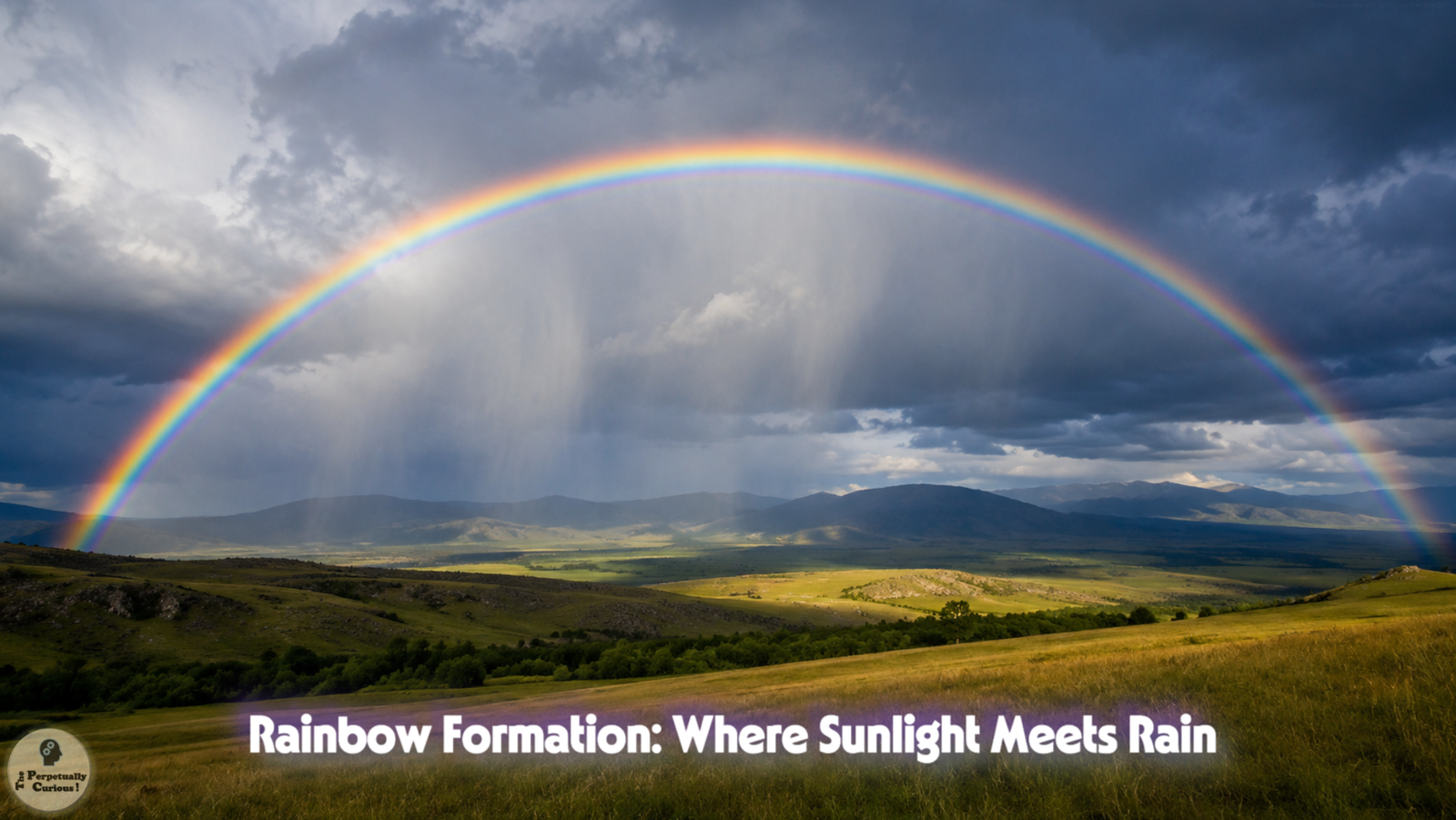
🌈 When Sunlight Paints the Rain: The Quiet Geometry of Rainbow Formation
From section: 🌦 Conditions for seeing a rainbow: timing, position, and subtle variationsFor an observer near ground level looking toward droplets above the horizon, rainbows are most often visible when the Sun is lower than about 42 degrees in the sky. As the Sun rises, the antisolar point moves farther below the horizon, carrying more of the rainbow’s circular geometry out of view. …
- The Perpetually Curious! › Archives › Planet EarthArticle
🌈 Rainbow Formation: Why Every Observer Sees a Different Arc
From section: A rainbow begins with a viewpointA rainbow begins with a viewpoint The essential arrangement places the Sun behind the observer and illuminated droplets ahead.
- The Perpetually Curious! › Archives › Engineering & TechnologyArticle
🚂 Train Engines: How Steam, Diesel, and Electricity Reach the Wheels
That contrast reveals the central engineering story of train engines.
- The Perpetually Curious! › Archives › Cosmic ExplorationArticle
Cosmic Eyes: How Humanity's Space Telescopes Unveil the Universe's Hidden Realms 🔭
The universe radiates stories across wavelengths our eyes cannot detect. From radio whispers to gamma-ray shouts, cosmic phenomena broadcast their secrets through an electromagnetic spectrum far broader than the narrow rainbow of human vision.
- The Perpetually Curious! › Canonical › Planet EarthArticle
🌇 When the Sky Becomes a Painting: Why Clouds Glow Red and Orange at Sunset on Earth
From section: 🌤 Sunlight as a hidden rainbowThe journey into how these wavelengths separate begins as sunlight interacts with molecules throughout the atmosphere.
- The Perpetually Curious! › Canonical › Cosmic ExplorationArticle
🛰️ When Fire Meets Air: How Spacecraft Reenter Earth’s Atmosphere
From section: Frequently Asked Questions+… A controlled return usually begins with a retrograde deorbit burn. The spacecraft briefly fires its engines or thrusters opposite its direction of travel, reducing its orbital speed enough to lower part of its path into denser atmosphere. The maneuver does not slow the spacecraft for landing by itself. …
- The Perpetually Curious! › Canonical › Engineering & TechnologyArticle
🚆 Quiet Power on the Rails: Understanding Hydrogen Trains and Their Emerging Role
From section: 🛤️ Why hydrogen trains emerged… Diesel trains therefore remain common because they carry their own fuel and can travel long distances, but their combustion engines release carbon dioxide and other air pollutants along the route.
- The Perpetually Curious! › Canonical › Planet EarthArticle
🌧️ When Clouds Let Go: Why It Rains and How Raindrops Are Born
From section: 💡 Did You Know?🌈 Falling drops can become tiny optical elements When sunlight is refracted as it enters raindrops, reflected inside them, and refracted again as it leaves, the same water involved in rainfall can produce rainbow formation. …
- The Perpetually Curious! › Canonical › Planet EarthArticle
🌑 How Coal Is Formed: The Slow Birth of Black Stone Across Deep Time
From section: 🚂 Coal and the rise of steam powerCoal’s concentrated energy also made it central to the age of steam engines. In the nineteenth century, coal fueled boilers that heated water into steam, which then powered locomotives, factories, pumps, mills, and ships. …