Explore by topic, question, or idea. Find articles, reflections, videos, puzzles, and curiosity pathways gathered across the site.
Press Enter or select Search. A newly typed query starts globally; filters are applied only through the visible rail.
121 results for “seasonal ponds and root depth in south india”
- The Perpetually Curious! › CanonicalReflection
The Way a River Travels
… The journey is not a clean line from origin to end. It is a layered history of movement, written in silt, in depth, and in the gradual widening of the banks.
- The Perpetually Curious! › CanonicalReflection
The Meeting of Elements
… The water has travelled through air, cloud, and falling rain, arriving with a rhythm that is steady rather than forceful. Their encounter is simple on the surface, yet it carries a sense of depth. It shows how contact between unlike histories can unfold with patience and without demand.
- The Perpetually Curious! › CanonicalReflection
Quiet Cycles of Life
… The rhythm leaves a signature in the atmosphere itself. In the Northern Hemisphere, carbon dioxide typically rises through winter and early spring, reaches a seasonal high in late spring, then declines through summer as vegetation grows, before rising again in autumn and winter. …
- The Perpetually Curious! › CanonicalReflection
Light and Shadow: The Art of Seeing
… Shadow inscribes the past and the possible, holding what was and hinting at what might be. Between them, we develop depth perception not only for physical space but for time, emotion, and meaning itself. …
- The Perpetually Curious! › CanonicalReflection
The World Before Categories
… When comparison falls away, even briefly, the overlooked begins to return. The familiar object, seen without the usual labels, regains depth. The ordinary scene, viewed without haste, becomes visible again in a way that feels both simple and quietly new.
- The Perpetually Curious! › Archives › History, Arts, and CultureArticle
The Algorithm of Ancient Wisdom: How Tamil Poetry Became Humanity's Most Elegant Ethical Code 📜
Sometime between the late centuries BCE and the early centuries CE, a Tamil poet in ancient India crafted what would become one of humanity’s most enduring ethical texts.
- The Perpetually Curious! › Archives › Botanical WondersArticle
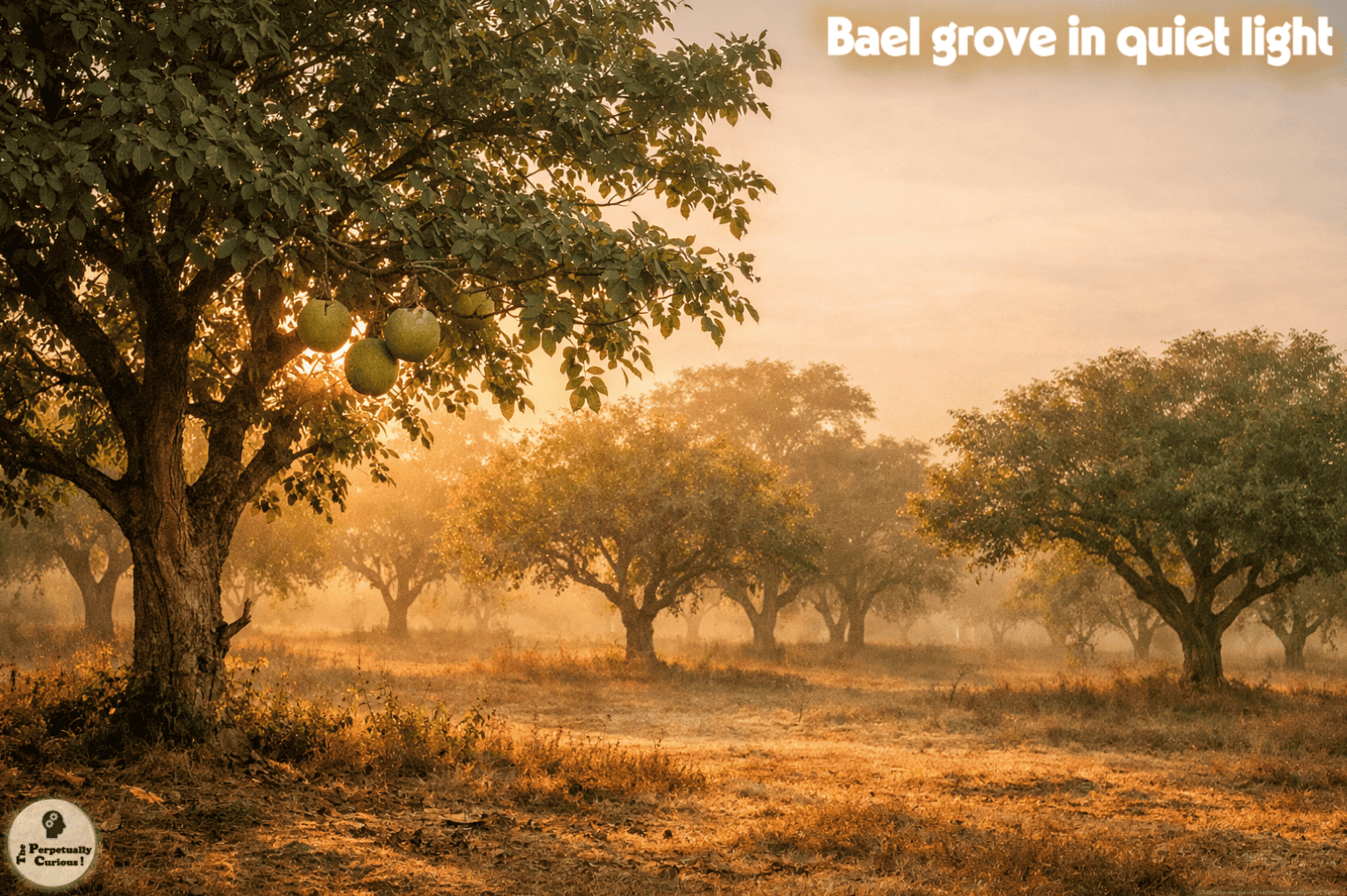
🍃 Bael Tree: Quiet Resilience in Leaf and Fruit
The bael tree, Aegle marmelos, is not a showy tree in the usual sense. Its strength is quieter. It grows across warm South Asian landscapes where dry seasons can be long, soils can be difficult, and survival often depends on patience rather than speed.
- The Perpetually Curious! › Canonical › Environment & SustainabilityArticle
🔄 Tides of Plastic: Microplastic Pollution in the Oceans and Its Journey Back to Us
The ocean has always carried stories. It carries the weight of tides, the drift of plankton, and the quiet pulse of currents that circle the planet. Today, it carries something else as well. It carries countless fragments of human life that have become small enough to slip…
- The Perpetually Curious! › Archives › Botanical WondersArticle
🌿 How Plants Tell Time: The Quiet Clocks That Shape the Living World
Imagine a morning glory on a warm summer morning. Long before the first direct sunlight reaches its petals, the bud begins to loosen, cells take up water, and the flower slowly unfurls. Even when light conditions vary, it tends to follow a familiar daily rhythm for some time.
- The Perpetually Curious! › Canonical › Planet EarthArticle
🌊 Where the Salt Stays: Why the Ocean Is Salty but Rivers and Most Lakes Are Fresh
A river can begin as rain on a mountainside, run across stone, gather in a lake, and eventually meet the sea. Along the way, the water may look clear and taste fresh. Yet the ocean at the end of that journey is unmistakably salty.