Explore by topic, question, or idea. Find articles, reflections, videos, puzzles, and curiosity pathways gathered across the site.
Press Enter or select Search. A newly typed query starts globally; filters are applied only through the visible rail.
26 results for “small islands in the skin why moles form and why most stop growing”
- The Perpetually Curious! › Canonical › Planet EarthArticle
🌏 When the Pacific Breathes Warm: El Niño and the Changing Rhythms of Rain
From section: Frequently Asked Questions+… Rain still develops through local and regional processes involving moisture, uplift, cooling, and condensation. This distinction becomes clearer when examining how clouds and rain form.
- The Perpetually Curious! › Canonical › Planet EarthArticle
🏔️ Mount Kailash: A Summit Where Water, Story, and Sky Converge
This article opens with the landscape itself, its position, its water, and its rock, and then moves outward toward the traditions and journeys that have made it one of the most recognized summits in the world. …
- The Perpetually Curious! › Canonical › Planet EarthArticle
🌧️ When Earth Begins to Breathe: Why Rain Smells the Way It Does
From section: 🧫 Geosmin and the work of soil microbesOne of the most distinctive contributors to the smell of rain is geosmin, a compound produced by soil‑dwelling microorganisms such as Streptomyces and other Actinobacteria. These microbes play essential roles in decomposing organic matter and maintaining soil health.
- The Perpetually Curious! › Canonical › Planet EarthArticle
🌐 How SONAR Uses Sound to Map the Hidden Ocean Depths
From section: 🗺️ Mapping the seafloor and hidden landscapesOne of the most widely used applications of SONAR is seafloor mapping. Multibeam SONAR systems send out many narrow beams of sound that fan out beneath a ship. …
- The Perpetually Curious! › Canonical › Planet EarthArticle
🌍 Why Mud Is Brown or Black: Where Earth Turns to Quiet Ink
From section: 🧱 Minerals, organic matter, and the palette of mud… Many of these minerals contain iron, an element abundant in the Earth’s crust. Iron makes up roughly 5 percent of Earth’s continental crust by mass, making it one of the most common color-influencing elements in soil and sediment worldwide. …
- The Perpetually Curious! › Canonical › Planet EarthArticle
🌊 Where the Waves Leave Their Footprints: Why Beaches Carry Sand
From section: ⚖️ Why Sand Stays While Other Sediments Drift AwayThis distinction between sand and mud is not only a matter of size but also a reflection of the environment in which each material forms. Beaches are shaped by more active movement, while mudflats and marshes often form where water is calmer.
- The Perpetually Curious! › Archives › Planet EarthArticle
❄️ Antarctica: Southernmost Continent’s Frozen Symphony of Silence and Light
From section: ❓ FAQ… Yes, but visits are strictly regulated under the Antarctic Treaty System. Most tourists arrive via expedition cruise ships from South America. Recent seasons have seen visitor numbers ranging from tens of thousands to over 100,000 annually. …
- The Perpetually Curious! › Archives › Planet EarthArticle
When Nature's Fury Spirals: Understanding the Science Behind Nor'easters 🌊
Few weather phenomena capture the raw power of nature quite like a nor'easter bearing down on the Eastern Seaboard. These massive storm systems, born from the collision of opposing air masses over the Atlantic, represent some of the most complex and fascinating atmospheric dynamics on Earth.
- The Perpetually Curious! › Archives › Planet EarthArticle
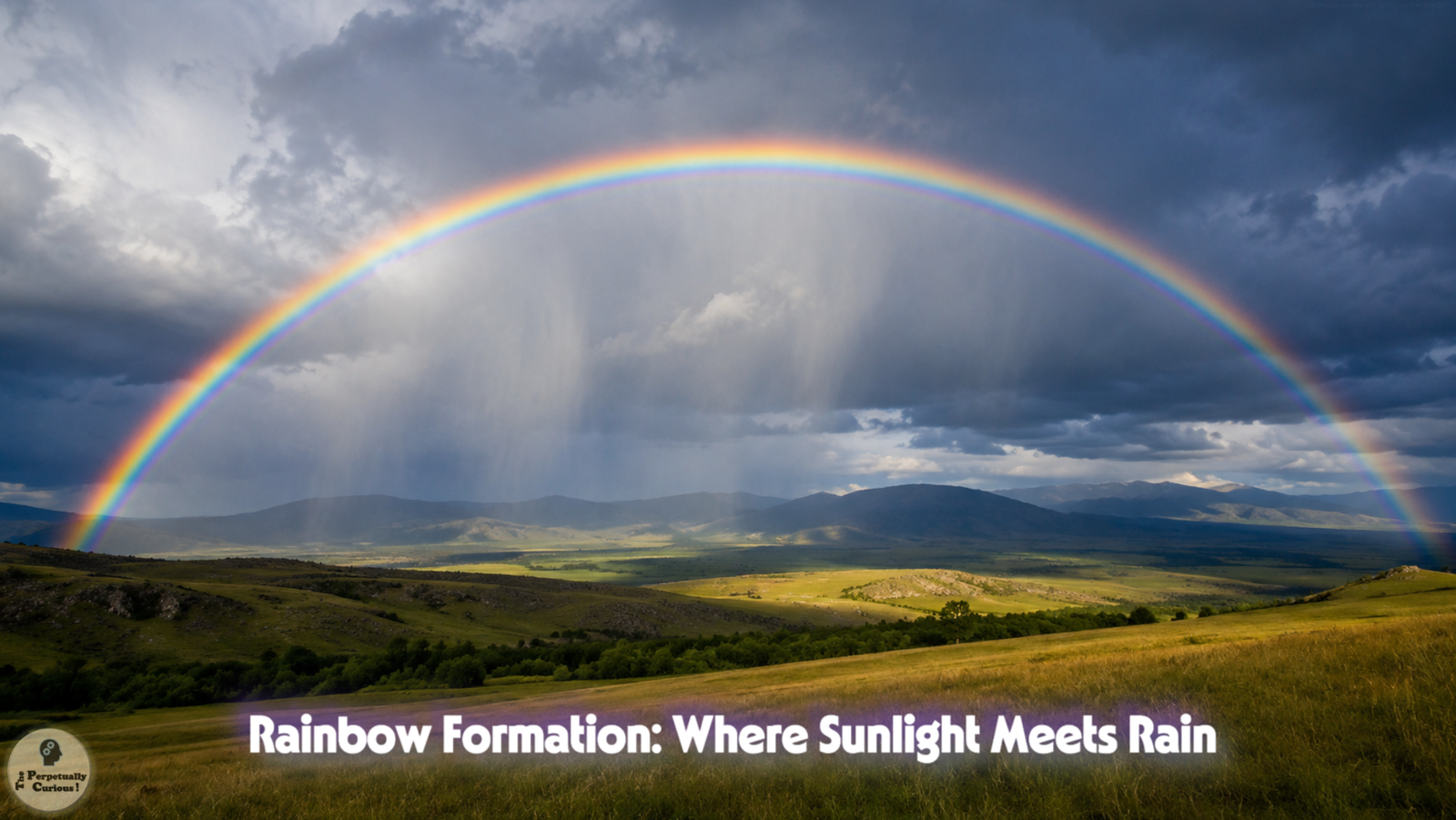
🌈 Rainbow Formation: Why Every Observer Sees a Different Arc
From section: A rainbow begins with a viewpointMost of those rays travel elsewhere.
- The Perpetually Curious! › Archives › Planet EarthArticle
Where Earth's Temperate Logic Ends: Understanding the Arctic Circle 🌐
During winter solstice, it never rises, creating one of Earth's most extraordinary thresholds.Read more »