Explore by topic, question, or idea. Find articles, reflections, videos, puzzles, and curiosity pathways gathered across the site.
Press Enter or select Search. A newly typed query starts globally; filters are applied only through the visible rail.
4 results for “small islands in the skin why moles form and why most stop growing”
- The Perpetually Curious! › Canonical › Environment & SustainabilityArticle
🌿 Liquid Trees: Microalgae Photobioreactors and the Quiet Art of Urban Breathing
Cities often carry a subtle heaviness in their air, shaped by traffic, heating, industry, construction, and the density of human activity. Into a small number of public spaces, designers have introduced an unfamiliar form of living technology: transparent vessels filled with…
- The Perpetually Curious! › Canonical › Environment & SustainabilityArticle
🔄 Tides of Plastic: Microplastic Pollution in the Oceans and Its Journey Back to Us
From section: Frequently Asked Questions+What are microplastics in the ocean? Microplastics are small plastic particles, typically smaller than about 0.2 inches (5 millimeters). They can form when larger plastic items break apart, or they can come from intentionally manufactured small particles, synthetic fibers, tire wear, coatings, and other sources.
- The Perpetually Curious! › Canonical › Environment & SustainabilityArticle
🕸️ Ghost Nets, Silent Drifters: How Lost Fishing Gear Haunts the Ocean
From section: 🔍 Seeing the unseen: why ghost nets can be hard to trackBecause ghost nets are both measurable and elusive, they lead naturally from description into reflection. To understand them, researchers must follow objects that drift, sink, tangle, fragment, and sometimes reappear, carrying traces of human activity into places most people never see.
- The Perpetually Curious! › Archives › Environment & SustainabilityArticle
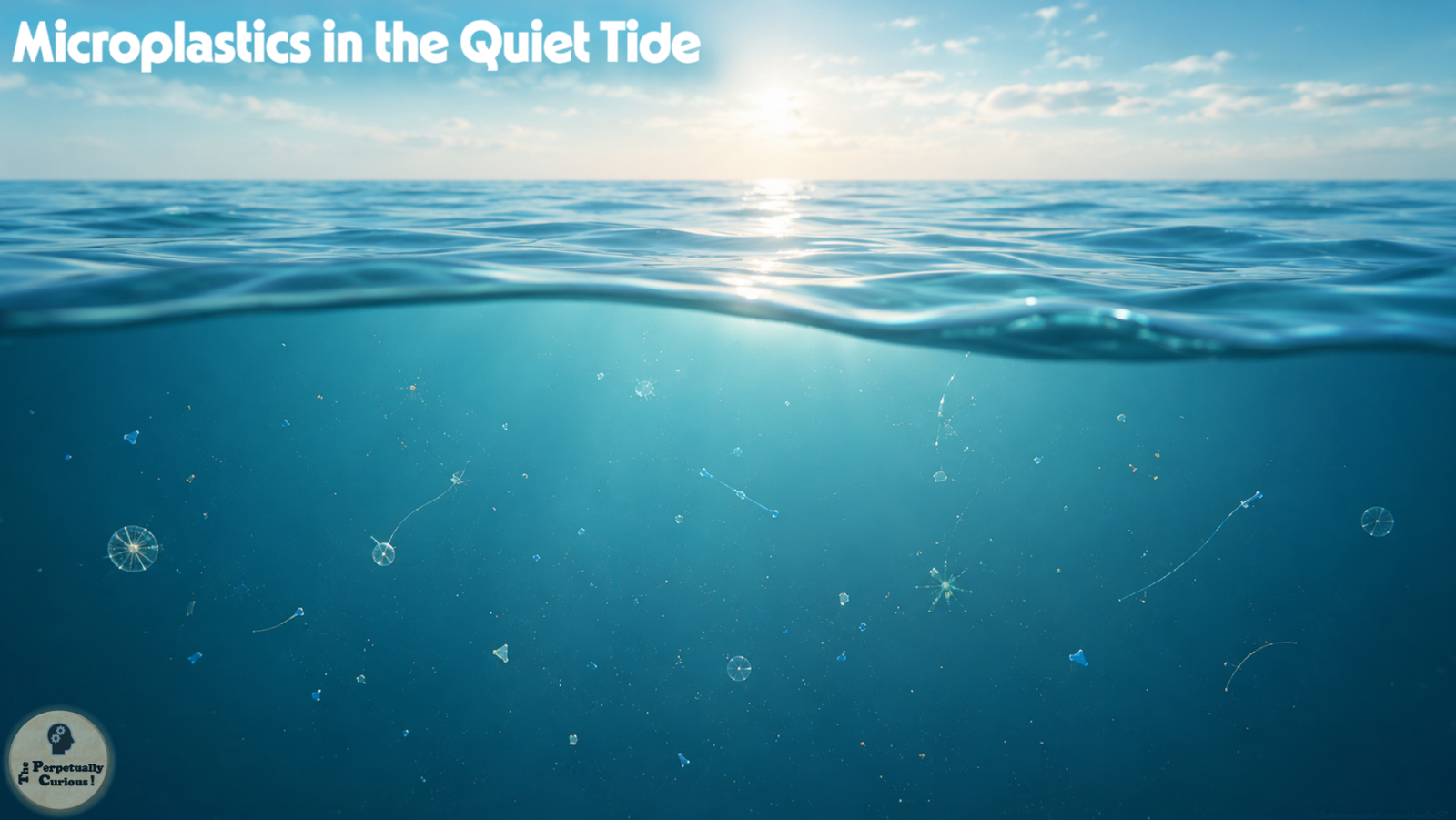
🌊 Microplastics in the Ocean: How Tiny Fragments Travel
From section: A small material with a long routeA small material with a long route The route from land to sea often begins quietly.