Explore by topic, question, or idea. Find articles, reflections, videos, puzzles, and curiosity pathways gathered across the site.
Press Enter or select Search. A newly typed query starts globally; filters are applied only through the visible rail.
10 results for “technology darkness”
- The Perpetually Curious! › Canonical › Cosmic ExplorationArticle
🌌 Why Space Looks Dark in a Universe Filled with Light: Understanding the Quiet Cosmos
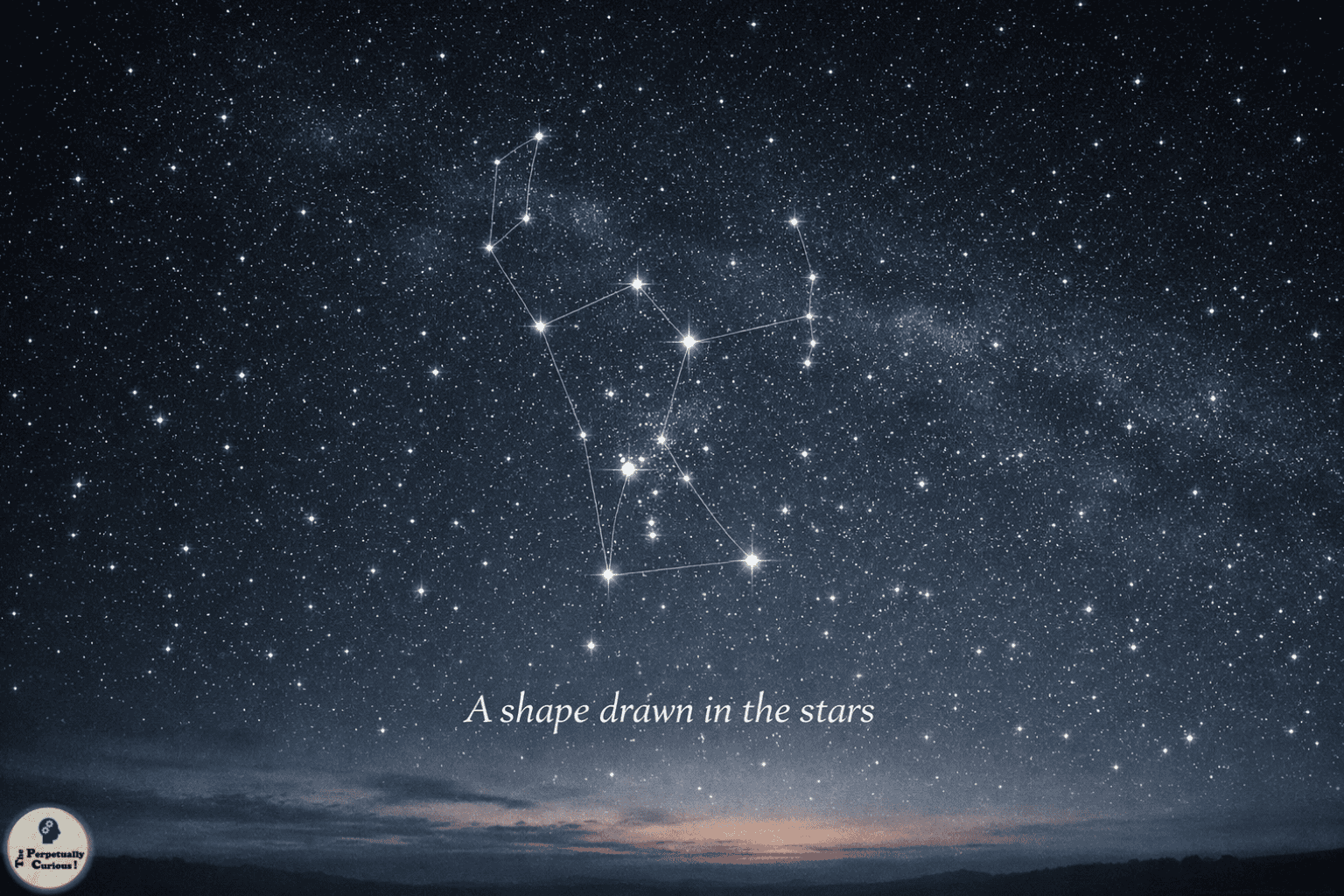
From section: 🌠 Seeing darkness with new understandingThe next time a night sky appears as a field of scattered stars on a dark background, it may carry a different meaning. The patterns people trace among those points belong to constellations, while the darkness between them belongs to light, distance, and the transparency of space.
- The Perpetually Curious! › Archives › Cosmic ExplorationArticle
Cosmic Eyes: How Humanity's Space Telescopes Unveil the Universe's Hidden Realms 🔭
The universe radiates stories across wavelengths our eyes cannot detect. From radio whispers to gamma-ray shouts, cosmic phenomena broadcast their secrets through an electromagnetic spectrum far broader than the narrow rainbow of human vision.
- The Perpetually Curious! › Archives › Cosmic ExplorationArticle
🌌 The Silent Storm Above: Understanding Our Orbital Debris Challenge
The night sky appears serene and infinite, yet beyond our atmosphere swirls an invisible tempest of our own making. ESA estimates about 140 million debris fragments in the 0.04 to 0.4 inch (1 mm to 1 cm) range, plus about 1.2 million objects between 0.4 and 4 inches (1 to 10…
- The Perpetually Curious! › Canonical › Cosmic ExplorationArticle
🌍 When Earth First Took Shape: A Planet Born from Cosmic Dust
Earth’s story begins in a quiet arm of the Milky Way, where a drifting cloud of gas and dust moved through darkness. Over time, gravity drew part of this cloud inward, creating a rotating structure that grew denser and hotter as it contracted. At the center, heat and pressure…
- The Perpetually Curious! › Canonical › Cosmic ExplorationArticle
🌙 Quiet Worlds, Vast Stories: Some Lesser-Known Moons of Our Solar System
Most sky‑watchers can name a handful of large moons such as Ganymede, Titan, or Earth’s own Moon, yet scattered across the outer darkness are smaller, quieter companions that rarely appear in familiar summaries. These lesser-known moons do not dominate by size.
- The Perpetually Curious! › Canonical › Cosmic ExplorationArticle
🌌 Borrowing the Orbits of Giants: How Gravity Assists Carry Spacecraft into the Deep
From section: 💡 Did You Know🧮 Michael Minovitch was among the early pioneers who formalized the mathematics of gravity assist trajectories in the 1960s, when he was a graduate student at UCLA. His calculations helped demonstrate that multi‑planet missions were achievable with existing technology.
- The Perpetually Curious! › Canonical › Cosmic ExplorationArticle
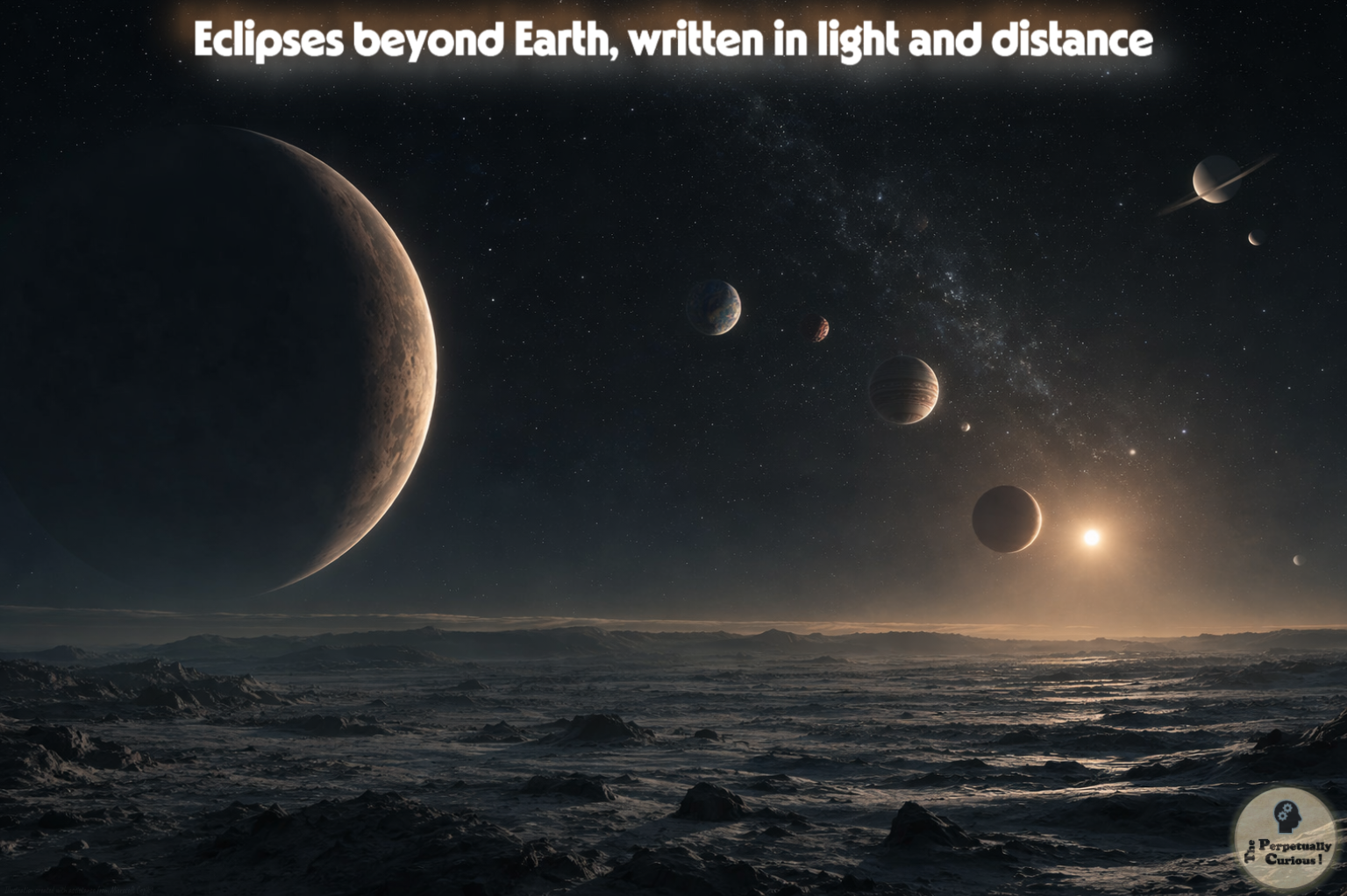
🌑 Shadows Across the Solar System: How Eclipses Unfold Beyond Earth
From section: 🌞 Solar eclipses across the Solar SystemSaturn’s rings also cast broad shadows across the planet’s atmosphere. These shadows shift with the seasons as the angle of sunlight changes, creating a layered interplay of light and darkness. …
- The Perpetually Curious! › Archives › Cosmic ExplorationArticle
🌞 The Solar Wind: When the Sun Breathes Across Space
Though invisible to our eyes, this cosmic current shapes Earth’s environment, drives space weather, and even fuels storms that can disrupt technology on Earth, and it is why space‑weather forecasters watch the Sun every day.
- The Perpetually Curious! › Archives › Cosmic ExplorationArticle
🌘 Eclipses Across the Solar System: When Shadows Travel
From section: Atmosphere, rings, and distanceThe shadow is never only darkness.
- The Perpetually Curious! › Archives › Cosmic ExplorationArticle
🌌 Constellations: How Star Patterns Help Us Find Our Way
From section: Why orientation needs memoryHere, the focus stays with the first act of recognition: seeing a pattern, remembering it, and using it to find a way through darkness.