Explore by topic, question, or idea. Find articles, reflections, videos, puzzles, and curiosity pathways gathered across the site.
Press Enter or select Search. A newly typed query starts globally; filters are applied only through the visible rail.
34 results for “the ancient art of fermentation a global journey through cultured foods”
- The Perpetually Curious! › Canonical › Cosmic ExplorationArticle
🌌 The Hunt for the Invisible: Understanding Dark Matter Through Science’s Greatest Detective Story
In the quiet architecture of the cosmos, unseen matter shapes the paths of galaxies and the stories they tell.Its presence is felt in every curve of starlight, a patient influence woven through the structure of space.We stand within this vast design, aware of only a fraction of what holds the universe together.
- The Perpetually Curious! › Archives › Cosmic ExplorationArticle
💫 When Galaxies Feast: The Quiet Art of Cosmic Cannibalism
Galaxies often appear serene when viewed from a distance, as if they drift through the universe in gentle isolation. Yet their histories are shaped by encounters that unfold over immense spans of time. These encounters are not always dramatic or violent.
- The Perpetually Curious! › Archives › Cosmic ExplorationArticle
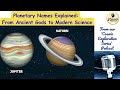
🌌 Planetary Names Explained: From Ancient Gods to Modern Science
💡 Have you ever wondered why the planets in our solar system bear such distinctive names? From swift Mercury to majestic Jupiter, these names reflect ancient traditions that connect cultural understanding with the science of the skies. Read more »
- The Perpetually Curious! › Archives › Cosmic ExplorationArticle
The Asteroid Belt: Ancient Fragments of Our Solar System's Story 🌌
On New Year's Day 1801, Italian astronomer Giuseppe Piazzi made a discovery that would transform our understanding of the solar system. While searching for a suspected planet between Mars and Jupiter, he found something else entirely: the first of millions of rocky fragments…
- The Perpetually Curious! › Videos & Podcasts › Cosmic ExplorationPodcast
🌌 Planetary Names Explained: From Ancient Gods to Modern Science | Cosmic Exploration Series Podcast
#PlanetNames #SolarSystem #Astronomy 🪐 Why are the planets named Mercury, Venus, Earth, Mars, Jupiter, Saturn, Uranus, and Neptune? This astronomy podcast explores the origins and meanings of the planet names in our solar system, revealing how ancient observation, mythology…
- The Perpetually Curious! › Archives › Cosmic ExplorationArticle
Where the Solar System Whispers Its Secrets: A Journey to the Kuiper Belt 🌌
Like a library written in ice, each world preserves a different chapter of our solar system's ancient history.Read more »
- The Perpetually Curious! › Canonical › Cosmic ExplorationArticle
🌍 When Worlds Pull: Gravity Across the Planets and What It Reveals About Them
Gravity moves through every world with its own quiet signature, shaping how each planet holds its place in the dark.Across these distant spheres, the same pull becomes a different story.In that silent exchange, the architecture of motion reveals itself.
- The Perpetually Curious! › Canonical › Cosmic ExplorationArticle
🌑 Shadows Across the Solar System: How Eclipses Unfold Beyond Earth
From section: 🤝 Sharing the wonder, one sky at a timeIf this journey through eclipses across the Solar System has sparked curiosity or offered a new perspective, your decision to share it may help others discover the same sense of quiet awe. Each shared link becomes a small reflection of the larger cosmic alignments that inspired these words.
- The Perpetually Curious! › Canonical › Cosmic ExplorationArticle
🌌 Why Space Looks Dark in a Universe Filled with Light: Understanding the Quiet Cosmos
Light moves through the quiet of space and waits for a surface to answer it. The rest remains open and unlit, a depth that holds its silence.
- The Perpetually Curious! › Canonical › Cosmic ExplorationArticle
The Cosmic Recipe: Understanding the Physical Criteria for Star Formation 🌟
From section: 💧 The essential fuel: hydrogen… Hydrogen, the most abundant element in the universe, serves as the primary fuel during the main-sequence phase. Through a sequence of nuclear reactions, hydrogen nuclei ultimately combine to form helium, releasing energy because the final products have slightly less mass than the starting particles.