Explore by topic, question, or idea. Find articles, reflections, videos, puzzles, and curiosity pathways gathered across the site.
Press Enter or select Search. A newly typed query starts globally; filters are applied only through the visible rail.
21 results for “the living colors of tradition where chemistry meets cultural wisdom in natural dyes”
- The Perpetually Curious! › Archives › Cosmic ExplorationArticle
The Moon's Ancient Dance: Understanding Lunar Phases Through Science and Story 🌙
Every approximately 29.5 days, Earth’s sole natural satellite completes a shape-shifting performance that has captivated humanity since our species first gazed skyward.
- The Perpetually Curious! › Canonical › Cosmic ExplorationArticle
🌟 Brown Dwarfs: Between Giant Planets and the Smallest Stars
From section: 🌡️ From L to T to Y: Atmospheres in transition… Its two components, classified approximately as L7.5 and T0.5, complete a mutual orbit in about 27 years. Because the pair spans the boundary between the L and T classes, it provides an especially valuable laboratory for examining how cloud structure and atmospheric chemistry change across that transition.
- The Perpetually Curious! › Archives › Cosmic ExplorationArticle
The Universe's Greatest Mystery: Why You Exist at All 🌌
The Cosmic Coin Flip That Created Everything In the universe's first moments after the Big Bang, the universe played a game of annihilation that should have left nothing behind. Matter met antimatter in a cosmic battlefield, particle pairs destroying each other in perfect flashes of pure energy.
- The Perpetually Curious! › Canonical › Cosmic ExplorationArticle
🌍 When Worlds Pull: Gravity Across the Planets and What It Reveals About Them
From section: Frequently Asked Questions+… Magnetic fields can influence some charged-particle processes, but they are not a simple guarantee that an atmosphere will be retained. A broader treatment of these interacting factors appears in why Earth has a living atmosphere.
- The Perpetually Curious! › Canonical › Cosmic ExplorationArticle
🌌 Borrowing the Orbits of Giants: How Gravity Assists Carry Spacecraft into the Deep
From section: 💡 Did You Know☄️ Comets and asteroids also experience natural gravity assists. When a small body passes near a planet, its orbit can be altered significantly over long timescales.
- The Perpetually Curious! › Canonical › Cosmic ExplorationArticle
🌙 Quiet Worlds, Vast Stories: Some Lesser-Known Moons of Our Solar System
From section: 🔭 Why lesser-known moons matterAfter learning about the largest moons, it is natural to wonder what lies beyond the giants. Smaller moons may seem modest at first glance, yet they often preserve clues about the early solar system. …
- The Perpetually Curious! › Archives › Cosmic ExplorationArticle
🔭 The Ten Largest Moons in Our Solar System: A Journey Through Worlds of Ice, Fire, and Hidden Oceans
The long tradition of naming these worlds after mythological figures reflects the cultural patterns embedded in planetary names, which often mirror the stories humans have projected onto the night sky.Read more »
- The Perpetually Curious! › Archives › Cosmic ExplorationArticle
🌌 Planetary Names Explained: From Ancient Gods to Modern Science
💡 Have you ever wondered why the planets in our solar system bear such distinctive names? From swift Mercury to majestic Jupiter, these names reflect ancient traditions that connect cultural understanding with the science of the skies. Read more »
- The Perpetually Curious! › Archives › Cosmic ExplorationArticle
☀️ Solar Eclipses Explained: The Dance of Shadow and Light
This article follows the journey of a solar eclipse from its basic geometry to its cultural meaning and scientific significance, weaving each section into a single narrative that explores how shadow and light shape our understanding of the cosmos and why this rare alignment has inspired observers across time.Read more…
- The Perpetually Curious! › Archives › Cosmic ExplorationArticle
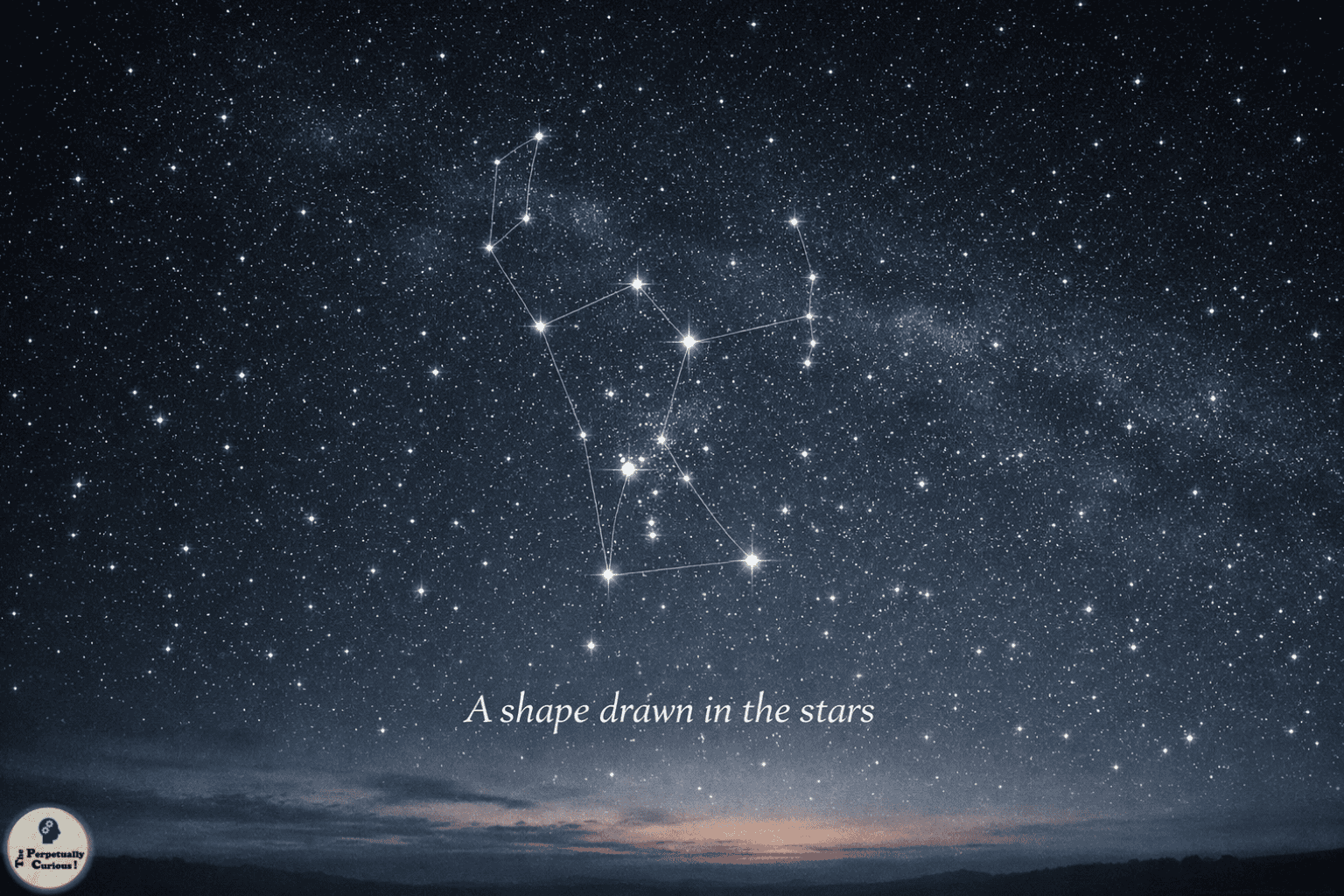
🌌 Constellations: How Star Patterns Help Us Find Our Way
From section: Why orientation needs memoryFor the wider trail on our main site, the discussion opens beyond orientation into cultural sky traditions, the eighty-eight official regions of modern astronomy, changing stellar motion, and FAQ-level distinctions.