Explore by topic, question, or idea. Find articles, reflections, videos, puzzles, and curiosity pathways gathered across the site.
Press Enter or select Search. A newly typed query starts globally; filters are applied only through the visible rail.
4 results for “the living colors of tradition where chemistry meets cultural wisdom in natural dyes”
- The Perpetually Curious! › Canonical › Environment & SustainabilityArticle
🌿 Liquid Trees: Microalgae Photobioreactors and the Quiet Art of Urban Breathing
From section: 💡 Did You Know🧪 Photosynthesis can alter the chemistry of the culture medium as microalgae consume dissolved inorganic carbon. Operators may therefore track pH alongside dissolved oxygen, temperature, and culture density to understand how conditions inside the living culture are changing.
- The Perpetually Curious! › Canonical › Environment & SustainabilityArticle
🔄 Tides of Plastic: Microplastic Pollution in the Oceans and Its Journey Back to Us
From section: 💡 Did You Know?🧬 Microplastics can shape microbial communities The plastisphere hosts microbial communities that may differ from those found on natural particles. …
- The Perpetually Curious! › Canonical › Environment & SustainabilityArticle
🕸️ Ghost Nets, Silent Drifters: How Lost Fishing Gear Haunts the Ocean
From section: 💡 Did You Know?🧫 Microorganisms can form biofilms on ghost nets. These thin living layers may change how other organisms colonize the net’s surface, creating tiny biological microenvironments on a piece of plastic debris.
- The Perpetually Curious! › Archives › Environment & SustainabilityArticle
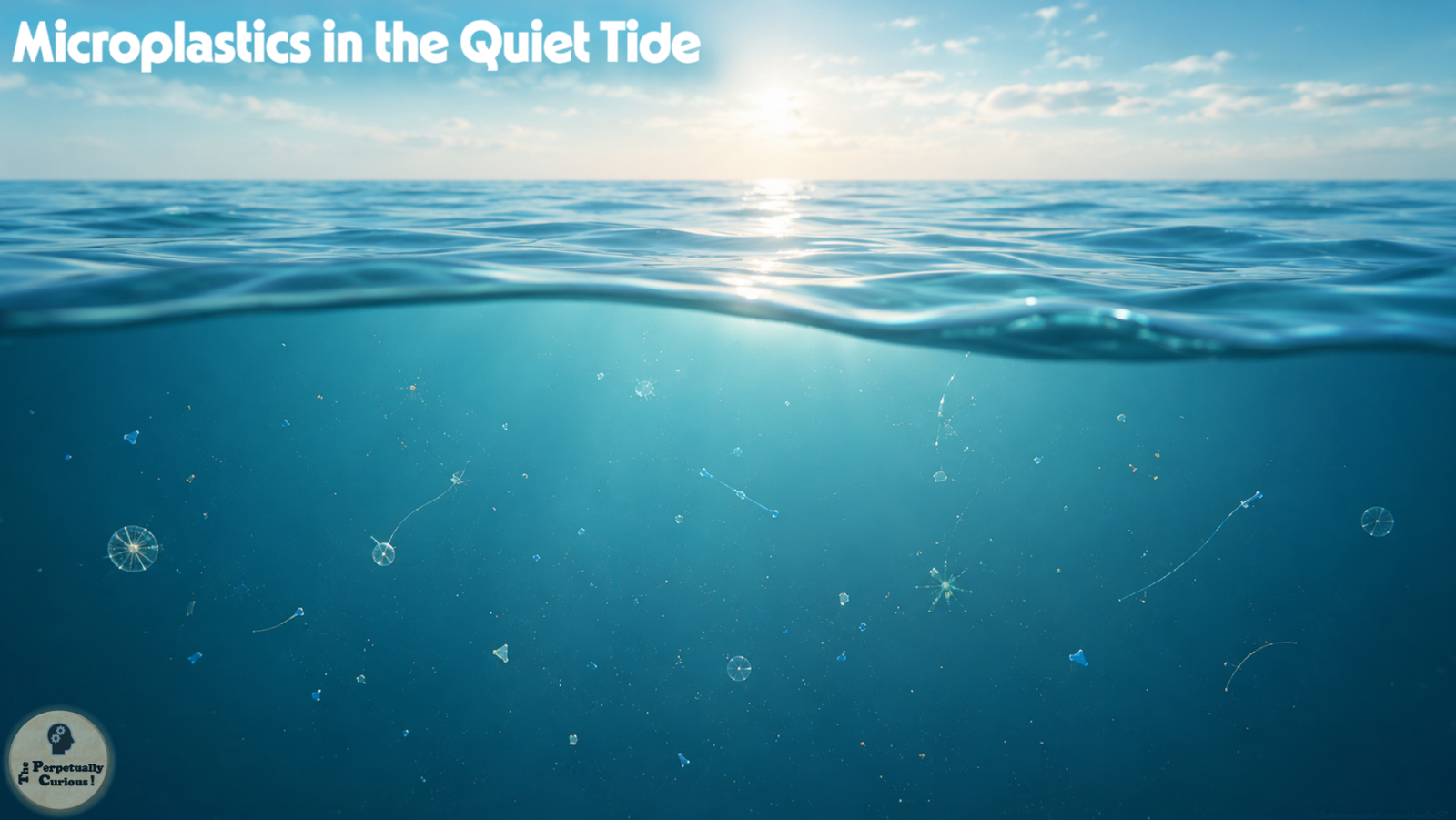
🌊 Microplastics in the Ocean: How Tiny Fragments Travel
Microplastics in the ocean are not only small pieces of plastic. They are mobile fragments, shaped by weathering, water movement, and the living systems they pass through.