Explore by topic, question, or idea. Find articles, reflections, videos, puzzles, and curiosity pathways gathered across the site.
Press Enter or select Search. A newly typed query starts globally; filters are applied only through the visible rail.
5 results for “the second brain speaks first when parkinson disease begins in your belly”
- The Perpetually Curious! › Canonical › Environment & SustainabilityArticle
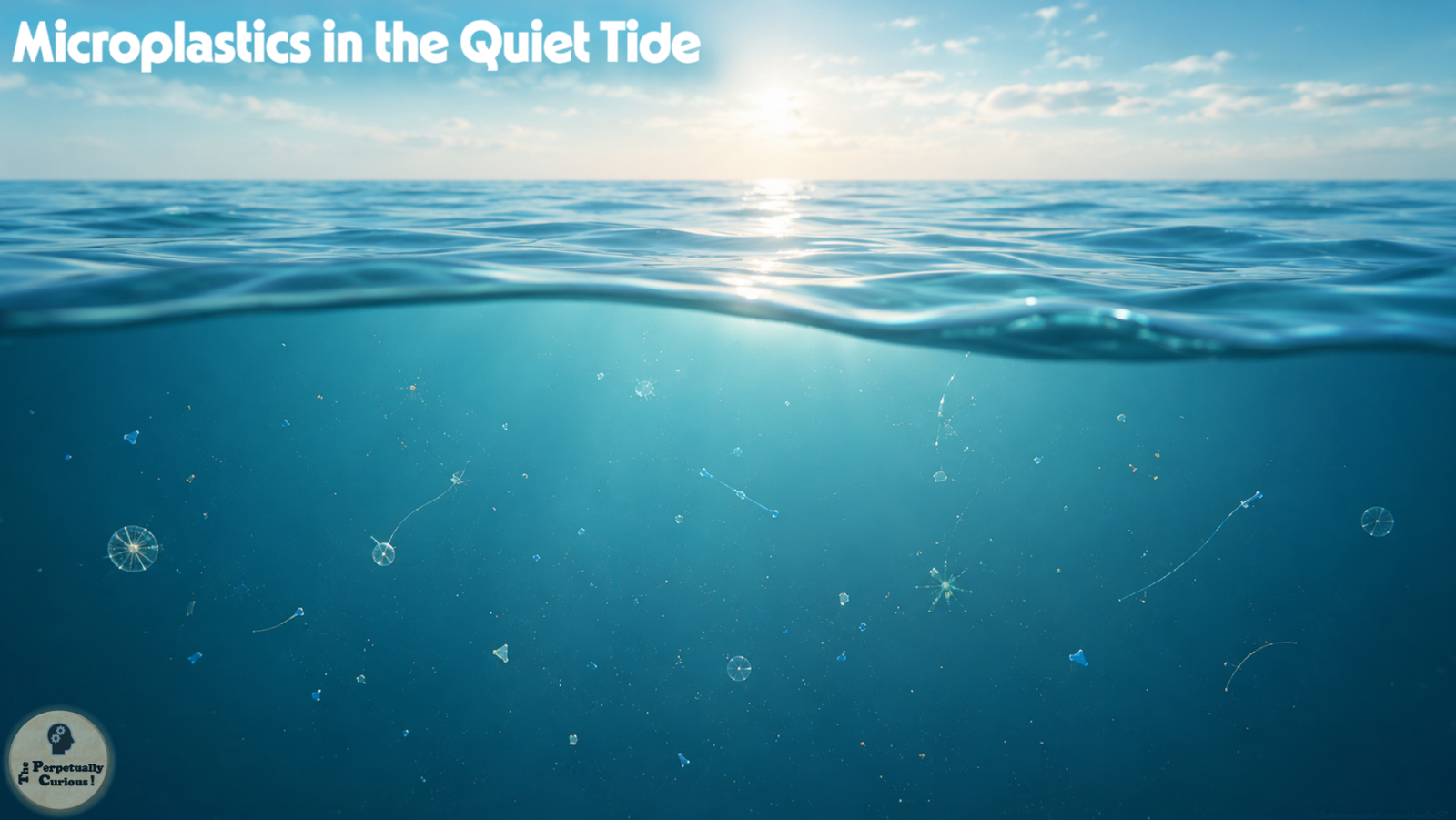
🔄 Tides of Plastic: Microplastic Pollution in the Oceans and Its Journey Back to Us
Their journey begins with movement. Plastic fragments leave roads, rivers, shorelines, vessels, and cities, then enter waters that do not hold still. …
- The Perpetually Curious! › Canonical › Environment & SustainabilityArticle
🕸️ Ghost Nets, Silent Drifters: How Lost Fishing Gear Haunts the Ocean
The story begins with a quiet contradiction: a net can be lost to people while still functioning in the sea. To understand why, we first have to look at the materials that allow fishing nets to linger beyond their purpose.
- The Perpetually Curious! › Canonical › Environment & SustainabilityArticle
🌿 Liquid Trees: Microalgae Photobioreactors and the Quiet Art of Urban Breathing
The answer begins with photosynthesis, but it extends into engineering, maintenance, measurement, and the limits of comparison. …
- The Perpetually Curious! › Archives › Environment & SustainabilityArticle
🌊 Microplastics in the Ocean: How Tiny Fragments Travel
In each case, a human-made material begins to join the ordinary motion of the ocean.
- The Perpetually Curious! › Archives › Environment & SustainabilityArticle
From Rainforest Floor to Landfill Core: How Nature's Decomposers Are Learning to Eat Our Plastic Problem 🍄
This was humanity's first encounter with Pestalotiopsis microspora's remarkable ability: a common rainforest fungus that could break down plastic without oxygen.