Explore by topic, question, or idea. Find articles, reflections, videos, puzzles, and curiosity pathways gathered across the site.
Press Enter or select Search. A newly typed query starts globally; filters are applied only through the visible rail.
275 results for “the ten largest moons in our solar system a journey through worlds of ice fire and hidden oceans”
- The Perpetually Curious! › Canonical › Wilderness & Homestead CreaturesArticle
🌺 Whispers of Tiny Wings: Hummingbirds, Their Lives, and the Science of Small Flight
From section: 🌸 Partners in pollination and ecosystem dynamicsThe chemistry of nectar shapes how hummingbirds interact with flowers, influencing which plants they visit and how energy flows through these ecological networks. …
- The Perpetually Curious! › Canonical › Planet EarthArticle
🌊 Where the Waves Leave Their Footprints: Why Beaches Carry Sand
From section: ⛰️ The Birth of SandMuch beach sand begins its life as part of a larger rock. Mountains, cliffs, and ancient bedrock slowly break down through the combined effects of mechanical and chemical weathering. Mechanical weathering includes processes such as freeze‑thaw cycles, abrasion, and the grinding action of moving water. …
- The Perpetually Curious! › Archives › Cosmic ExplorationArticle
Cosmic Eyes: How Humanity's Space Telescopes Unveil the Universe's Hidden Realms 🔭
The universe radiates stories across wavelengths our eyes cannot detect. From radio whispers to gamma-ray shouts, cosmic phenomena broadcast their secrets through an electromagnetic spectrum far broader than the narrow rainbow of human vision.
- The Perpetually Curious! › Archives › Cosmic ExplorationArticle
The Moon's Ancient Dance: Understanding Lunar Phases Through Science and Story 🌙
Every approximately 29.5 days, Earth’s sole natural satellite completes a shape-shifting performance that has captivated humanity since our species first gazed skyward.
- The Perpetually Curious! › Canonical › Biology & HealthArticle
😮💨 When A Breath Becomes a Yawn: Why We Yawn and What This Quiet Reflex May Reveal
This article follows the path of that window. It begins with the physical mechanics of yawning, then moves into scientific ideas about its possible functions, explores why yawns sometimes ripple through groups, and looks at yawning in early life and across species. …
- The Perpetually Curious! › CanonicalGateway
🌍 Planet Earth | ✍️ Articles
Earth’s systems, landscapes, and natural forces that shape our world This collection explores Earth’s systems, landscapes, and natural forces through clear, scientific narratives that trace geology, oceans, climate, and the dynamic processes that shape our planet from the inside out.
- The Perpetually Curious! › Archives › Cosmic ExplorationArticle
Lunar Regolith: The Moon's Ancient Chronicle Written in Dust 🌙
From section: Opening Reflection ✨Far more than simple dust, regolith represents one of the most extraordinary geological archives in our solar system, preserving stories that Earth's active surface has long since erased.
- The Perpetually Curious! › Archives › Environment & SustainabilityArticle
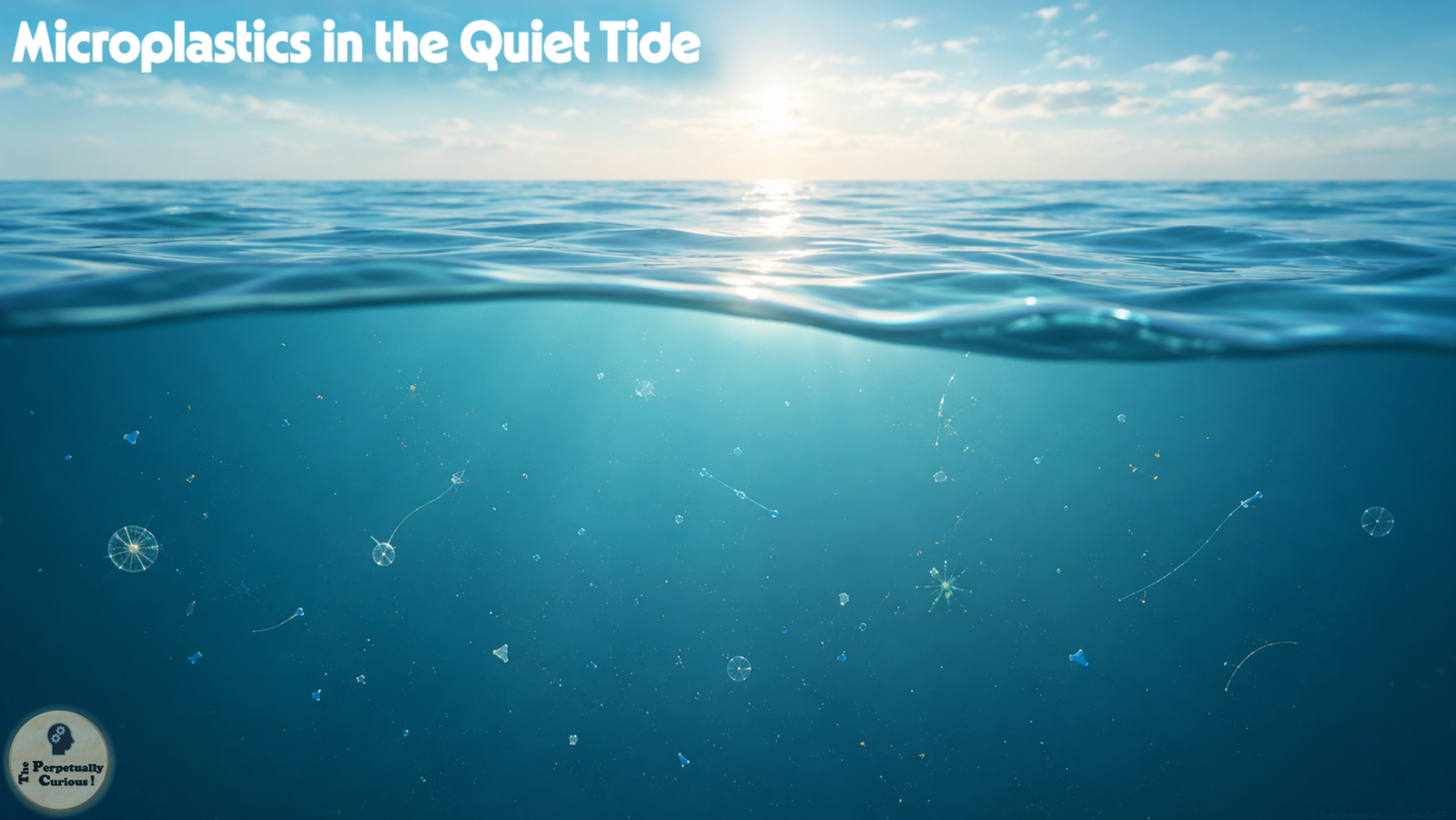
🌊 Microplastics in the Ocean: How Tiny Fragments Travel
Microplastics in the ocean are not only small pieces of plastic. They are mobile fragments, shaped by weathering, water movement, and the living systems they pass through.
- The Perpetually Curious! › Archives › Cosmic ExplorationArticle
🌋 Io: Jupiter’s Volcanic Moon
Sculpted by gravity and painted in sulfur, Io is a volcanic world of mountains and sulfur storms, its restless heart forever beating with tidal fire. Read more »
- The Perpetually Curious! › Canonical › Biology & HealthArticle
🌫️ Why We Get Hiccups: The Reflex Beneath Every Small “Hic”
… First comes the physical event itself: a sudden muscular contraction, a quick interruption of airflow, and the familiar “hic.” Beneath that small interruption is a wider story about breath, timing, reflexes, and the nervous system’s ability to coordinate the body in fractions of a second.