Explore by topic, question, or idea. Find articles, reflections, videos, puzzles, and curiosity pathways gathered across the site.
Press Enter or select Search. A newly typed query starts globally; filters are applied only through the visible rail.
29 results for “the ten largest moons in our solar system a journey through worlds of ice fire and hidden oceans”
- The Perpetually Curious! › Canonical › Planet EarthArticle
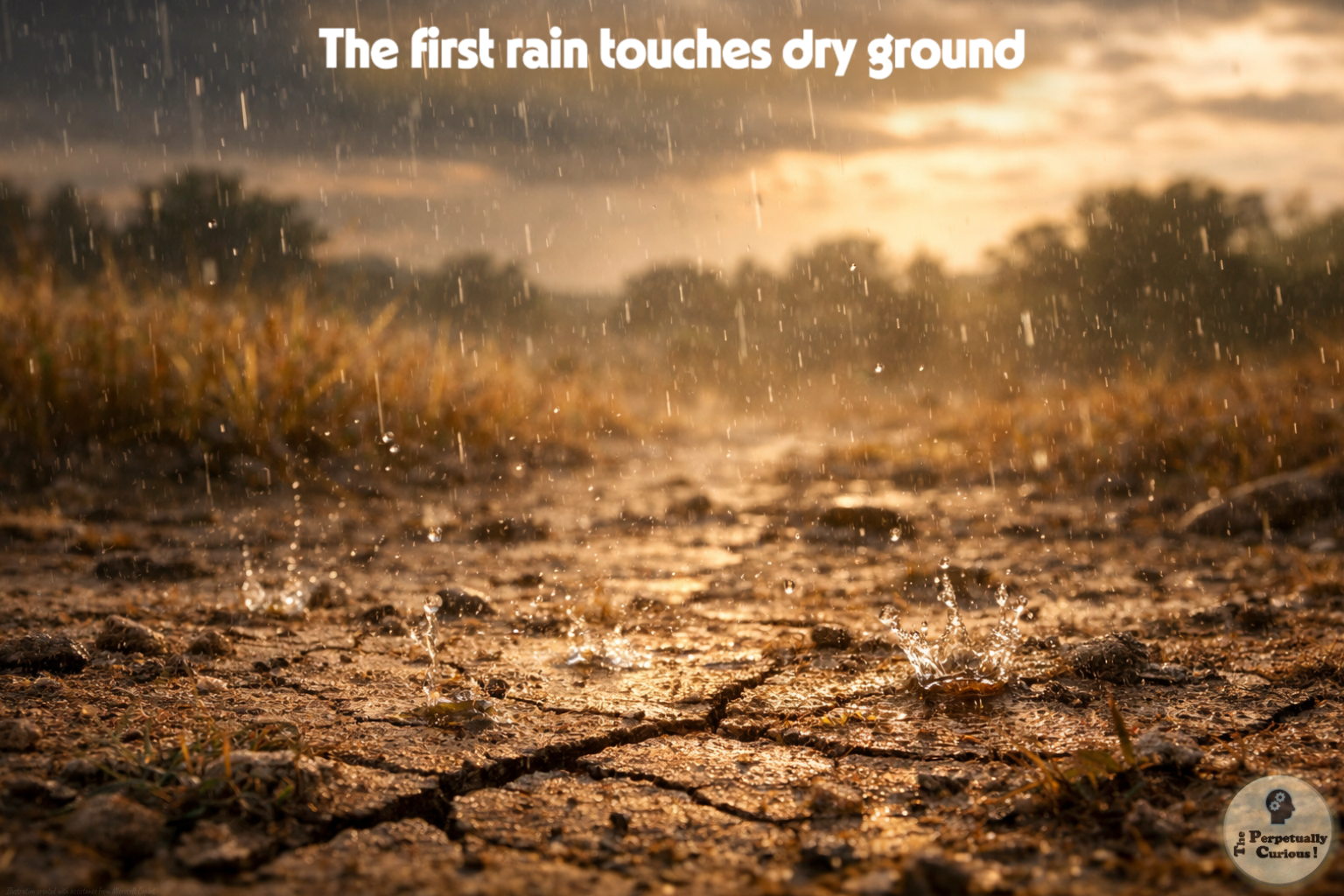
🌧️ When Earth Begins to Breathe: Why Rain Smells the Way It Does
From section: 🪐 Petrichor across planets and moonsThe diversity of extraterrestrial precipitation across the solar system highlights how unusual Earth’s rain truly is. Each world has its own form of rainfall, but none produce the familiar scent that rises from Earth’s living soil.
- The Perpetually Curious! › Canonical › Planet EarthArticle
🌏 When the Pacific Breathes Warm: El Niño and the Changing Rhythms of Rain
From section: 💡 Did you know?🗓️ El Niño does not follow a fixed timetable. Events recur irregularly, generally every two to seven years. Many begin developing during Northern Hemisphere spring or summer, strengthen through autumn, and reach their greatest intensity during winter, but their duration and seasonal evolution vary.
- The Perpetually Curious! › Canonical › Planet EarthArticle
🏔️ Mount Kailash: A Summit Where Water, Story, and Sky Converge
From section: 🚶 The Kailash Kora: Walking a circle of meaningThe Kora transforms belief into movement. It is a physical journey that reflects inner intention, and it is also a way of experiencing the landscape in a continuous circle, where each step reveals new angles of rock, ice, and sky.
- The Perpetually Curious! › Canonical › Planet EarthArticle
🌊 How Nor’easters Form: When the Coast Becomes a Storm Engine
From section: 🌡️ Where cold land air meets a milder oceanAs moist air rises, it cools, and cloud droplets or ice crystals can grow. Some of the cloud processes that form rain can also begin precipitation that reaches the ground as snow. Temperatures through the air below the clouds help determine what finally reaches a particular place.
- The Perpetually Curious! › Canonical › Planet EarthArticle
🌑 How Coal Is Formed: The Slow Birth of Black Stone Across Deep Time
A quiet patience moves through every coal seam, carrying the memory of forests that once breathed beneath ancient skies. In its dark layers, time settles gently, holding the shapes of roots and waters that have long since passed away. …
- The Perpetually Curious! › Canonical › Planet EarthArticle
🌈 When Sunlight Paints the Rain: The Quiet Geometry of Rainbow Formation
Rainbows often arrive with a sense of gentle timing, appearing just as a storm begins to loosen its hold on the sky. Sunlight returns through thinning clouds, rain still hangs in the distance, and an arc of color seems to gather between them.
- The Perpetually Curious! › Archives › Planet EarthArticle
🌊 The Great Lakes: North America's Temporary Inland Seas
This remarkable journey reveals just one facet of North America's inland seas, a system containing 21% of the world's surface freshwater within basins carved by ice and shaped by time.Read more »
- The Perpetually Curious! › Archives › Planet EarthArticle
🌧️ Petrichor: How First Rain Lifts Earth’s Hidden Scent
From section: When raindrops become tiny scent liftersAs those pockets rise through the droplet and burst, they can release fine aerosol particles into the air.
- The Perpetually Curious! › Canonical › Planet EarthArticle
🌊 Where the Waves Leave Their Footprints: Why Beaches Carry Sand
From section: ⛰️ The Birth of SandMuch beach sand begins its life as part of a larger rock. Mountains, cliffs, and ancient bedrock slowly break down through the combined effects of mechanical and chemical weathering. Mechanical weathering includes processes such as freeze‑thaw cycles, abrasion, and the grinding action of moving water. …
- The Perpetually Curious! › Archives › Planet EarthArticle
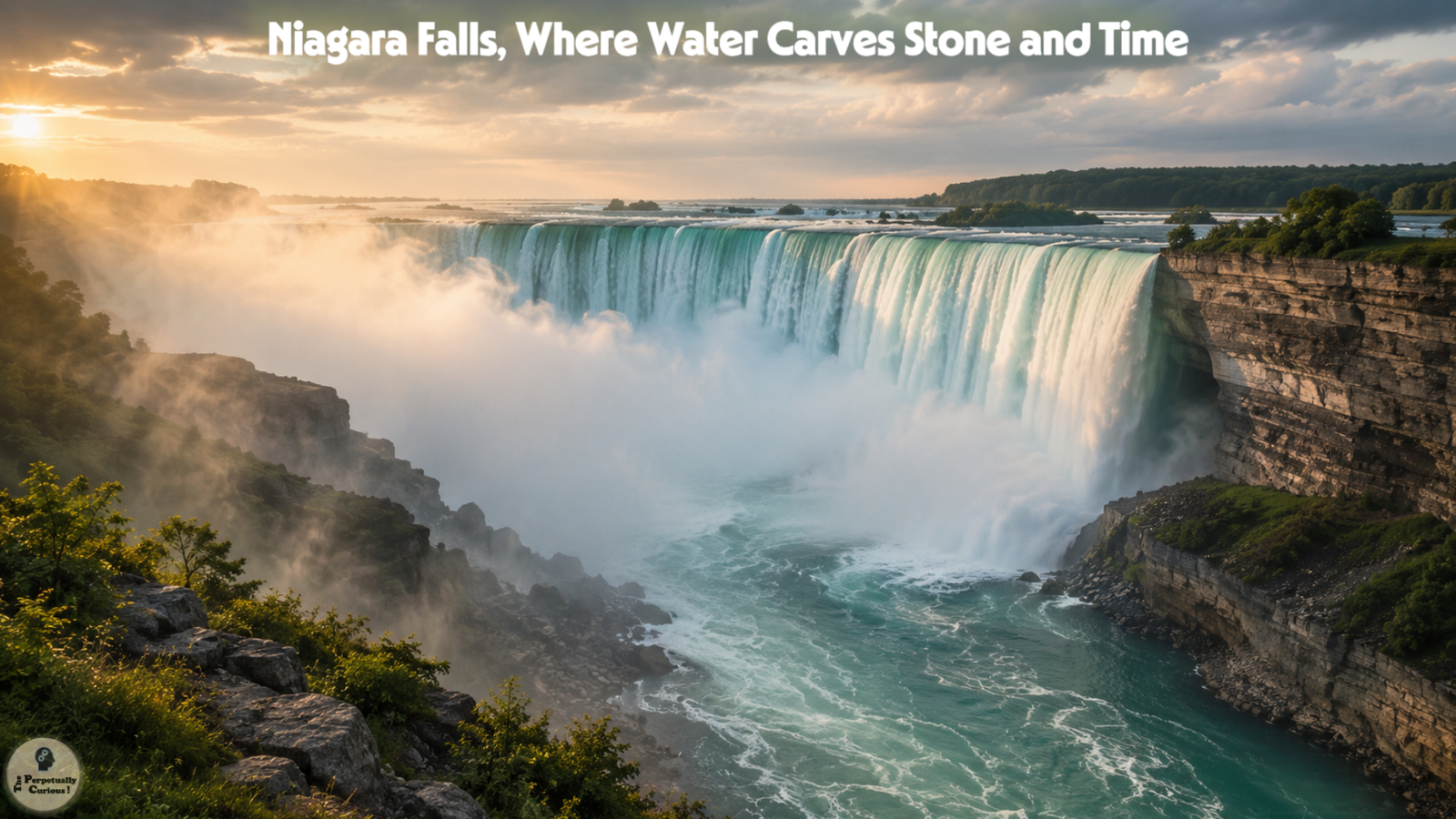
🌊 Niagara Falls Facts: How Water Turns Stone Into Time
When Niagara Falls first appears through its mist, it can feel like a single spectacular drop. But the falls are better understood as a place where a much larger water system briefly becomes visible. The water is not arriving from nowhere.