Explore by topic, question, or idea. Find articles, reflections, videos, puzzles, and curiosity pathways gathered across the site.
Press Enter or select Search. A newly typed query starts globally; filters are applied only through the visible rail.
20 results for “two wasp approaches to securing the next generation builders vs infiltrators in nature”
- The Perpetually Curious! › Canonical › Cosmic ExplorationArticle
🌌 Why Space Feels Cold Among So Many Suns: The Quiet Physics of Cosmic Warmth
From section: 🌡 What temperature really means in the cosmosWhat changes in interplanetary and interstellar space is not the existence of temperature, but the rate and pathways through which energy can be exchanged. To understand why highly energetic particles may still provide little heating, we must look next at the sparse matter occupying what we call the vacuum of space.
- The Perpetually Curious! › Archives › Cosmic ExplorationArticle
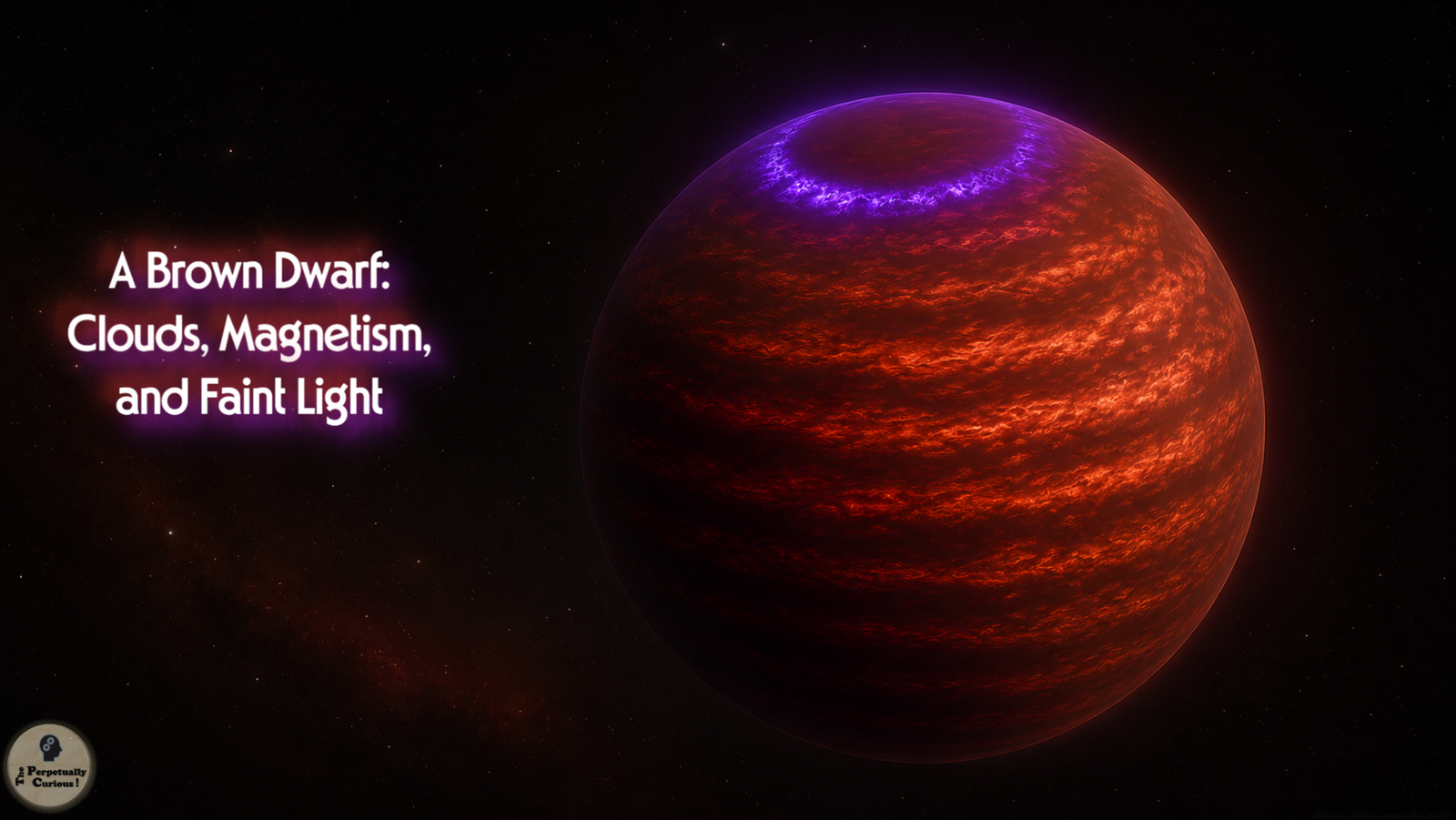
🌟 Brown Dwarfs: Why Stellar Ignition Never Takes Hold
A brown dwarf begins with a question that gravity cannot answer by itself. As gas contracts, the interior grows denser and hotter. Yet heating alone does not make a star.
- The Perpetually Curious! › Canonical › Cosmic ExplorationArticle
🌌 The Hunt for the Invisible: Understanding Dark Matter Through Science’s Greatest Detective Story
That tension gives dark matter its detective-story quality. The clues did not arrive from one instrument or one generation. They accumulated across galaxy motions, colliding clusters, gravitational lensing, the cosmic microwave background, and increasingly sensitive underground experiments. …
- The Perpetually Curious! › Archives › Cosmic ExplorationArticle
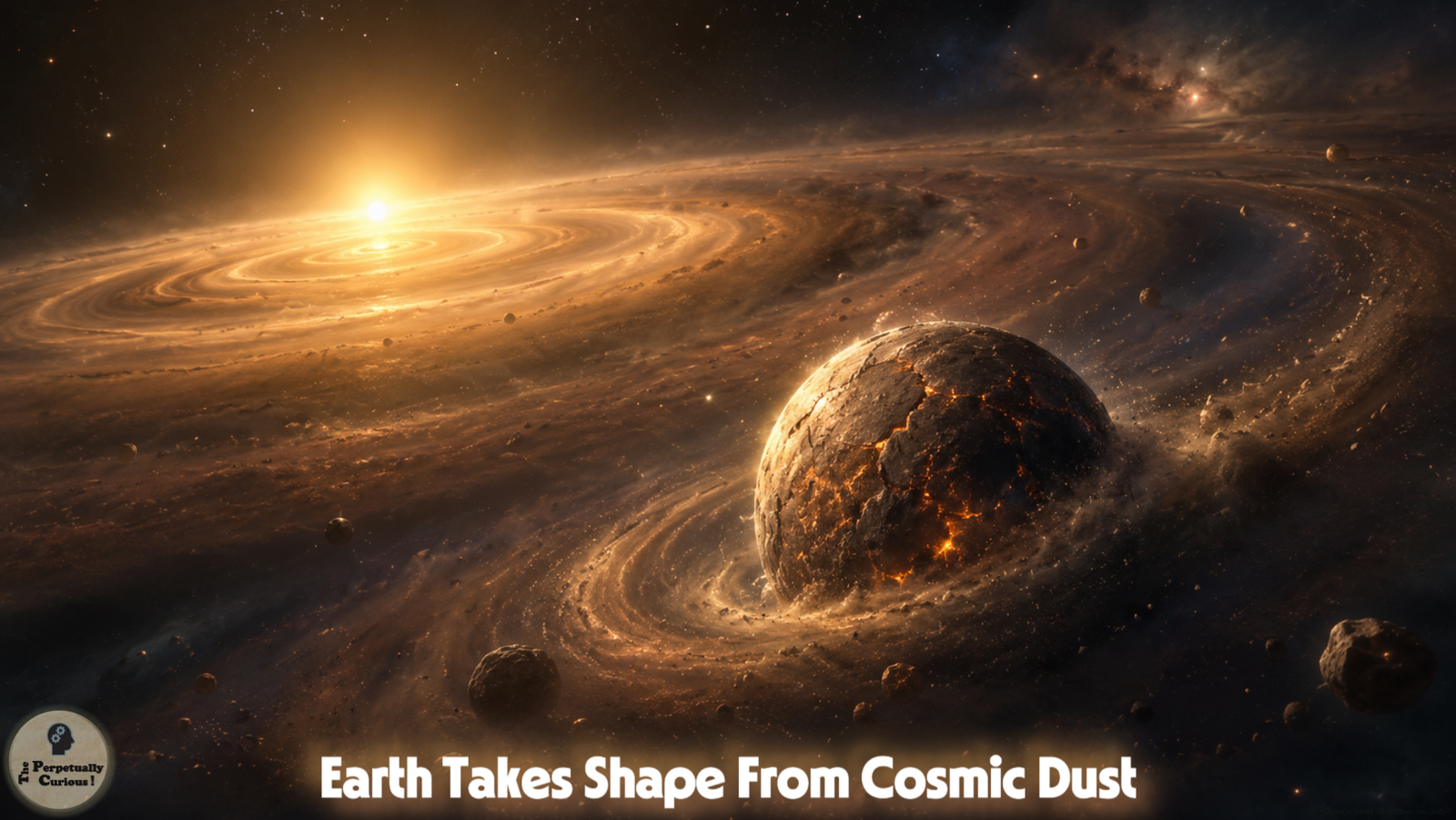
🌍 How Earth Formed: The Slow Assembly of a Young Rocky World
From section: A Planet Built Through ContinuityAccretion provided the substance of the planet and the energy that carried it into its next state.
- The Perpetually Curious! › Canonical › Cosmic ExplorationArticle
🌟 Brown Dwarfs: Between Giant Planets and the Smallest Stars
From section: 🔭 How brown dwarfs came into viewTwo discoveries in 1995 marked the decisive transition from prediction to observation. Teide 1, found in the Pleiades star cluster, emerged as one of the first confirmed brown dwarfs, with the later detection of lithium confirming its substellar nature. …
- The Perpetually Curious! › Archives › Cosmic ExplorationArticle
The Universe's Ancient Whisper: Decoding the Cosmic Microwave Background 🌌
When Static Revealed Creation 📡 In 1964, two radio astronomers at Bell Labs faced an irritating problem. Arno Penzias and Robert Wilson could not eliminate a persistent hiss from their horn antenna, no matter how meticulously they cleaned it or removed the pigeons nesting inside.
- The Perpetually Curious! › Archives › Cosmic ExplorationArticle
🔭 The Ten Largest Moons in Our Solar System: A Journey Through Worlds of Ice, Fire, and Hidden Oceans
Several are larger than the dwarf planets at the edge of the solar system, and two are even larger than Mercury in diameter.
- The Perpetually Curious! › Archives › Cosmic ExplorationArticle
The Cosmic Clock: How Stars Age Through Billions of Years ⏰
Understanding how stars like our Sun age reveals one of nature's grandest stories, written across cosmic time.Read more »
- The Perpetually Curious! › Archives › Cosmic ExplorationArticle
Lunar Regolith: The Moon's Ancient Chronicle Written in Dust 🌙
From section: Opening Reflection ✨That contrast is explored more directly in a related article on Earth soil and lunar regolith, where water and life on Earth, and vacuum and impacts on the Moon, help explain why two kinds of ground can share familiar elements yet preserve history so differently.
- The Perpetually Curious! › Archives › Cosmic ExplorationArticle
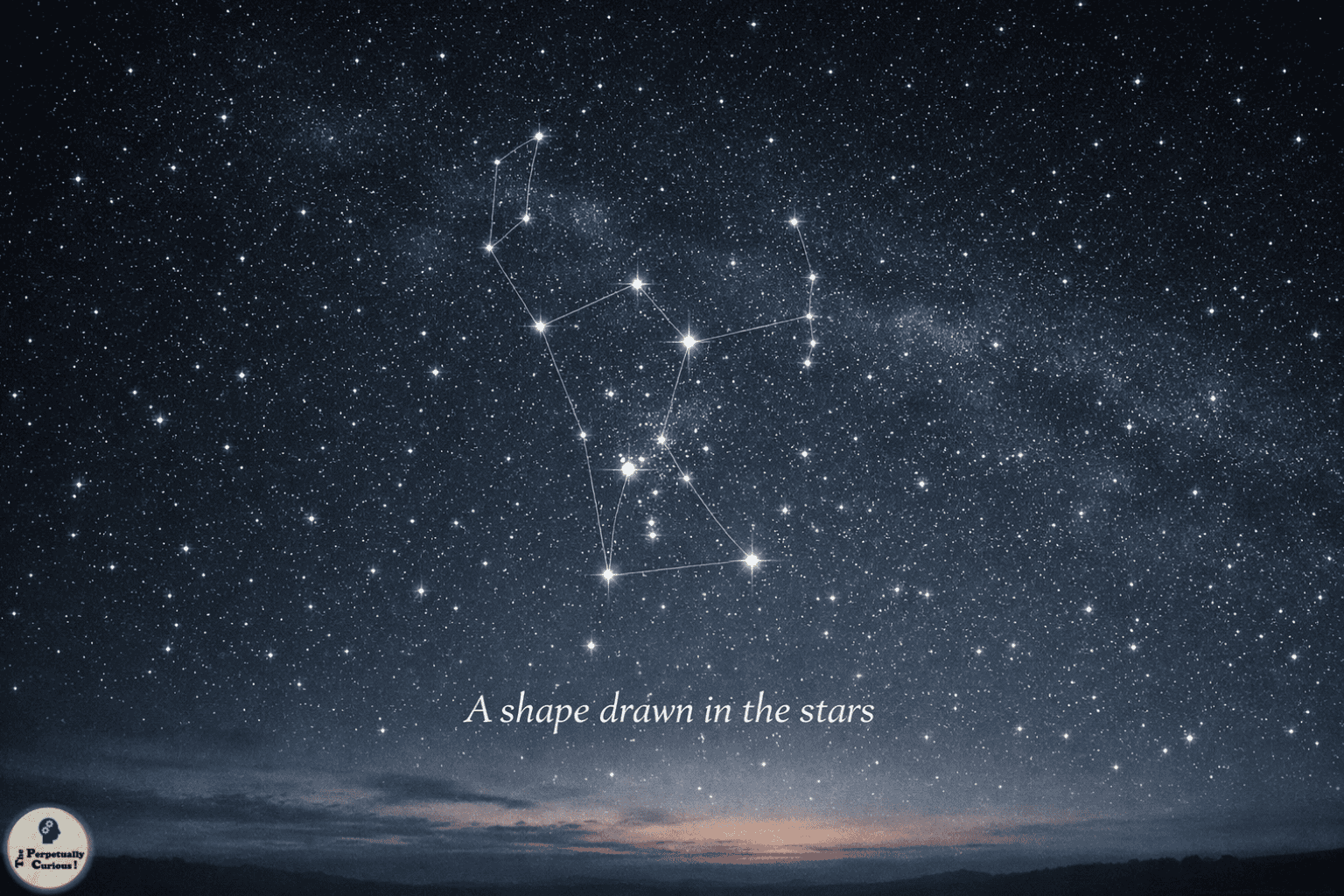
🌌 Constellations: How Star Patterns Help Us Find Our Way
At first glance, constellations look like drawings placed gently across the night. A hunter, a cross, a scorpion, a bear, or a bright line of stars can seem almost intentional, as though the sky itself has arranged symbols for us to find.