Explore by topic, question, or idea. Find articles, reflections, videos, puzzles, and curiosity pathways gathered across the site.
Press Enter or select Search. A newly typed query starts globally; filters are applied only through the visible rail.
26 results for “when leaves let go why autumn colors turn red gold and brown”
- The Perpetually Curious! › Canonical › Planet EarthArticle
🌇 When the Sky Becomes a Painting: Why Clouds Glow Red and Orange at Sunset on Earth
From section: Frequently Asked Questions+Why do clouds turn red or orange at sunset? Because Mie scattering displays the warm wavelengths that remain after Rayleigh scattering has depleted the shorter wavelengths more strongly from the direct beam.
- The Perpetually Curious! › Canonical › Planet EarthArticle
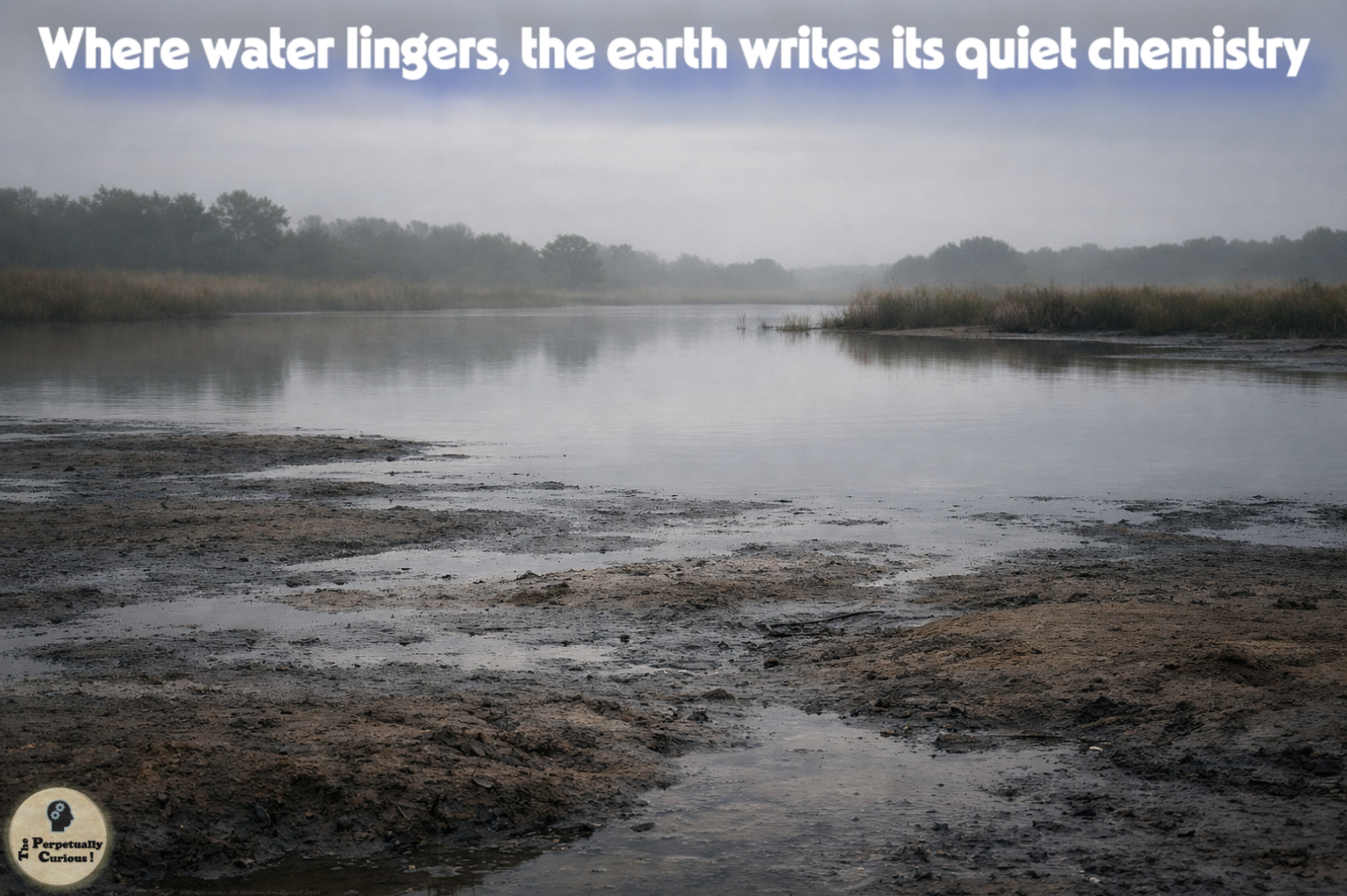
🌍 Why Mud Is Brown or Black: Where Earth Turns to Quiet Ink
From section: 🧱 Minerals, organic matter, and the palette of mudOrganic matter tends to darken mud. Leaves, roots, algae, and microscopic organisms break down over time into complex carbon‑rich substances. As this material accumulates and becomes more decomposed, it forms humus, which is usually dark brown to black. …
- The Perpetually Curious! › Canonical › Planet EarthArticle
🌧️ When Clouds Let Go: Why It Rains and How Raindrops Are Born
From section: 🔊 The sensory physics of rain… It arrives with sound. The familiar patter begins when drops strike leaves, roofs, soil, puddles, and other surfaces, setting each material into its own pattern of vibration. …
- The Perpetually Curious! › Archives › Planet EarthArticle
🌍 Why Mud Is Brown or Black: What Wet Soil Reveals
Iron is especially important because it can color sediment red, yellow, brown, gray, or black depending on its chemical state.
- The Perpetually Curious! › Canonical › Planet EarthArticle
🌊 Where the Salt Stays: Why the Ocean Is Salty but Rivers and Most Lakes Are Fresh
From section: 💧 Most freshwater lakes have somewhere for water to goMany freshwater lakes function as open basins. Rivers and streams enter them, and an outlet carries water onward. …
- The Perpetually Curious! › Canonical › Planet EarthArticle
🌏 When the Pacific Breathes Warm: El Niño and the Changing Rhythms of Rain
A distant ocean shifts, and the world listens as its breath travels outward. Patterns of wind and water turn with quiet persistence, touching faraway seasons. In that slow rearrangement, the planet reveals how deeply its rhythms are shared.
- The Perpetually Curious! › Canonical › Planet EarthArticle
🌌 Sky in Slow Layers: Understanding Earth’s Atmospheric Structure
From section: 🌎 From ground to space: one connected atmosphereSeen through these overlapping scientific maps, the troposphere, stratosphere, mesosphere, thermosphere, and exosphere form one continuous atmosphere rather than a stack of sealed compartments. Energy enters, moves through, and leaves this system in different ways at different heights.
- The Perpetually Curious! › Canonical › Planet EarthArticle
🌈 When Sunlight Paints the Rain: The Quiet Geometry of Rainbow Formation
From section: 💧 Inside a raindrop: refraction, reflection, and dispersionAs the light exits, it is refracted a second time. Because water bends different wavelengths by slightly different amounts, the separation that begins at entry increases as the light leaves the droplet. Violet light is refracted slightly more strongly than red light, creating the spread of color known as dispersion.
- The Perpetually Curious! › Canonical › Planet EarthArticle
🌊 Where the Waves Leave Their Footprints: Why Beaches Carry Sand
From section: 🏖️ The Character of Beach SandThese colors reflect the geological stories of the landscapes that feed each shore. In some regions, wind carries fine beach sand inland to form dunes, creating landscapes that continue the story of each grain far beyond the shoreline.
- The Perpetually Curious! › Canonical › Planet EarthArticle
🌑 How Coal Is Formed: The Slow Birth of Black Stone Across Deep Time
From section: 🔍 The ranks of coalLignite is often referred to as brown coal. It is the lowest rank and is usually less deeply altered than higher-rank coals. …