Explore by topic, question, or idea. Find articles, reflections, videos, puzzles, and curiosity pathways gathered across the site.
Press Enter or select Search. A newly typed query starts globally; filters are applied only through the visible rail.
13 results for “when proteins forget their shape protein misfolding in neurodegenerative diseases”
- The Perpetually Curious! › Canonical › Wilderness & Homestead CreaturesArticle
🐘 Minds Like Quiet Rivers: The Intelligence of Elephants
From section: 🧠 A brain built for long lives and complex worldsAs we move from anatomy to behavior, memory becomes the natural bridge. A large, well-connected brain offers the capacity to store and update information across years and even decades, and elephants use this capacity in ways that shape their survival.
- The Perpetually Curious! › Archives › Wilderness & Homestead CreaturesArticle
🦜 More Than a Tongue: The Surprising Science of Why Animals Cannot Talk
Language is so woven into human life that it is easy to forget how unlikely it is. Across millions of animal species, only one lineage learned to shape breath into words, to give sound the weight of meaning, and to speak.
- The Perpetually Curious! › Canonical › Wilderness & Homestead CreaturesArticle
🌺 Whispers of Tiny Wings: Hummingbirds, Their Lives, and the Science of Small Flight
In the brief shimmer of their passing, something quiet lingers.A reminder that even the smallest lives can shape the world in ways we rarely see.Their motion becomes a moment of stillness, carried forward in memory and light.
- The Perpetually Curious! › Canonical › Wilderness & Homestead CreaturesArticle
🌍 African Wild Dogs: Painted Wolves of the Savanna
From section: ⚖️ Living alongside other predators… Lions may kill wild dogs as competitors, while spotted hyenas may attempt to steal kills. The social dynamics described in hyena clan life illustrate how competing carnivores shape one another’s behavior across shared landscapes.
- The Perpetually Curious! › Canonical › Wilderness & Homestead CreaturesArticle
🐆 Baby Cheetahs: Early Life, Survival, and the Slow Road to Speed
The story of a baby cheetah begins in a place few eyes ever see. Long before speed defines the adult, a cub’s earliest days unfold in a hidden den, where concealment, shelter, and maternal care shape its chances of survival.
- The Perpetually Curious! › Canonical › Wilderness & Homestead CreaturesArticle
🐾 Where the Wild Paths Divide: Wolves, Foxes, and Jackals in the Dog Family
From section: 🌱 How landscapes shape behavior and rolesFrom anatomy and senses, the narrative naturally turns to the landscapes that shape behavior and ecological roles. Wolves often inhabit forests, tundra, and open plains where large ungulates such as deer, elk, and caribou are present. …
- The Perpetually Curious! › Archives › Wilderness & Homestead CreaturesArticle
🧪 Animal Chemical Encounters: When Molecules Shape Behavior
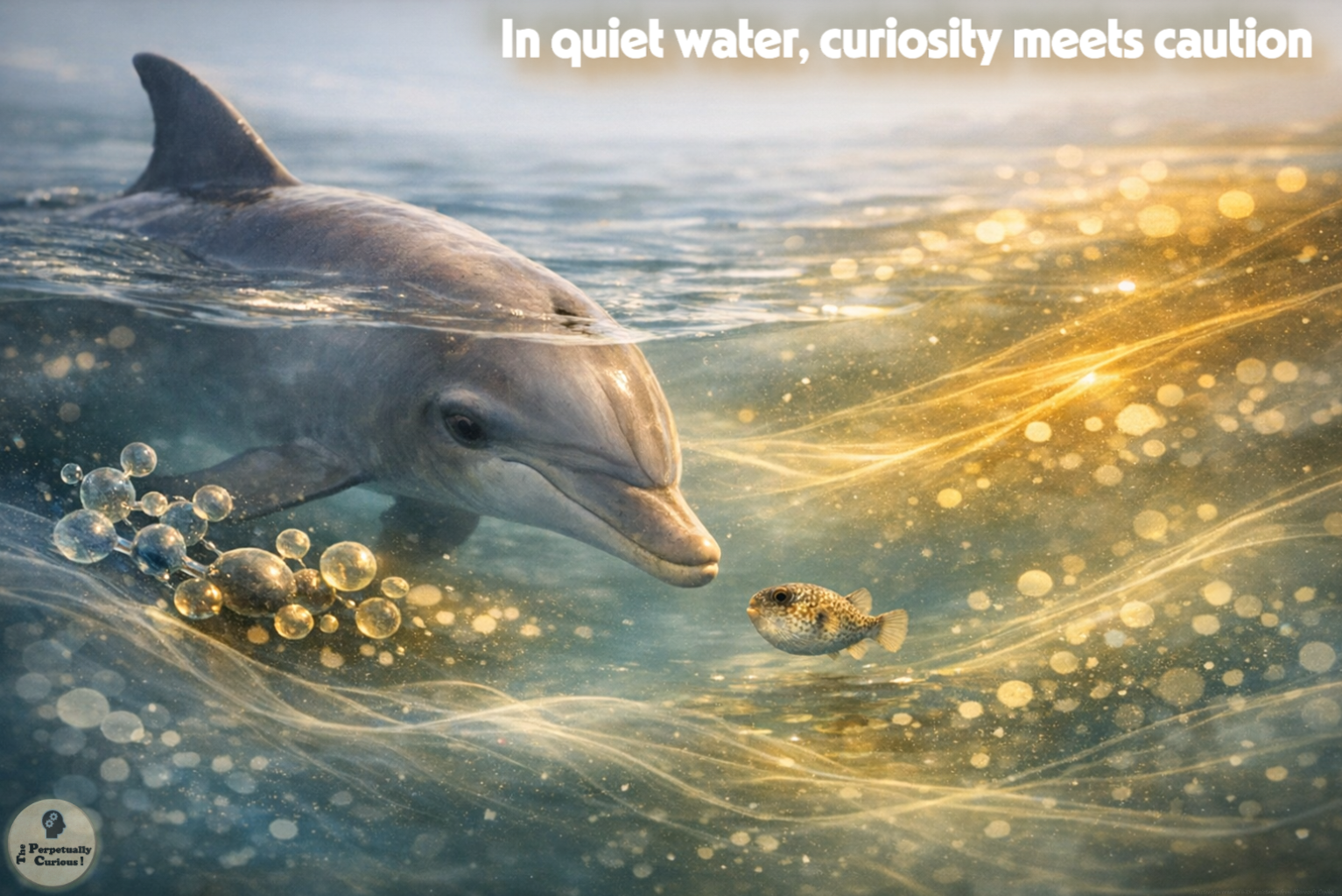
From section: When chemistry becomes part of behaviorThe animals may be responding to the fish's changing shape, to its texture, to social play, to chemical exposure, or to several factors at once.
- The Perpetually Curious! › Canonical › Wilderness & Homestead CreaturesArticle
🧫 Tides of Chemical Worlds: How Animals Meet the Molecules Around Them
From section: 🐾 Beyond dolphins: Other animals and natural intoxicantsAcross ecosystems, several species have been documented interacting with natural chemicals that influence their behavior. These examples vary in how intentional they appear, yet together they reveal a pattern in which animals meet environmental chemistry in ways that shape their actions.
- The Perpetually Curious! › Archives › Wilderness & Homestead CreaturesArticle
The Silkworm: Nature's Liquid Moonlight Architect 🐛
From their tiny bodies flows a liquid protein that hardens into silk, a fiber that has clothed emperors and inspired bioengineers.Read more »
- The Perpetually Curious! › Archives › Wilderness & Homestead CreaturesArticle
🐝 Two Wasp Approaches to Securing the Next Generation: Builders vs. Infiltrators in Nature
📖 Introduction Wasps are among the most versatile predators in the insect world, and their methods for raising young are as varied as their shapes and colors.