

In the quiet of early morning, when the first light touches leaves and petals, a brief glint of color may appear and vanish before the eye can settle. A hummingbird has arrived, suspended in the air with a stillness that seems to pause the world around it. Its wings move too quickly to follow, yet its body remains poised as if held by an invisible thread. Encounters like this invite a deeper look into how such small creatures live, move, and shape the landscapes around them. This article follows that path, beginning with who hummingbirds are and gradually unfolding the science, ecology, and quiet wonder that surround them.
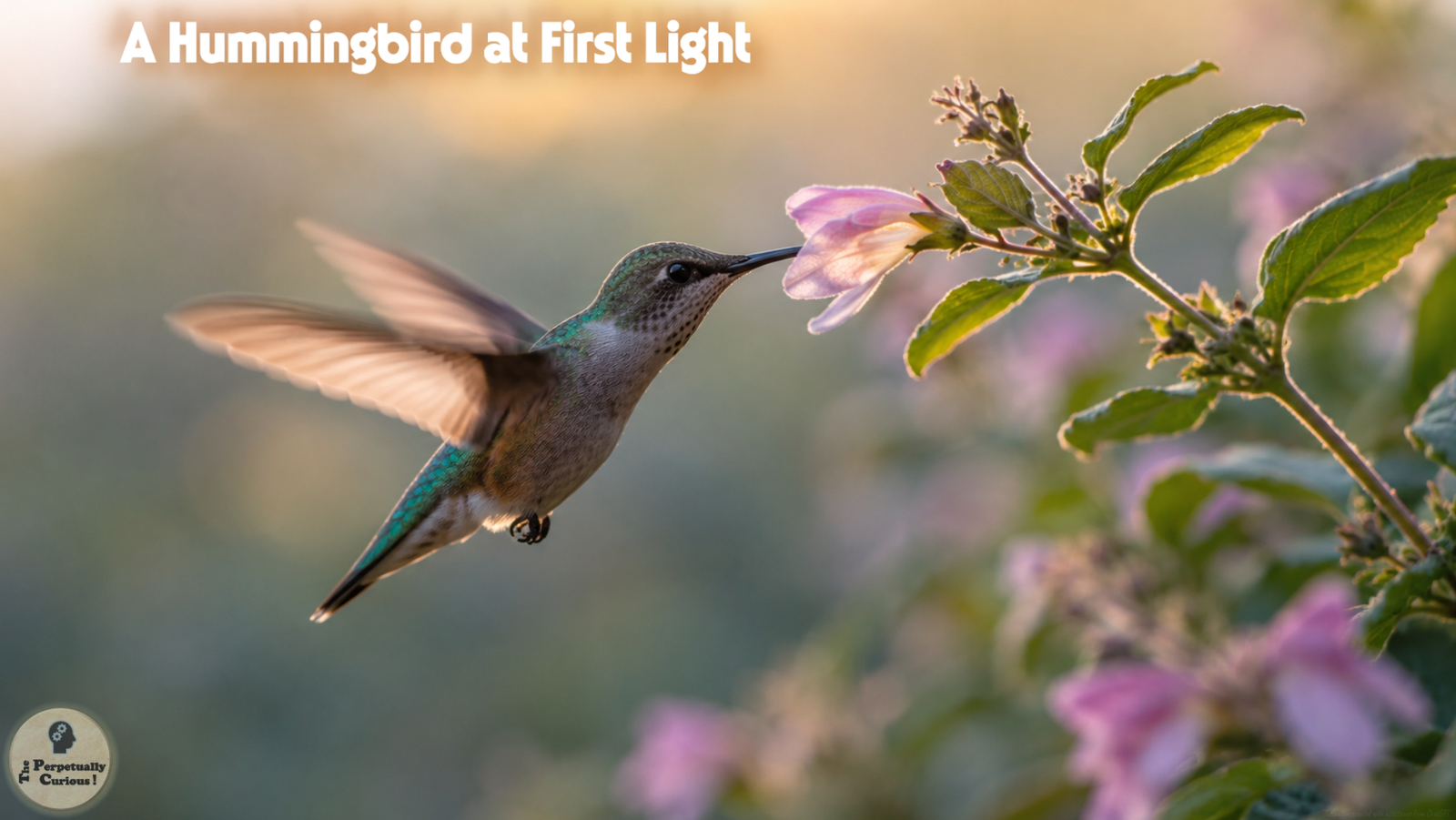
In the brief shimmer of their passing, something quiet lingers.
A reminder that even the smallest lives can shape the world in ways we rarely see.
Their motion becomes a moment of stillness, carried forward in memory and light.
🌍 A family of jewels across the Americas
Hummingbirds belong to the family Trochilidae, a lineage found only in the Americas. Depending on the checklist and taxonomic treatment, scientists recognize roughly 360 to 380 species, and this diversity is most concentrated in Central and South America. Mountain slopes, cloud forests, and tropical lowlands create a mosaic of habitats where hummingbirds have diversified over millions of years. The Andes, with their steep elevation gradients and rich floral communities, are especially important centers of hummingbird evolution.
Most hummingbirds are small, often measuring from about 3 to 5 inches (7.5 to 13 centimeters) in length. The bee hummingbird of Cuba is considered the smallest bird in the world at about 2 to 2.4 inches (5 to 6 centimeters) and approximately 0.07 to 0.09 ounces (2 to 2.6 grams) depending on sex. At the larger end, the giant hummingbird group of the Andes may reach about 9 inches (23 centimeters) and weigh close to 1 ounce (28 grams), with recent work distinguishing northern and southern giant hummingbirds. These variations in size and form set the stage for the remarkable flight abilities that define the group.
🗺️ Types of hummingbirds and where they live
Hummingbirds form several major groups that reflect their evolutionary history and ecological specialization. Hermits often inhabit lowland tropical forests and have long, curved bills suited to deep flowers. Mountain gems and brilliants occupy high elevation regions, where cooler temperatures and steep terrain shape their behavior and physiology. Coquettes and woodstars are known for their ornate plumage and rapid, darting flight.
Geography plays a central role in hummingbird diversity. The Andes host more than one third of all species, with communities that can change dramatically over short elevation gradients. North America supports fewer species, but several are long distance migrants. The Caribbean islands contain unique species that evolved in relative isolation. These patterns illustrate how landscapes shape the evolution of small, specialized birds and highlight the ecological variety within the family.
🕊️ The mechanics of hovering and agile flight
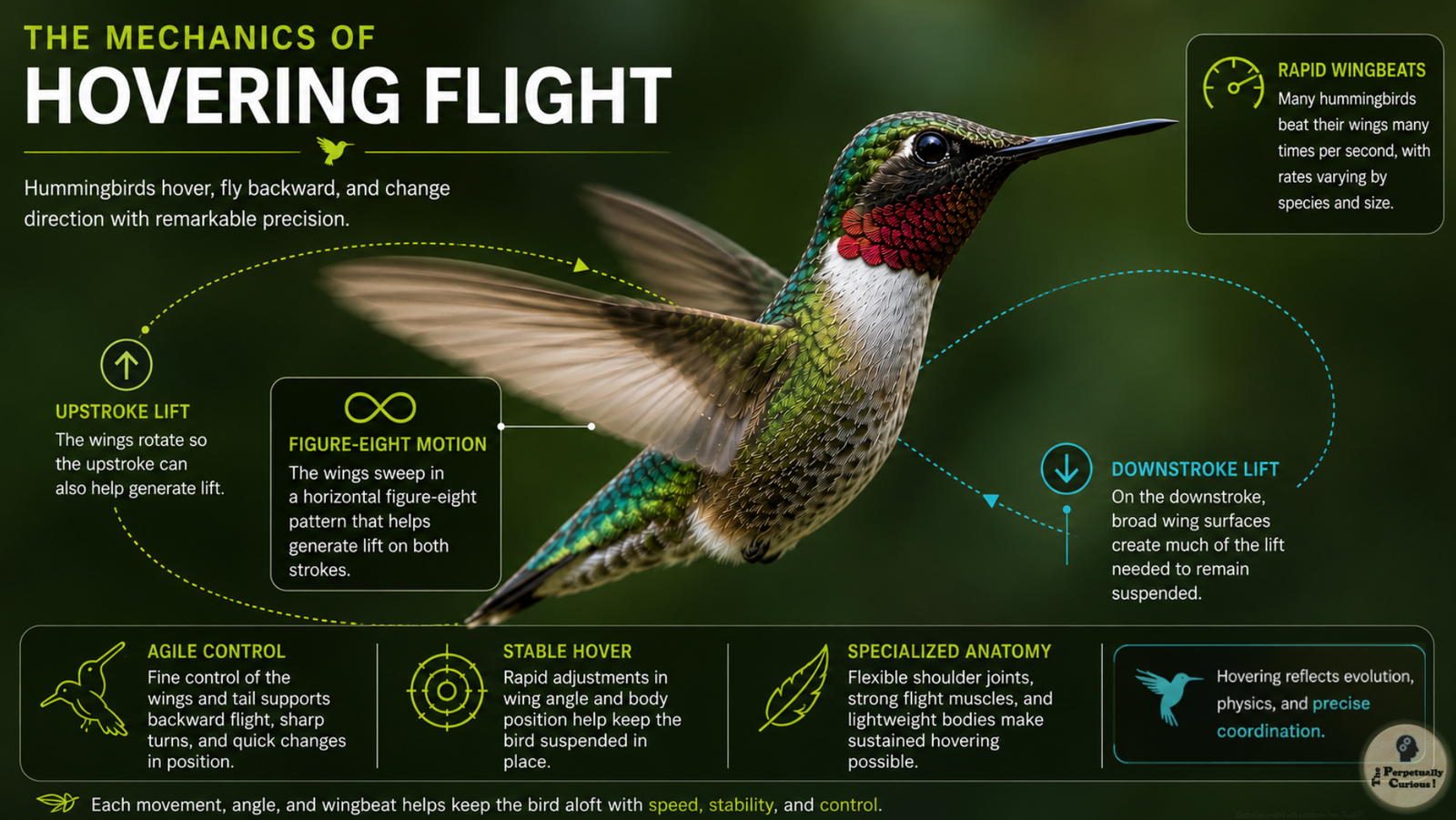
Among birds, hummingbirds are exceptional for sustained hovering in still air. Their wings trace a pattern that resembles a horizontal figure eight, which allows them to generate lift on both the downstroke and the upstroke, with the contribution of each stroke varying by species and flight condition. Smaller species may beat their wings at approximately 50 to 80 times per second, while larger species such as the giant hummingbird may do so at closer to about 8 to 15 beats per second. These values vary, but they illustrate the intensity of motion required to remain suspended in place.
Beyond hovering, hummingbirds transition smoothly into forward flight by adjusting wing angles and increasing stroke amplitude. Their tails act as rudders, providing stability and steering during rapid maneuvers. Hovering is rare among vertebrates because it requires a high power to weight ratio, specialized musculature, and precise neuromuscular control. Hummingbirds meet these demands through a combination of lightweight bodies, large flight muscles, and rapid neural processing. Their unique wing motion also enables backward flight, a capability shared by very few birds.
🔥 Life at the edge of energy demand
Hummingbirds live at a metabolic pace that is among the highest known for warm blooded animals. Their hearts may beat more than 1,000 times per minute during intense flight, and even at rest, heart rates remain high relative to their size. To sustain this level of energy use, hummingbirds feed frequently. Nectar provides sugars that can be rapidly converted into usable energy, and insects supply protein and essential nutrients.
A hummingbird may consume nectar volumes that approach or exceed its own body mass in a day. Before long migratory flights, individuals often increase their intake and store fat as an energy reserve. This intense energy demand raises the question of how hummingbirds survive periods when food is scarce or temperatures drop, which leads naturally to torpor.
🌙 Torpor and the art of temporary stillness
Torpor is a controlled, reversible state in which a hummingbird reduces its metabolic rate and allows its body temperature to fall significantly. During torpor, heart rate and breathing slow, and the bird becomes still. This state may occur during cold nights or when food availability is limited, and some species use it even in warm environments when metabolic demands warrant it. By entering torpor, a hummingbird can reduce its energy use by as much as 65 to 90 percent in deep torpor.
Rewarming from torpor requires energy and often coincides with sunrise, when ambient temperatures rise and nectar becomes available. Some high elevation species rely on torpor regularly, using it as a daily survival strategy. This ability to pause and resume metabolic activity is one reason small birds with intense energy demands can, paradoxically, live for several years.
🐣 Lifespan, nesting, and the quiet work of survival
Hummingbirds often live for several years, although many individuals do not survive their first year because of predation, weather, migration challenges, or competition for resources. Those that reach adulthood may live for three to five years or more, with some documented cases extending beyond that range. Banding studies have recorded individuals living beyond nine years, showing that longevity is possible despite their small bodies and high metabolic demands.
Nests are typically small and carefully constructed. Many species build cup-shaped nests about the size of a walnut shell, using plant fibers, lichens, and spider silk. The spider silk gives the nest flexibility, allowing it to stretch as the chicks grow. Clutches usually contain two eggs, each roughly the size of a pea. Parental care is usually provided by the female, who incubates the eggs and feeds the chicks after they hatch.
These early days are among the most vulnerable stages of hummingbird life. Predators may include snakes, larger birds, and certain arthropods, while weather and habitat conditions can also affect nesting success. Together, these pressures shape nesting behavior, habitat selection, and the broader ecological web in which hummingbirds participate.
🌿 Ecological relationships rather than friendships
Hummingbirds are solitary and territorial, and they do not form social bonds with other birds. They defend feeding territories vigorously, often chasing intruders away from nectar sources. Despite this solitary nature, hummingbirds participate in ecological relationships that shape entire communities. Their interactions with flowering plants influence pollination patterns, and their consumption of insects connects them to broader food webs. The timing of flowering and migration also reflects deeper patterns shaped by plant and animal biological clocks, which guide seasonal rhythms across ecosystems. The same territorial energy that drives nectar defense also fuels the remarkable long distance journeys some species undertake each year.
🧭 Journeys across continents and seas
Many hummingbird species migrate, although not all do. In North America, the ruby throated hummingbird provides a well known example. It breeds in eastern North America and migrates to Central America and parts of the Caribbean. Some individuals cross the Gulf of Mexico in a single flight that may last about 18 to 22 hours.
The rufous hummingbird is often noted for its long migration relative to body size. It travels between breeding grounds in the Pacific Northwest and Alaska and wintering areas in Mexico, covering a one way distance of approximately 2,000 miles (3,200 kilometers), or roughly 3,900 miles (6,300 kilometers) for the full round trip. These journeys rely on stopover sites where birds refuel, and navigation may involve cues from the sun, magnetic fields, and landscape features.
Migration connects distant ecosystems and highlights the role of hummingbirds as mobile participants in pollination and energy flow. This connection leads naturally to their ecological roles.
🌸 Partners in pollination and ecosystem dynamics
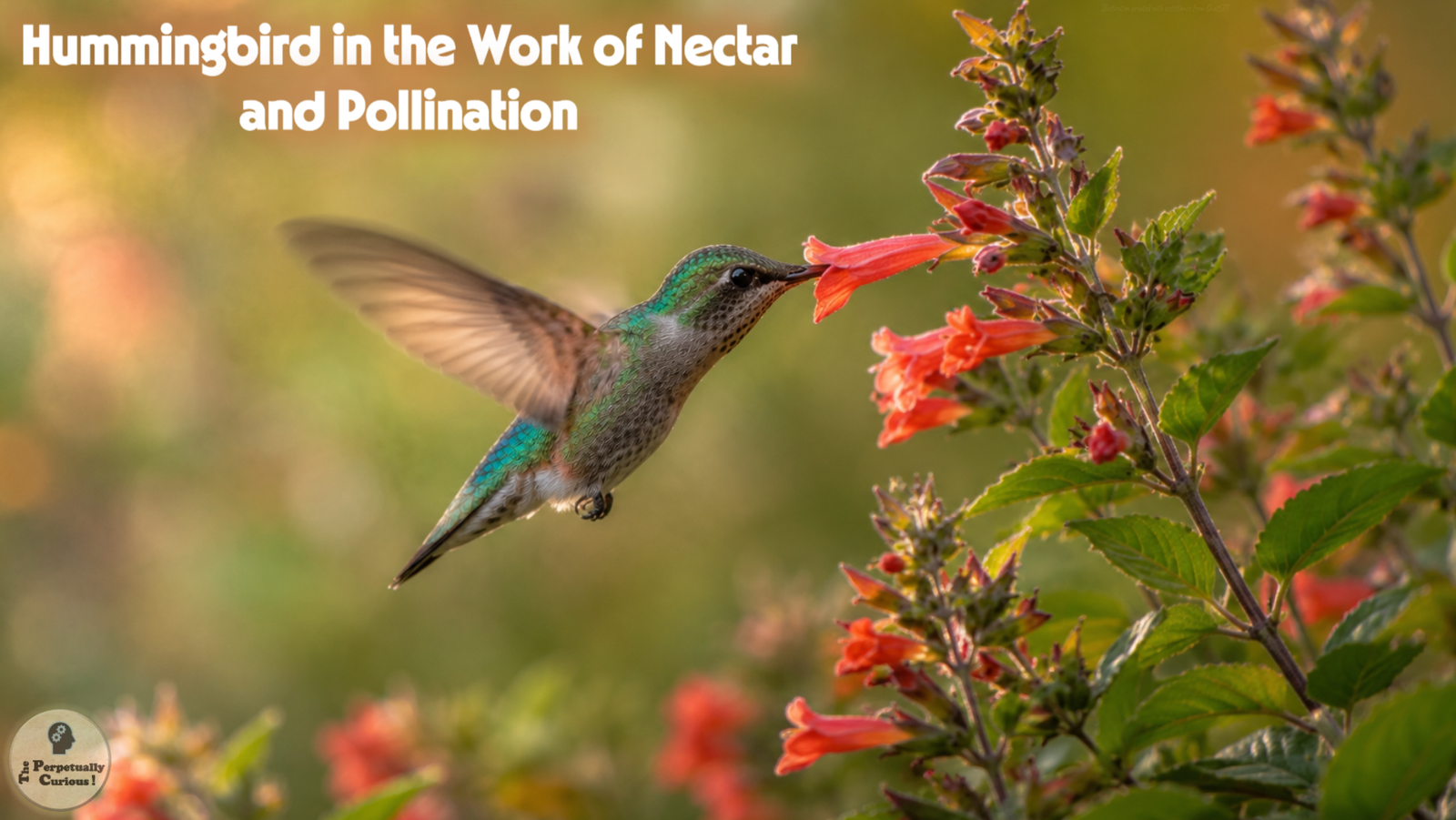
Hummingbirds and flowering plants have coexisted for millions of years, and many species show signs of mutual adaptation. Flowers frequently visited by hummingbirds often have tubular shapes, bright colors such as red or orange, and nectar that is accessible to long, slender bills, though hummingbirds perceive a broader color spectrum than previously recognized, including ultraviolet wavelengths. As hummingbirds feed, pollen may adhere to their bills or feathers and be transferred to other flowers, placing them among the most agile pollinators in many ecosystems.
The chemistry of nectar shapes how hummingbirds interact with flowers, influencing which plants they visit and how energy flows through these ecological networks. The composition of floral plant sugars, including the balance of different natural sweet compounds, may influence which species of hummingbirds visit particular flowers.
🎨 Hummingbirds in human perception and culture
Across many cultures in the Americas, hummingbirds appear in stories, art, and symbolism. They are often associated with agility, resilience, or the fleeting nature of beauty. Modern observers frequently describe hummingbirds as jewel like, focusing on their iridescent plumage. The shimmering colors arise from microscopic structures in the feathers that reflect and refract light through thin film interference.
These cultural and aesthetic dimensions coexist with scientific understanding. Together, they shape how societies value hummingbirds and how environmental change is interpreted. This leads naturally into a consideration of conservation.
🌿 Conservation context and environmental change
Hummingbirds show a wide range of conservation statuses. Some species are considered of least concern, while others are listed as vulnerable, endangered, or critically endangered. Habitat loss in cloud forests, montane regions, and tropical lowlands can reduce the availability of nesting sites and flowering plants. Climate change may alter the timing of flowering and migration, potentially affecting the alignment between food resources and hummingbird movements.
Some species show signs of range shifts, moving to higher elevations or latitudes as temperatures change. Long term monitoring and field studies continue to refine understanding of these trends. With this broad view in place, a few details from hummingbird biology reward a closer look.
Pass this article along to someone curious and let the learning travel.
💡 Did you know?
🧠 Hummingbirds have remarkable spatial memory, and they often remember the locations of flowers and feeders with impressive precision. Their brains are proportionally large for their body size, especially in regions associated with memory.
🎶 Some hummingbirds produce sounds with their feathers during courtship displays. These sounds arise from airflow over specialized feathers during rapid dives or turns. A different feather-based mechanism appears in peacock train-rattling, where the shorter true tail helps drive vibrations through the display train.
🌈 Hummingbirds have fewer feathers than many birds of similar size, which may help reduce weight and improve maneuverability. Despite this, their plumage can appear exceptionally vibrant due to structural coloration, in which microscopic feather structures refract and reflect light rather than relying on chemical pigments.
🧬 Hummingbirds are closely related to swifts, and fossil evidence suggests that their lineage diverged tens of millions of years ago. Early fossil hummingbirds show that the distinctive hovering flight style has ancient origins.
🧭 Some hummingbirds migrate along the same routes year after year, and individuals may return to the same breeding territories with notable consistency, using cues from the sun, magnetic fields, and landscape features to navigate.
🌬️ During high speed courtship dives, some species reach velocities that approach 50 miles per hour (80 kilometers per hour), and the rapid deceleration at the end of the dive produces forces several times their body weight.
🌺 Certain hummingbird species have bills that curve dramatically upward or downward, matching the shape of specific flowers. These pairings illustrate how coevolution can sculpt both plant and bird over long periods.
🔍 High elevation hummingbirds show oxygen transport adaptations, including hemoglobin changes that help some species function in thin mountain air.
👅 A hummingbird tongue is forked and grooved, capable of flicking in and out of a flower approximately 20 times per second, capturing nectar through a combination of elastic trapping and fluid mechanics.
🔄 Hummingbirds are among the only birds capable of sustained backward flight, a result of the flexible shoulder joint and wing motion that also enable hovering.
How many hummingbird species are there?
Depending on the checklist and taxonomic treatment, scientists recognize roughly 360 to 380 species. This number may change as new data refine evolutionary relationships.
Where are hummingbirds found in the wild?
Hummingbirds are native to the Americas, from Alaska to Tierra del Fuego. The highest diversity occurs in Central and South America.
What do hummingbirds eat?
Most hummingbirds feed on nectar for energy and consume insects and spiders for protein and nutrients.
How long do hummingbirds live?
Many individuals that survive their first year may live for three to five years, and some live longer.
Do all hummingbirds migrate?
Not all species migrate. Some remain in relatively small geographic areas, while others travel thousands of miles seasonally.
How do hummingbirds hover in place?
They hover by moving their wings in a pattern that generates lift on both the downstroke and the upstroke, supported by specialized joints and muscles.
How fast can hummingbirds flap their wings?
Wingbeat rates vary widely, from about 8 to 15 beats per second in the giant hummingbird to approximately 50 to 80 beats per second in smaller species. These values illustrate the intensity of motion required to remain suspended in place.
How do hummingbirds see color?
Hummingbirds have excellent color vision and can perceive a broader range of wavelengths than humans, including ultraviolet.
What is the largest hummingbird species?
The giant hummingbird group of the Andes includes the largest hummingbirds, reaching about 9 inches (23 centimeters) in length, with recent work distinguishing northern and southern giant hummingbirds.
How do hummingbirds communicate?
Communication may involve vocalizations, visual displays, and feather generated sounds during courtship or territorial interactions.
How do hummingbirds choose which flowers to visit?
They often select flowers based on nectar concentration, accessibility, and color cues. Their choices may also be influenced by territorial behavior and memory of previous foraging success.
Do hummingbirds sleep?
They enter periods of rest at night, and many species use torpor to conserve energy. Torpor resembles sleep but involves deeper physiological changes.
How do hummingbirds stay warm at high elevations?
Some species have dense plumage and may use torpor strategically. Their high metabolic rate also produces heat, although this requires constant energy intake.
Can hummingbirds recognize individual humans?
Hummingbirds can learn familiar feeding locations and repeated visual patterns, and observers often report recognition-like behavior around regular feeders. Their strong spatial and visual memory may allow them to distinguish familiar situations.
How do hummingbirds interact with other animals?
They may compete with insects for nectar resources, and they sometimes chase larger birds away from feeding territories.
How do hummingbirds maintain such high energy levels?
They rely on rapid digestion, efficient oxygen transport, and the ability to switch between burning sugars and stored fat depending on activity and season.
Why do hummingbirds defend territories so aggressively?
Territorial defense helps ensure access to reliable nectar sources, which are essential for sustaining their high metabolic demands.
Do hummingbirds have a split tongue?
Yes. A hummingbird tongue is forked at the tip, forming two slender grooves that open when they touch nectar and snap closed as they withdraw. This mechanism allows rapid nectar collection.
Do hummingbirds drink water?
They obtain most of their water from nectar, which is largely water by volume. They may also sip from shallow water sources or raindrops when available.
How often do hummingbirds need to eat?
They feed many times per hour during the day because their high metabolic rate requires a steady supply of energy. Before migration or cold nights, they store fat as an energy reserve.
Do hummingbirds ever stop flying?
Yes. They perch frequently to rest, preen, and conserve energy. Perching is an essential part of their daily rhythm.
How fast do hummingbirds fly when not diving?
Most species fly at speeds of about 25 to 35 miles per hour during normal travel, depending on wind and activity.
Do hummingbirds reuse their nests?
They rarely reuse nests. Instead, females often build new nests each season, sometimes incorporating materials from older ones.
How do hummingbirds survive storms or heavy rain?
They often perch in sheltered locations and may enter torpor during prolonged cold or wet conditions to conserve energy.
Can hummingbirds see ultraviolet patterns on flowers?
Yes. Their color vision extends into the ultraviolet range, allowing them to detect floral cues that are invisible to humans.
Do hummingbirds have a sense of smell?
Hummingbirds rely strongly on vision, but they can detect some scents. Research shows that they may avoid nectar sources carrying insect-related chemical cues, such as ant defensive compounds.
How do hummingbirds prepare for migration?
They increase their body mass by accumulating fat, which serves as fuel for long flights. Some individuals nearly double their weight before departure.
Do hummingbirds have predators?
Predators may include larger birds, snakes, and certain arthropods. Their agility and speed reduce risk, but young birds are especially vulnerable.
How do hummingbirds keep their feathers in good condition?
They preen regularly, using their bills to align feathers and remove debris. Feather maintenance is essential for efficient flight.
Do hummingbirds have good hearing?
They hear well within the frequency range of most birds and can detect the wing sounds and vocalizations of other hummingbirds.
How do hummingbirds manage heat in hot climates?
They dissipate heat through rapid breathing and by adjusting blood flow to the skin. Shade and reduced activity also help regulate temperature.
Why do hummingbirds visit feeders even when flowers are available?
Feeders provide a reliable, concentrated energy source. Hummingbirds may incorporate both feeders and flowers into their foraging routes.
Can hummingbirds fly upside down?
They can briefly invert during aggressive chases or evasive maneuvers, although sustained inverted flight is not typical.
Do hummingbirds dream?
There is no direct evidence of dream states, but their nighttime torpor involves deep physiological changes that differ from typical avian sleep.
How many times does a hummingbird breathe per minute?
Breathing rates vary widely, but during rest they may breathe dozens of times per minute, increasing significantly during flight.
How much nectar can a hummingbird drink in a day?
Some individuals, particularly during periods of high activity or pre-migratory hyperphagia, may consume nectar volumes approaching or exceeding their body mass over the course of a day.
🌐 Sharing tiny wonders with a wider world
Hummingbirds draw attention through motion, color, and the brief moments in which they appear and vanish. Learning about them often deepens the sense of connection people feel toward the natural world. When knowledge is shared, curiosity expands, and the quiet details of these small birds become part of a broader understanding of how life persists, adapts, and changes. In this way, the story of hummingbirds continues to travel, carried forward by those who pause long enough to notice.
“Whispers of Tiny Wings: Hummingbirds, Their Lives, and the Science of Small Flight.” The Perpetually Curious!, June 2026.
https://www.theperpetuallycurious.org/articles/hummingbird-facts/Continue Exploring
For the curious mind: want to explore this theme through a few questions? Visit the Classic Quiz Studio, nestled under Explorations opens in a new tab ,and see where a few well-placed questions lead: Wilderness & Homestead Creatures Quizzesopens in a new tab
For what comes next
Site Updates gathers occasional notes, new additions, and ways to keep in touch. RSS brings new publications to your feed reader in chronological order.
Choose the path that speaks to you, and let the next curiosity find you wherever your wondering takes you.
🎥 Watch the Hummingbird Story in Motion
Some parts of hummingbird life become clearer in motion: the hovering pause near a flower, the quick adjustment of wings, the rhythm of feeding, and the early days inside a nest. The videos below extend the article visually, first through a broad look at hummingbirds in flight and feeding, then through a closer glimpse of hummingbird chicks and early survival.
Hummingbirds in Flight and Life
This video works as a broader visual companion to the article, showing hummingbirds as active, agile birds shaped by flight, feeding, and high energy demands.
Hummingbird Chicks and Early Life
This video works as a broader visual companion to the article, showing hummingbirds as active, agile birds shaped by flight, feeding, and high energy demands.