Explore by topic, question, or idea. Find articles, reflections, videos, puzzles, and curiosity pathways gathered across the site.
Press Enter or select Search. A newly typed query starts globally; filters are applied only through the visible rail.
218 results for “animals meet the molecules around them”
- The Perpetually Curious! › Canonical › Wilderness & Homestead CreaturesArticle
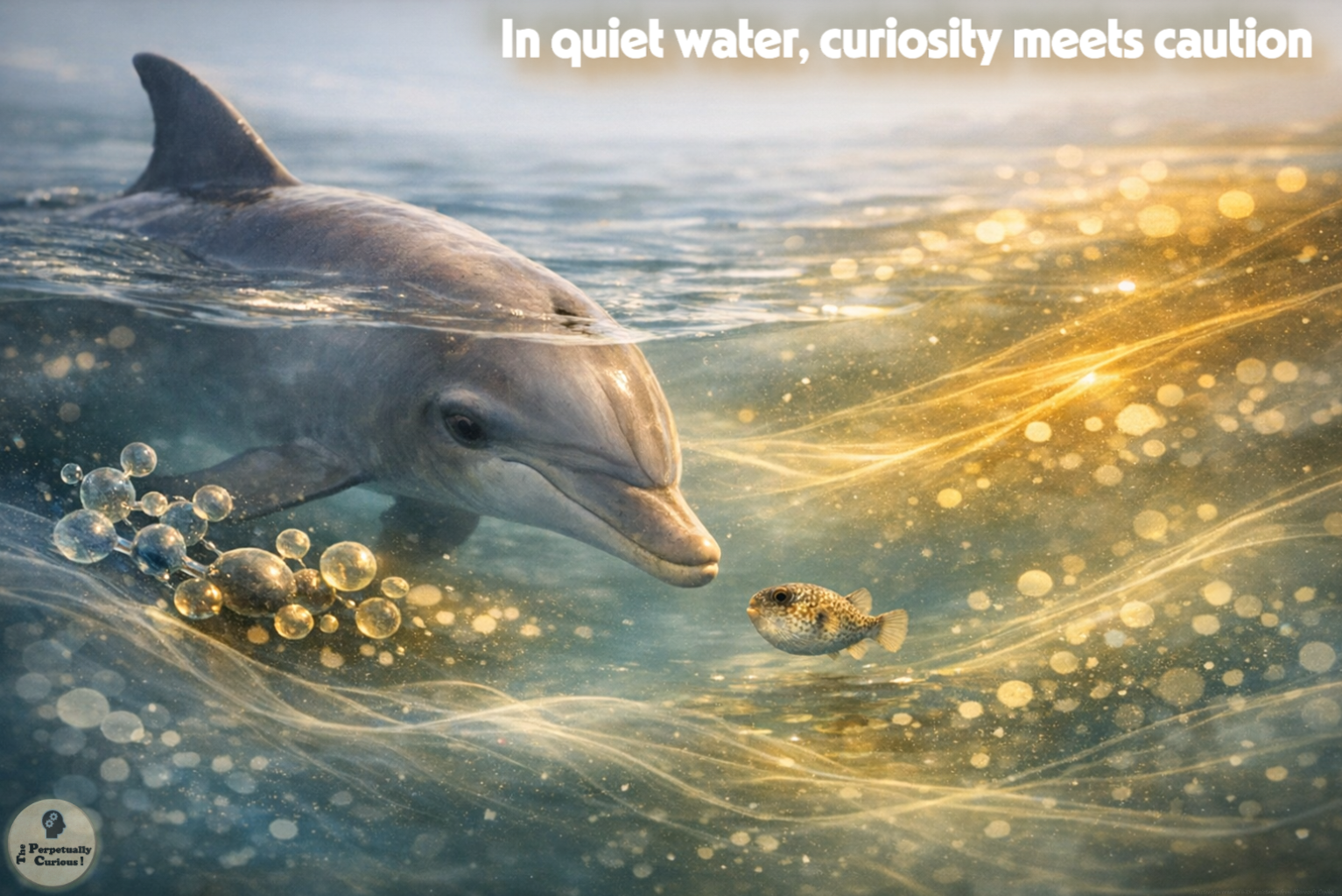
🧫 Tides of Chemical Worlds: How Animals Meet the Molecules Around Them
Among these encounters, some are fleeting, some are routine, and a few invite deeper questions about how animals sense and respond to the chemistry around them. Dolphins interacting with pufferfish are one such case, but they are part of a wider pattern. …
- The Perpetually Curious! › CanonicalGateway
🐣 Baby Animals Series | ▶️ Videos
From section: 🦒 Baby GiraffesYoung giraffes beginning life on long legs, learning to move and stay close to the adults around them.
- The Perpetually Curious! › Canonical › Food & LifestyleArticle
🥛 Milk Across Cultures: A Journey Through Nature’s Dairy Diversity
From section: 🎭 Dairy as cultural memoryBecause these traditions arise from living landscapes, their continuity also depends on the animals, water, forage, and land that sustain them.
- The Perpetually Curious! › Archives › Wilderness & Homestead CreaturesArticle
🧪 Animal Chemical Encounters: When Molecules Shape Behavior
From section: When chemistry becomes part of behaviorMany species meet the world through molecules that mark food, danger, territory, readiness to breed, or the presence of another organism.
- The Perpetually Curious! › Canonical › Planet EarthArticle
🌌 Sky in Slow Layers: Understanding Earth’s Atmospheric Structure
From section: Frequently Asked Questions+… Noctilucent clouds are extremely high clouds made of tiny water-ice crystals near the mesopause. Some of their crystals form around microscopic particles of meteoric smoke. They can remain illuminated after the lower atmosphere has entered shadow, allowing them to glow blue or silver after sunset.
- The Perpetually Curious! › Canonical › Cosmic ExplorationArticle
🛰️ When Fire Meets Air: How Spacecraft Reenter Earth’s Atmosphere
From section: 🔥 Meeting the thin air and the beginning of reentry… These gas temperatures are not the same as the temperature of the heat shield itself or the rate at which heat reaches its surface. The energy first excites and breaks apart nitrogen and oxygen molecules, and at still higher energies some atoms become ionized. …
- The Perpetually Curious! › Canonical › Wilderness & Homestead CreaturesArticle
🌺 Whispers of Tiny Wings: Hummingbirds, Their Lives, and the Science of Small Flight
From section: Frequently Asked Questions+Can hummingbirds recognize individual humans? Hummingbirds can learn familiar feeding locations and repeated visual patterns, and observers often report recognition-like behavior around regular feeders. Their strong spatial and visual memory may allow them to distinguish familiar situations.
- The Perpetually Curious! › CanonicalReflection
The Meeting of Elements
👁️ Rock that cooled from molten heat now stands in its settled shape. Water reaches it after its long passage through air, cloud, and falling rain. The rock stands in the stillness shaped by cooling, and the water moves over it in measured surges that meet the surface with quiet…
- The Perpetually Curious! › CanonicalGateway
🐾 Wilderness & Homestead Creatures | ✍️ Articles
From section: 🐝 Small Architects, Pollinators, and Chemical WorldsTides of Chemical Worlds: How Animals Meet the Molecules Around Them
- The Perpetually Curious! › Archives › Wilderness & Homestead CreaturesArticle
🦜 More Than a Tongue: The Surprising Science of Why Animals Cannot Talk
Language is so woven into human life that it is easy to forget how unlikely it is. Across millions of animal species, only one lineage learned to shape breath into words, to give sound the weight of meaning, and to speak.