Explore by topic, question, or idea. Find articles, reflections, videos, puzzles, and curiosity pathways gathered across the site.
Press Enter or select Search. A newly typed query starts globally; filters are applied only through the visible rail.
21 results for “animals meet the molecules around them”
- The Perpetually Curious! › Canonical › Cosmic ExplorationArticle
🌌 Borrowing the Orbits of Giants: How Gravity Assists Carry Spacecraft into the Deep
From section: 🚀 Why Space Is Too Vast for Rockets Alone… The planets are not fixed targets. They are massive bodies in motion, and their orbital momentum can be tapped by a spacecraft that approaches them in the right way.
- The Perpetually Curious! › Archives › Cosmic ExplorationArticle
Worlds Beyond Worlds: The Extraordinary Story of Exoplanets 🌌
In the vast theater of space, thousands of alien worlds dance around distant stars, each one rewriting our understanding of what a planet can be.Read more »
- The Perpetually Curious! › Canonical › Cosmic ExplorationArticle
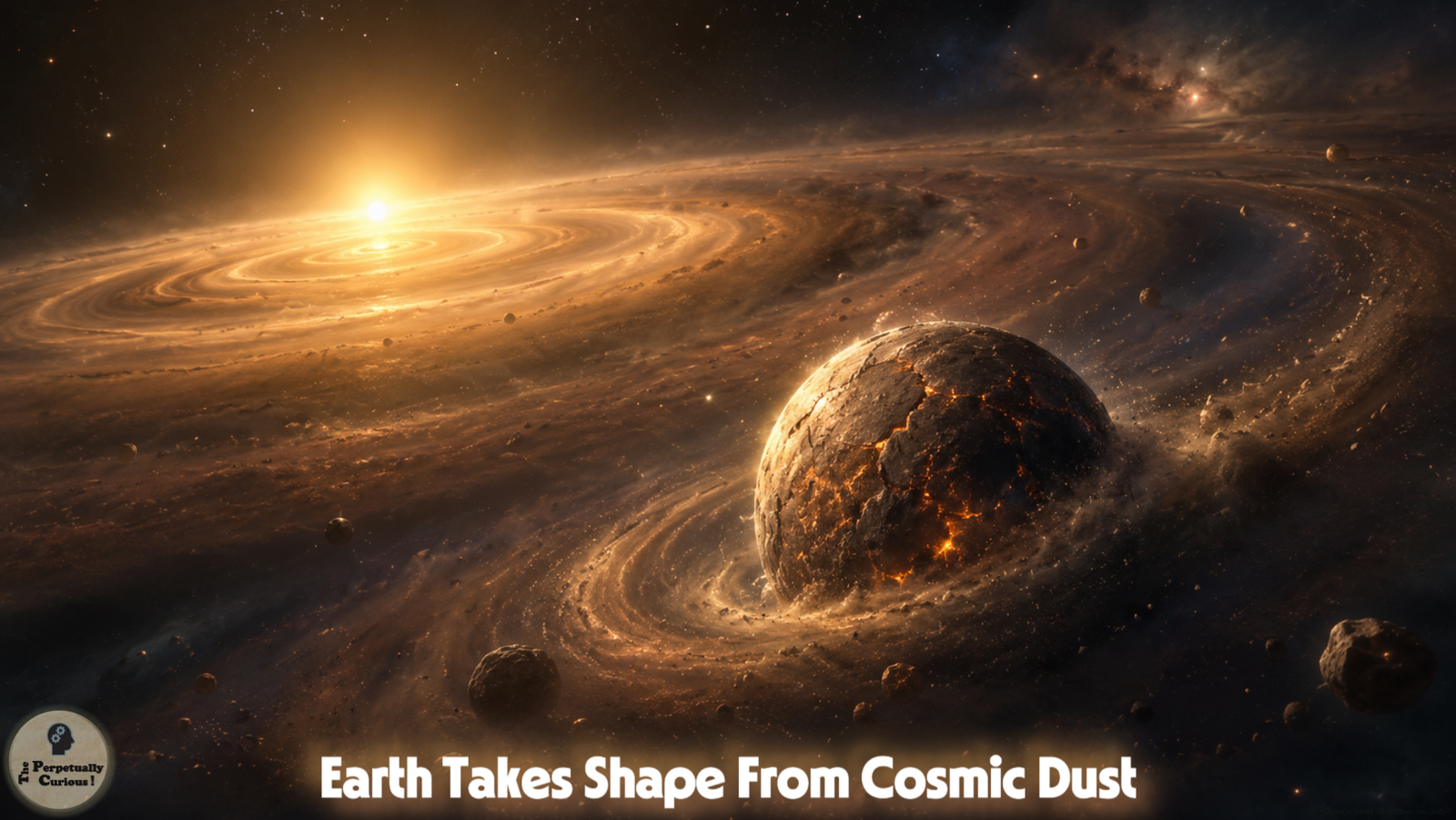
🌍 When Earth First Took Shape: A Planet Born from Cosmic Dust
From section: 🌟 The Sun’s age and Earth’s place in the Solar SystemSome of the earliest dated solid materials in the Solar System are found in certain meteorites known as calcium-aluminum-rich inclusions. These inclusions are about 4.567 billion years old and serve as important time markers because they formed near the beginning of solid material formation around the young Sun. …
- The Perpetually Curious! › Canonical › Cosmic ExplorationArticle
🌑 Shadows Across the Solar System: How Eclipses Unfold Beyond Earth
From section: 💡 Did You Know🔭 Exoplanet transits mirror Solar System geometry Astronomers detect planets around distant stars by observing tiny dips in starlight caused by transits.
- The Perpetually Curious! › Archives › Cosmic ExplorationArticle
🌍 How Earth Formed: The Slow Assembly of a Young Rocky World
Earth did not appear as a finished sphere in an otherwise complete Solar System. Its beginning was distributed across a rotating disk of gas, dust, rock, and metal around the newborn Sun.
- The Perpetually Curious! › Archives › Cosmic ExplorationArticle
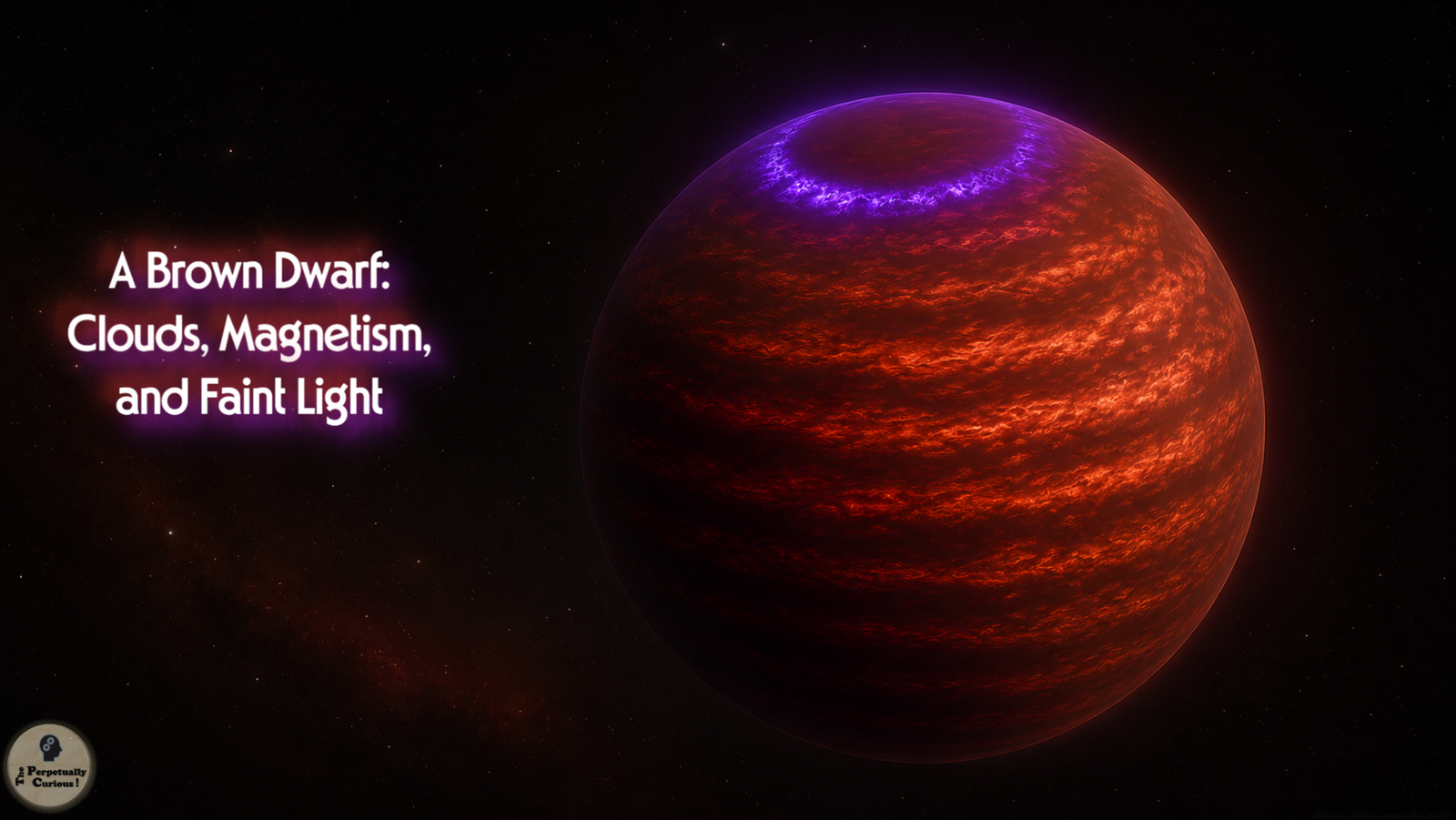
🌟 Brown Dwarfs: Why Stellar Ignition Never Takes Hold
From section: 🌌 A life powered by stored heatThat distinction turns a narrow difference in mass into an entirely different cosmic biography, revealing how gravity, heat, pressure, and quantum physics divide the smallest stars from the dark worlds beside them.
- The Perpetually Curious! › Archives › Cosmic ExplorationArticle
🌌 When Stars Become Worlds: A Journey Through the Largest Stars We Know
To contemplate them is to feel the scale of the cosmos press gently against the imagination.
- The Perpetually Curious! › Archives › Cosmic ExplorationArticle
The Cosmic Journey: Understanding Our Galactic Year 🌌
While you sleep, work, and live your daily life, our entire solar system hurtles through the cosmos, tracing an immense circle around the Milky Way that takes approximately 230 million years to complete (within the commonly cited range of 225-250 million years).
- The Perpetually Curious! › Archives › Cosmic ExplorationArticle
The Moon's Ancient Dance: Understanding Lunar Phases Through Science and Story 🌙
Every approximately 29.5 days, Earth’s sole natural satellite completes a shape-shifting performance that has captivated humanity since our species first gazed skyward.
- The Perpetually Curious! › Archives › Cosmic ExplorationArticle
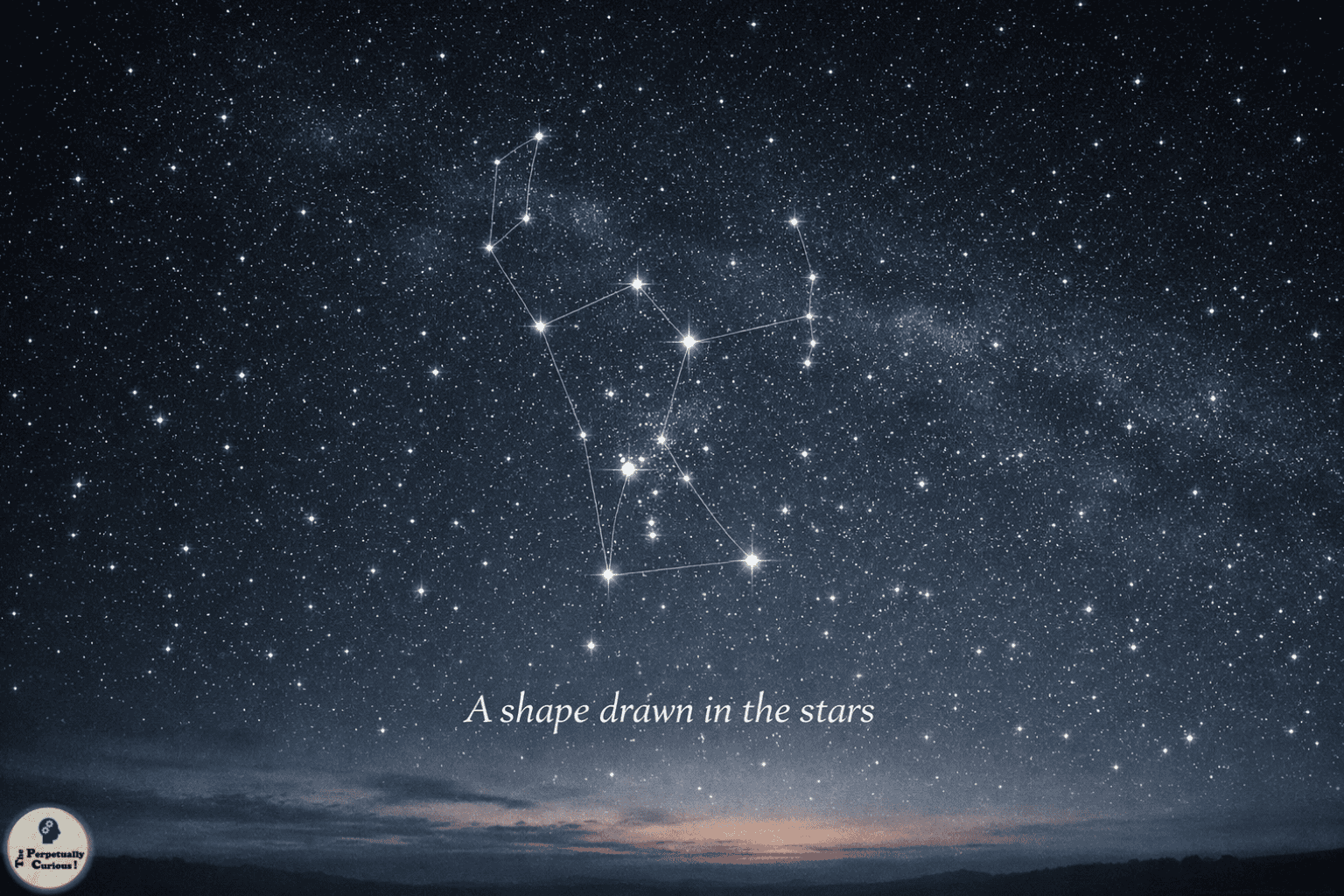
🌌 Constellations: How Star Patterns Help Us Find Our Way
From section: When scattered stars become a mapThe darkness around the stars matters too.