Explore by topic, question, or idea. Find articles, reflections, videos, puzzles, and curiosity pathways gathered across the site.
Press Enter or select Search. A newly typed query starts globally; filters are applied only through the visible rail.
107 results for “how mirrors work”
- The Perpetually Curious! › Canonical › Cosmic ExplorationArticle
🌟 Brown Dwarfs: Between Giant Planets and the Smallest Stars
The cosmos often reveals its rules most clearly where familiar categories begin to blur. Between giant planets and the smallest hydrogen-burning stars lies a dim frontier populated by brown dwarfs, objects massive enough for gravity to compress and heat their interiors, yet not…
- The Perpetually Curious! › Canonical › Cosmic ExplorationArticle
The Cosmic Recipe: Understanding the Physical Criteria for Star Formation 🌟
In the vast expanse of our universe, where darkness stretches for light-years and cold reigns supreme, something extraordinary happens. Stars are born. This process, far from being a simple ignition, represents one of nature's most complex and beautiful phenomena.
- The Perpetually Curious! › Canonical › Cosmic ExplorationArticle
🛰️ When Fire Meets Air: How Spacecraft Reenter Earth’s Atmosphere
High above Earth’s landscapes, spacecraft trace arcs through a realm where air gradually thins toward the quiet of orbit. Launch carries them outward through Earth’s layered atmosphere, but return brings the same atmospheric envelope into a very different role.
- The Perpetually Curious! › Canonical › History, Arts, and CultureArticle
🌍 Vertical Worlds: The 14 Lokas in Ancient Indian Cosmology
Some maps tell us where rivers run. Others tell us where a culture located memory, consequence, aspiration, and return. Across several strands of Indian thought, the universe was imagined not only as an expanse of sky and earth, but also as a layered order of worlds called lokas.
- The Perpetually Curious! › Canonical › Biology & HealthArticle
🌫️ When the World Blurs for a Moment: Why We Sneeze
A sneeze arrives like a sudden gust in the quiet rhythm of daily life. It interrupts thought, bends posture, and then dissolves as quickly as it came, leaving the air slightly unsettled and the senses newly awakened. In that fleeting instant, the body performs a complex act of…
- The Perpetually Curious! › Canonical › Environment & SustainabilityArticle
🕸️ Ghost Nets, Silent Drifters: How Lost Fishing Gear Haunts the Ocean
Far beneath the surface, where sunlight softens into blue and currents move with patient intention, some fishing nets slip away from the vessels that once guided them. They drift without purpose, yet they continue to behave as if they still serve one.
- The Perpetually Curious! › Canonical › Environment & SustainabilityArticle
🔄 Tides of Plastic: Microplastic Pollution in the Oceans and Its Journey Back to Us
The ocean has always carried stories. It carries the weight of tides, the drift of plankton, and the quiet pulse of currents that circle the planet. Today, it carries something else as well. It carries countless fragments of human life that have become small enough to slip…
- The Perpetually Curious! › Archives › PhysicsArticle
🌫️ How Radar Listens to the Sky: The Quiet Science Behind the Sweep
A radar dish turning slowly against the horizon often feels like a quiet sentinel, listening for stories carried on invisible waves. Although the technology is rooted in physics and engineering, its practice has a quiet elegance, as radar sends brief pulses of energy into the…
- The Perpetually Curious! › Archives › Engineering & TechnologyArticle
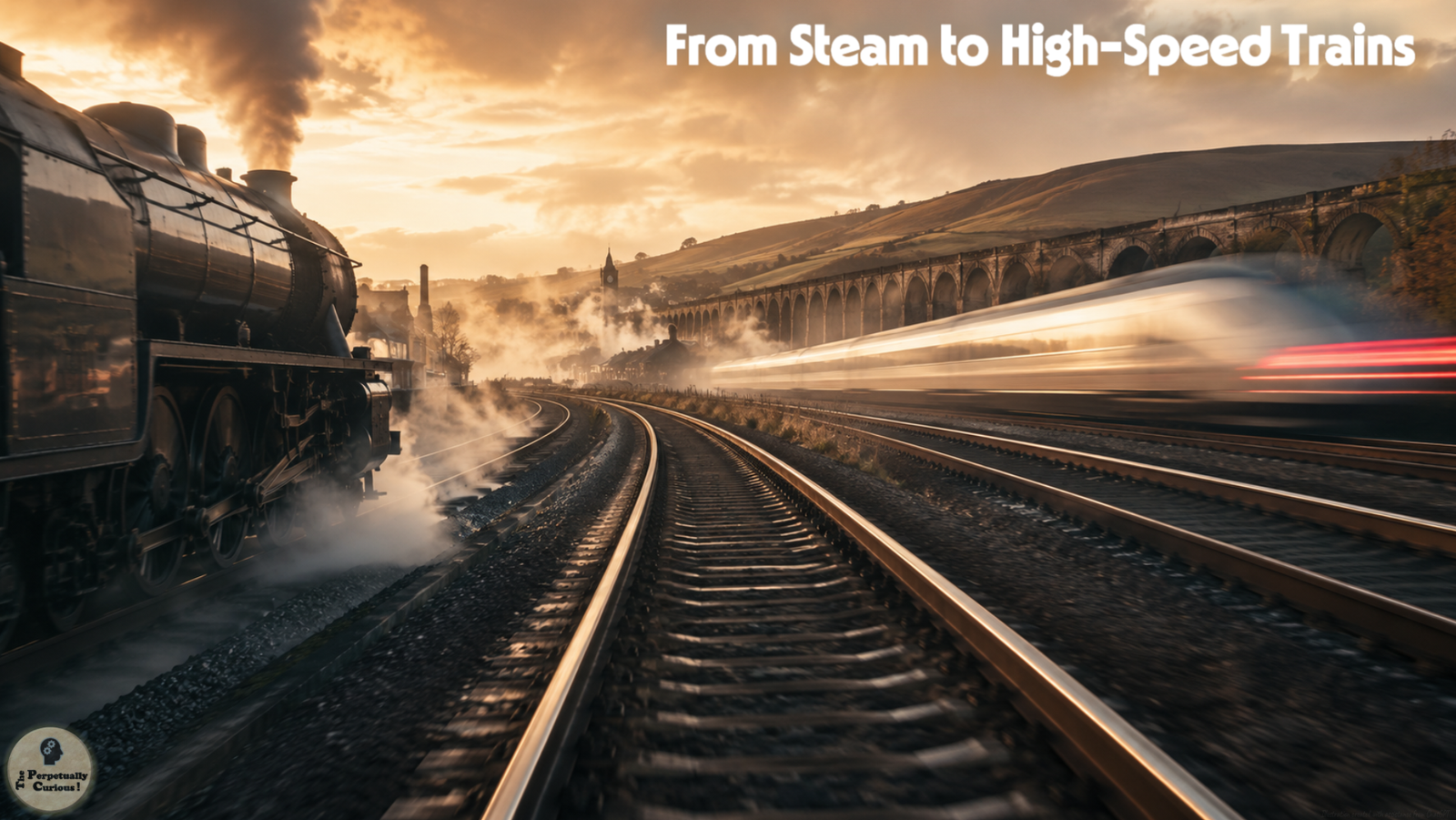
🚂 Train Engines: How Steam, Diesel, and Electricity Reach the Wheels
From section: ⚙️ Diesel changes the chain without abandoning electricityThe locomotive can work far from overhead wires and avoid the frequent water stops and intensive fire management associated with steam.
- The Perpetually Curious! › Archives › Biology & HealthArticle
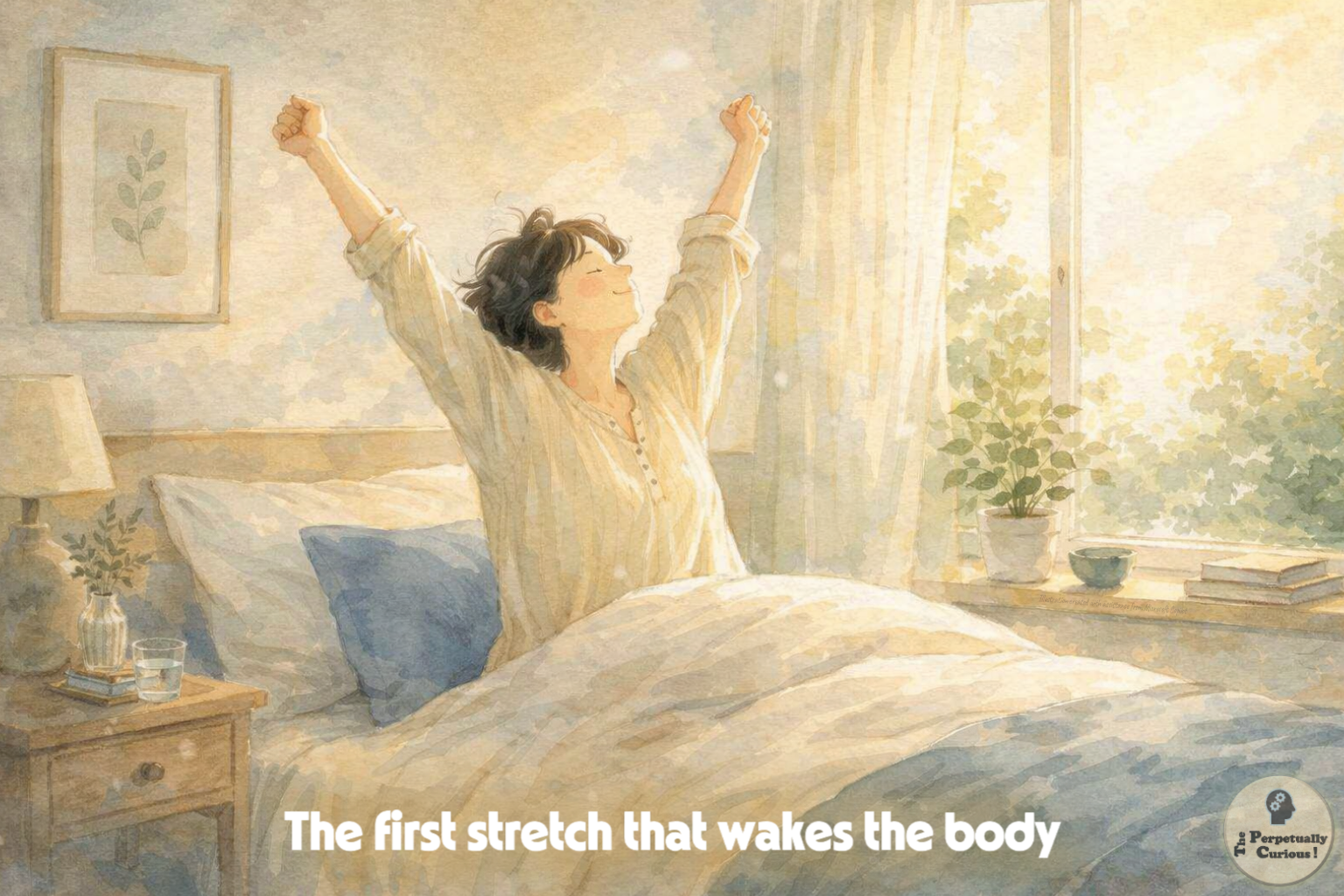
🌅 Pandiculation: How the Waking Stretch Restores Body Awareness
From section: A movement that sends information inwardIt is therefore more accurate to describe pandiculation as a sensory and motor transition than as a simple attempt to “work out” stiffness.