

A sneeze arrives like a sudden gust in the quiet rhythm of daily life. It interrupts thought, bends posture, and then dissolves as quickly as it came, leaving the air slightly unsettled and the senses newly awakened. In that fleeting instant, the body performs a complex act of protection shaped over millions of years. To understand why we sneeze is to glimpse the hidden vigilance of the respiratory system and the quiet intelligence of the nervous system that listens to the world on our behalf.
This journey begins in the nose, travels through the brainstem, and unfolds through a coordinated burst of muscular force. Along the way, it reveals how the body balances openness to the environment with the need to guard its most delicate passages. The sneeze is not merely a reflex; it is a moment in which the body meets the world with both curiosity and caution.
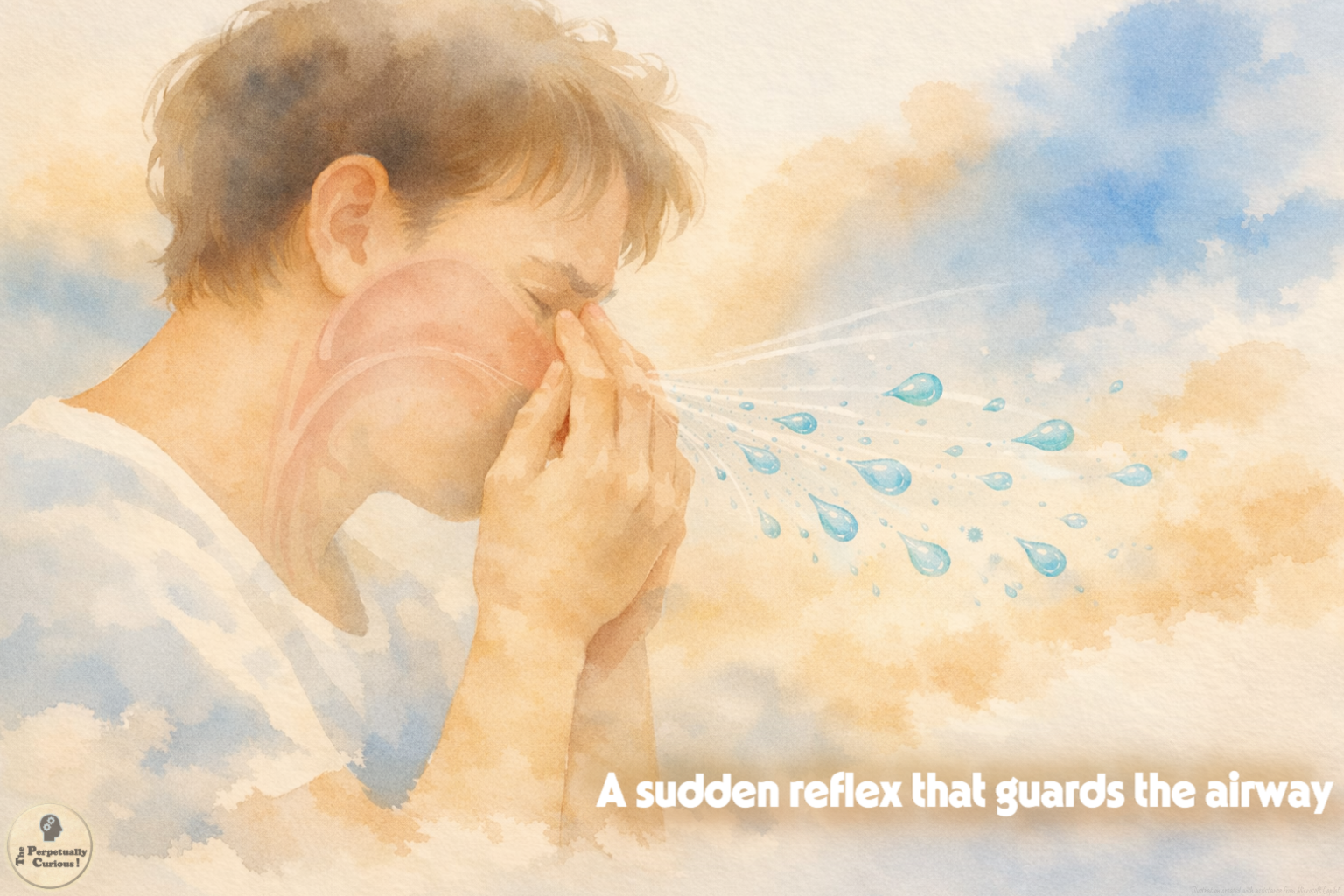
A sneeze is a brief shimmer in the flow of living,
a small reminder that the body listens even when the mind is elsewhere.
In that fleeting burst of breath and light, the world feels newly awake.
👃 A reflex born in the nose
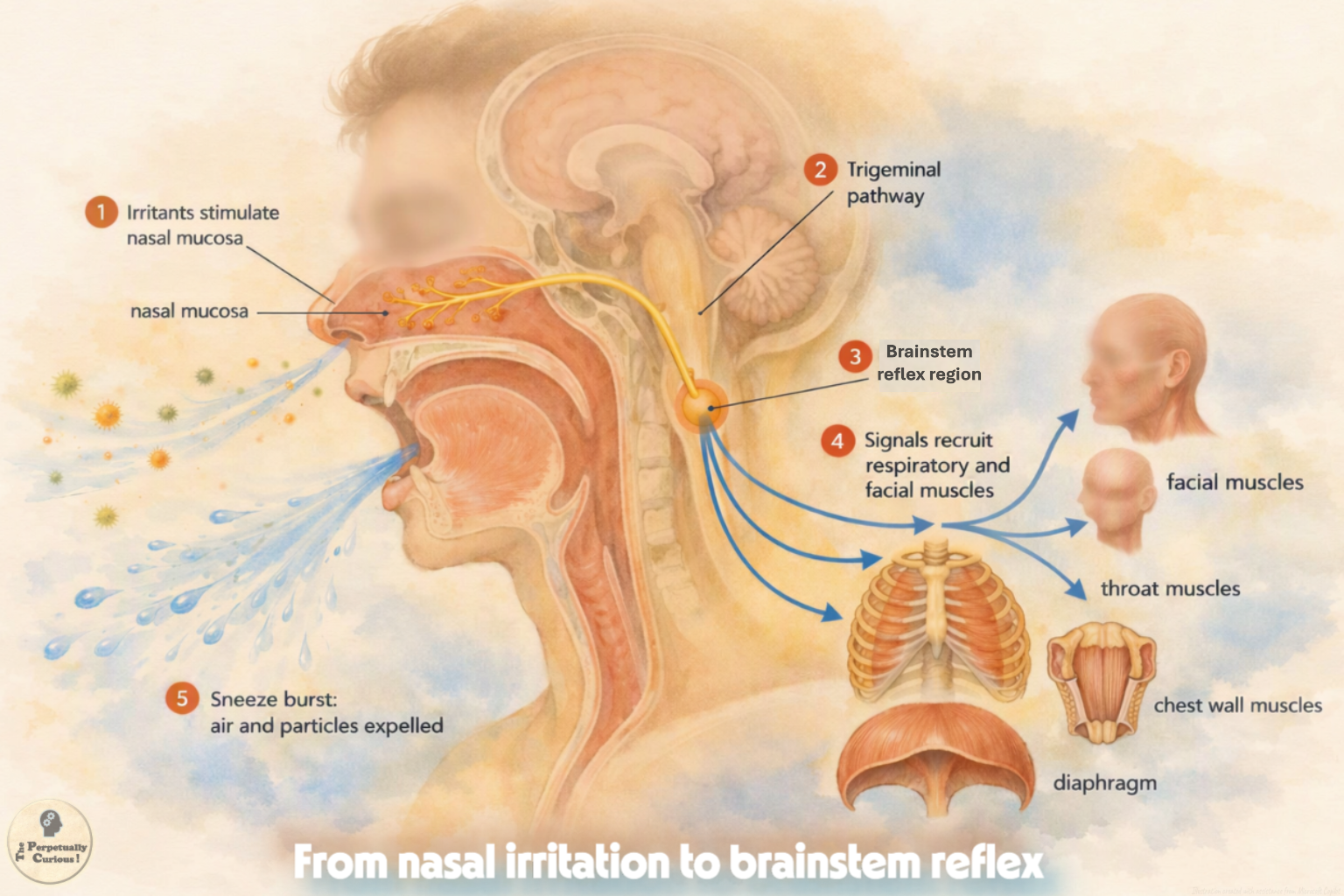
The story of a sneeze begins on the surface of the nasal mucosa, a moist and richly innervated tissue that lines the inside of the nose. This surface is home to sensory nerve endings responsive to mechanical, chemical, inflammatory, and thermal signals. These nerve endings constantly monitor the air that enters the nasal passages, forming the first line of sensory defense.
When an irritant lands on this surface, sensory neurons belonging to branches of the trigeminal nerve transmit signals toward the brainstem. These neurons may respond to dust, pollen, smoke, or rapid shifts in airflow. Their sensitivity varies between individuals, which is one reason why some people sneeze more readily than others.
A broader appreciation of how sensory receptors shape bodily responses can be found in the study of neurons, which reveals how diverse cell types collaborate to create unified experiences.
As these signals travel inward, they prepare the ground for a reflex that will soon involve the entire respiratory system. The next step takes place deeper within the nervous system, where the sneeze reflex is organized and set into motion.
🧠 The brainstem’s hidden sneeze circuit
Within the brainstem lies a region that receives sensory input from the nasal passages and helps integrate these signals into the motor pattern that produces a sneeze. Research suggests that this region acts as a central relay, coordinating the reflex arc that follows. Researchers have also identified a sneeze-evoking zone within the lateral brainstem, a small region that appears to participate in this integration.
Emerging evidence indicates that neurons expressing neuromedin B within the spinal trigeminal nucleus play a key role in relaying sneeze signals from nasal sensory input to the broader brainstem reflex circuit. When this pathway is disrupted in experimental models, sneezing becomes significantly reduced, which supports the idea that the reflex depends on a specific nose-to-brain circuit.
The brainstem is well suited for this task because it governs many involuntary protective reflexes, including coughing and blinking. A deeper understanding of this region is enriched by exploring the flow of cerebrospinal fluid, which supports and cushions the neural structures that coordinate reflexes.
Once the brainstem integrates incoming signals and helps coordinate the motor pattern, it recruits respiratory centers that control the diaphragm, chest wall, throat, and facial muscles. This coordination prepares the body for the sudden burst of air that defines a sneeze.
The transition from neural integration to physical expression marks the beginning of the sneeze’s outward journey, which unfolds through a sequence of muscular events. The architecture of this reflex shares conceptual parallels with yawning and with the hiccup reflex, another involuntary pattern shaped by respiratory timing and brainstem-related coordination.
💨 The mechanics of a sudden burst
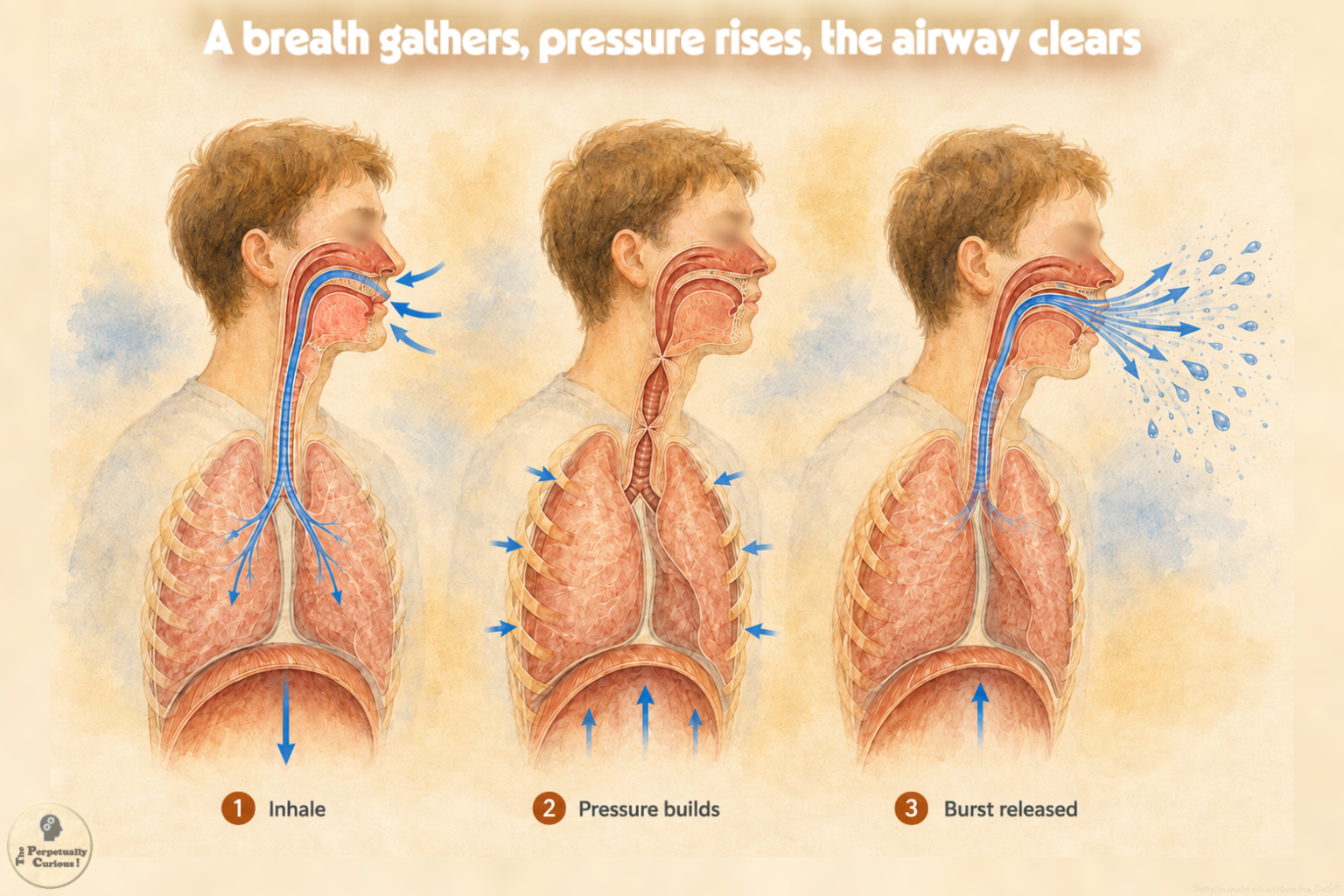
A sneeze unfolds in several distinct phases. It often begins with a quick inhalation that draws air into the lungs. The glottis, which is the opening between the vocal cords, may then narrow or close briefly. Muscles of the chest and abdomen contract, increasing pressure within the lungs.
When the glottis opens again, the pressurized air is expelled rapidly through the nose and mouth. Popular references often cite sneeze speeds approaching 100 miles per hour (about 160 kilometers per hour), although controlled experimental studies frequently record substantially lower values. Actual airflow varies by individual anatomy, posture, and the method used to measure it. The expelled air carries droplets of mucus and saliva, along with the particles that triggered the reflex.
The face participates as well. Muscles around the eyes contract, producing an involuntary blink. Muscles of the mouth and nose adjust the shape of the airway, and the entire expression becomes a coordinated event that involves both respiratory and facial musculature.
The upper-airway mechanics that shape a sneeze also appear in the quieter but persistent dynamics of snoring, where airflow through narrowed passages produces its own unmistakable signature.
This mechanical choreography clears the airway with remarkable efficiency. The next question is what kinds of stimuli commonly set this reflex in motion.
🌾 What commonly triggers a sneeze
Sneezing can arise from a wide range of stimuli, and these triggers often reflect the environments in which people live. Environmental irritants such as dust, smoke, or airborne particles from household activities can mechanically irritate the nasal mucosa or interact chemically with sensory receptors.
Allergens are another frequent source. Pollen, pet dander, and mold spores may provoke immune responses in susceptible individuals. In these cases, the nasal lining can become inflamed, and sensory nerves may become more reactive, which increases the likelihood of sneezing.
Respiratory infections, including those caused by common cold viruses, often involve sneezing as a prominent symptom. Viral replication and inflammation can alter the sensitivity of nasal tissues, making the sneeze reflex more easily triggered.
Temperature and light can also play a role. Sudden exposure to cold air may stimulate nasal thermoreceptors. The photic sneeze reflex describes sneezing that occurs when certain individuals move from a darker environment into bright light. Estimates suggest that this reflex may occur in about 18 to 35 percent of the population. One leading hypothesis proposes that bright light activates visual pathways that overlap with trigeminal sensory circuits, creating a cross-signal that triggers the sneeze reflex.
There are also reports of sneezing associated with a full stomach, sometimes referred to as snatiation. This phenomenon may reflect interactions between autonomic pathways that regulate digestion and those that influence nasal sensitivity, although the precise mechanisms remain under study.
Environmental and temporal factors can influence these triggers, and the study of biological clocks provides insight into how daily rhythms shape sensory responsiveness.
These diverse triggers reveal that sneezing is not tied to a single cause. Instead, it reflects a flexible reflex that responds to many different signals. The next section explores why such a reflex has persisted across species and through evolutionary time.
🛡️ A protective gatekeeper of the airway
From an evolutionary perspective, sneezing can be viewed as a protective gatekeeper for the upper respiratory tract. The nose and nasopharynx are the first regions to encounter inhaled air, and they are constantly exposed to potential irritants and pathogens. A reflex that can rapidly expel unwanted material may reduce the likelihood that harmful particles remain in contact with delicate tissues.
Sneezing works alongside other protective mechanisms, including mucociliary clearance, in which tiny hairlike structures called cilia move mucus toward the throat. Together, these systems help maintain airflow and support the filtering functions of the nose.
In the context of infections, sneezing has a dual nature. It may help remove infectious material from the nasal cavity, yet the expelled droplets can carry viruses or bacteria into the surrounding environment. This duality illustrates how a reflex that benefits the individual can have broader implications for communities.
The protective nature of sneezing resonates with the evolutionary story behind goosebumps, another reflex that reflects the body’s ancient strategies for responding to the environment.
Recognizing sneezing as a protective reflex provides a foundation for understanding its presence in many species. The next section extends the view beyond humans and considers how sneezing appears across the animal world.
🐾 Sneezing beyond the human world
Sneezing is not unique to humans. Many animals exhibit sneeze-like behaviors that serve similar purposes in clearing the airway. Cats and dogs may sneeze when exposed to dust, strong odors, or respiratory infections. Birds can produce rapid expulsions of air through the beak that resemble sneezes, particularly when their nasal passages are irritated.
Among African wild dogs, studies suggest that sneeze-like nasal exhalations can carry social information during group movement, with sneeze counts influencing whether the pack begins a collective movement.
These examples highlight both the universality and adaptability of sneeze-like behaviors across the animal world. The next section turns inward and considers what a sneeze feels like from the inside.
🌈 The sensory experience of a sneeze
A sneeze often begins with a subtle tingling sensation in the nose, a quiet signal that something is about to happen. As the reflex progresses, there may be a momentary shift in breathing rhythm, a tightening of facial muscles, or a brief sensation of pressure behind the eyes. Some individuals experience tearing or slight changes in heart rhythm, which reflect the involvement of autonomic pathways.
The release itself is sudden and unmistakable. The rush of air, the blink, and the return to normal breathing create a moment that feels both involuntary and strangely satisfying. This sensory experience reflects the interplay between nasal receptors, respiratory muscles, and the brain regions that support perception and awareness.
The sensory landscape of sneezing shares conceptual space with stretching, which also involves a buildup of tension followed by release. Tearing during sneezing also points toward autonomic pathways, a theme that overlaps gently with the science of crying.
With this sensory portrait in mind, the article now turns to a brief reflection that connects the science of sneezing with a sense of everyday wonder.
🌌 A brief reflection on a fleeting reflex
A sneeze lasts only a fraction of a second, yet it represents a carefully orchestrated collaboration between sensory neurons, brainstem circuits, respiratory muscles, and facial expressions. It is a reminder that the body is constantly listening to the world and responding in ways that often go unnoticed until they interrupt our routine.
In that brief blur of sound and motion, the body performs a small act of guardianship. The reflex may be familiar, but its underlying complexity invites a quiet appreciation. Each sneeze is a moment in which the body acts with swift precision, clearing the airway before returning to its steady rhythm.
This interplay between conscious awareness and involuntary action echoes the subtle boundary explored in the study of déjà vu, where perception and memory briefly intertwine.
Pass this article along to someone curious and let the learning travel.
💡 Did you know?
🌟 Eyebrow plucking can trigger sneezing
Plucking hairs near the eyebrows can stimulate branches of the trigeminal nerve, which may activate the sneeze reflex in some individuals.
🔥 Rare autonomic states have been reported to trigger sneezing
Occasional case reports describe sneezing during intense emotional or autonomic shifts, although these events are uncommon and not fully understood.
🌅 Morning sneezing is relatively common
Some individuals sneeze more frequently in the morning, which may relate to changes in nasal congestion, humidity, or circadian rhythms.
🌶️ Some people sneeze when they eat spicy food
Strong flavors may stimulate trigeminal pathways that overlap with nasal sensory circuits.
💓 Sneezing can momentarily alter heart rhythm
The autonomic nervous system briefly shifts during a sneeze, which may create a sensation of a pause, although the heart does not stop.
👶 Newborns sneeze frequently as part of airway adaptation
Infants sneeze often because their nasal passages are small and sensitive, and sneezing helps keep them clear.
📚 Sneezing has a formal name: sternutation
The term sternutation refers to the act of sneezing. The word derives from the Latin sternuere, meaning to sneeze, and has appeared in medical descriptions for centuries, a reminder that human curiosity about this reflex is far from new.
🐾 African wild dogs use sneezing as a group signal
In these social animals, the number of sneeze-like nasal exhalations within a group can influence whether the pack begins a collective movement.
Why do some people sneeze more in the morning?
Morning sneezing may relate to changes in nasal airflow, humidity, or congestion that occur during sleep. These factors can influence the sensitivity of nasal receptors. The study of biological clocks provides additional insight into how daily rhythms shape these patterns.
Can sneezing be influenced by hormones or circadian rhythms?
Hormonal fluctuations and circadian patterns may affect nasal congestion and autonomic activity, which can influence the likelihood of sneezing.
Why do some people sneeze when they encounter cold air or sudden temperature changes?
Cold air and rapid temperature shifts can stimulate thermoreceptors in the nasal mucosa. In individuals with heightened trigeminal sensitivity, these changes may activate the sneeze reflex. Examples include stepping into cold air, moving from a warm room into cooler air, or removing a mask or scarf in winter.
Why do some people sneeze when they smell strong perfumes or cleaning products?
Chemical sensitivity in trigeminal pathways may cause certain strong odors to activate the sneeze reflex.
Why does sneezing sometimes cause tearing?
The sneeze reflex can activate branches of the facial nerve that influence tear production, which may lead to brief tearing during or after a sneeze. This effect reflects the same autonomic pathways that shape crying.
Why does the nose feel clearer after a sneeze?
Sneezing can temporarily improve airflow by dislodging mucus or irritants, although the effect varies depending on the underlying cause of congestion. This momentary clarity relates to the same airway mechanics that influence snoring.
Why do people sometimes sneeze several times in a row?
Multiple sneezes may occur when the initial sneeze does not fully clear the irritant or when sensory neurons remain activated.
Why do some people sneeze when they are full?
This phenomenon, known as snatiation, refers to sneezing associated with stomach fullness or large meals. It may involve vagal or autonomic modulation of nasal sensitivity. Snatiation is distinct from gustatory rhinitis, which is triggered by specific foods such as spicy or hot dishes rather than by fullness itself. These interactions may relate to the same autonomic patterns that influence stretching.
Can sneezing be influenced by the gut?
There are rare reports of sneezing associated with digestive activity, and this may reflect autonomic interactions between the nasal passages and the digestive tract. These interactions are part of the broader gut-brain axis and appear to be uncommon.
Is it harmful to try to suppress a sneeze?
Attempts to suppress a sneeze may alter pressure dynamics in the nasal passages and sinuses. Gentle partial suppression is unlikely to cause harm for most people, but forceful closed-airway suppression, such as pinching the nose shut while keeping the mouth closed, has been linked in rare cases to pharyngeal injury, ear damage, and other forms of barotrauma.
Is it possible to sneeze while asleep?
The sneeze reflex is significantly reduced during sleep because the brainstem reflex circuits are less responsive. This sleep-related reduction in sneezing is separate from snoring, which arises from airflow and soft-tissue vibration in the sleeping upper airway.
How fast is a sneeze?
Popular references sometimes cite sneeze speeds approaching 100 miles per hour (about 160 kilometers per hour), although controlled experimental studies often record substantially lower airflow values. Reported maxima vary by individual anatomy, measurement method, and experimental setup.
Why do some people sneeze when they look at bright light?
The photic sneeze reflex may involve cross-talk between visual pathways and trigeminal sensory circuits. Genetic factors appear to play a role. This reflex is sometimes referred to as ACHOO syndrome.
Can sneezing be a sign of an underlying condition?
Sneezing can accompany conditions such as allergic rhinitis or respiratory infections. Persistent or very frequent sneezing may prompt further evaluation in clinical settings.
Do animals sneeze for reasons beyond clearing the airway?
In some species, sneeze-like behaviors serve social functions. Among African wild dogs, sneeze-like nasal exhalations have been linked with group movement decisions, suggesting that similar outward behaviors can serve different roles across species.
Why do some people sneeze when they pluck nose hairs?
Plucking nasal hairs can directly stimulate trigeminal branches inside the nasal vestibule, triggering the sneeze reflex. This is related to, but not identical with, eyebrow-plucking sneezes, which stimulate nearby external branches of the same nerve.
Why do some people sneeze when they drink carbonated beverages?
Carbonated drinks may stimulate trigeminal-sensitive pathways through dissolved carbon dioxide and acidity, but direct sneeze triggering appears variable and is not as well established as spicy-food sneezing.
Can emotional or autonomic shifts influence sneezing?
Rare case reports describe sneezing associated with abrupt autonomic shifts. These events are uncommon and not fully understood.
Why do some people sneeze when they inhale hot air or kitchen fumes?
Hot air, steam, or volatile compounds released during cooking can stimulate trigeminal-sensitive pathways in the nasal passages. These stimuli may activate temperature- or irritant-responsive receptors, producing a sneeze in individuals with heightened nasal sensitivity.
Why do some people sneeze loudly while others sneeze quietly?
Sneezing volume varies by individual anatomy, airflow force, and habitual motor patterns. Some people naturally recruit more chest wall and throat musculature, producing a louder sneeze, while others generate a smaller burst of airflow that results in a quieter sneeze.
Why do some sneezes bring up mucus while others do not?
Sneezing can expel mucus when the nasal passages are congested or inflamed. Individuals with allergies, infections, or higher baseline mucus production may expel more mucus during a sneeze, while others with clearer nasal passages may not.
Why do some cultures offer a blessing when someone sneezes?
Cultural responses to sneezing vary widely across the world. In many societies, offering a blessing developed as a way to acknowledge the sneeze as a moment of brief vulnerability, to express goodwill, or to reinforce social connection. These customs reflect cultural history and shared social meaning rather than biological necessity.
Why does a sneeze sometimes feel satisfying afterward?
A sneeze can briefly reset airflow patterns in the nasal passages by clearing irritants or shifting local pressure. This can create a momentary sensation of relief, although the effect varies by individual and by the underlying cause of congestion.
Why do some people sneeze when they pull their hair back or touch certain areas of the face?
The trigeminal nerve has branches that supply the scalp, forehead, and facial skin. Mechanical stimulation in these regions can occasionally activate nearby sensory pathways that contribute to the sneeze reflex, although this response is uncommon.
Why do some people sneeze when they bend forward?
Bending forward can shift sinus pressure and mucus distribution, which may increase nasal irritation in some individuals. Whether this directly triggers the sneeze reflex is not firmly established, but increased nasal irritation from postural mucus shifts may contribute in susceptible individuals.
Why do some people sneeze when they drink very cold beverages?
Cold liquids can stimulate temperature-sensitive pathways in the mouth and upper throat. In some individuals, this sensory input may interact with nasal reflex circuits.
Why do some people sneeze when they apply strong menthol products?
Menthol activates TRPM8 receptors, which respond to cooling sensations in trigeminal nerve endings. While TRPM8 is well established in nasal cold sensation, its direct contribution to the sneeze reflex is less firmly characterized than its role in cough modulation.
🌍 Sharing curiosity, one sneeze at a time
We warmly invite you to share this piece with anyone who enjoys learning about the quiet marvels of everyday life. Each share helps curiosity travel a little farther, reaching readers who might pause for a moment of wonder in their own day. Your support keeps this spirit of exploration alive in many corners of the world.
“When the World Blurs for a Moment: Why We Sneeze.” The Perpetually Curious!, June 2026.
https://www.theperpetuallycurious.org/articles/why-we-sneeze/Continue Exploring
For the curious mind: want to explore this theme through a few questions? Visit the Classic Quiz Studio, nestled under Explorations opens in a new tab ,and see where a few well-placed questions lead: Biology & Health Quizzesopens in a new tab
For what comes next
Site Updates gathers occasional notes, new additions, and ways to keep in touch. RSS brings new publications to your feed reader in chronological order.
Choose the path that speaks to you, and let the next curiosity find you wherever your wondering takes you.