Explore by topic, question, or idea. Find articles, reflections, videos, puzzles, and curiosity pathways gathered across the site.
Press Enter or select Search. A newly typed query starts globally; filters are applied only through the visible rail.
54 results for “microplastics in the ocean”
- The Perpetually Curious! › Archives › Environment & SustainabilityArticle
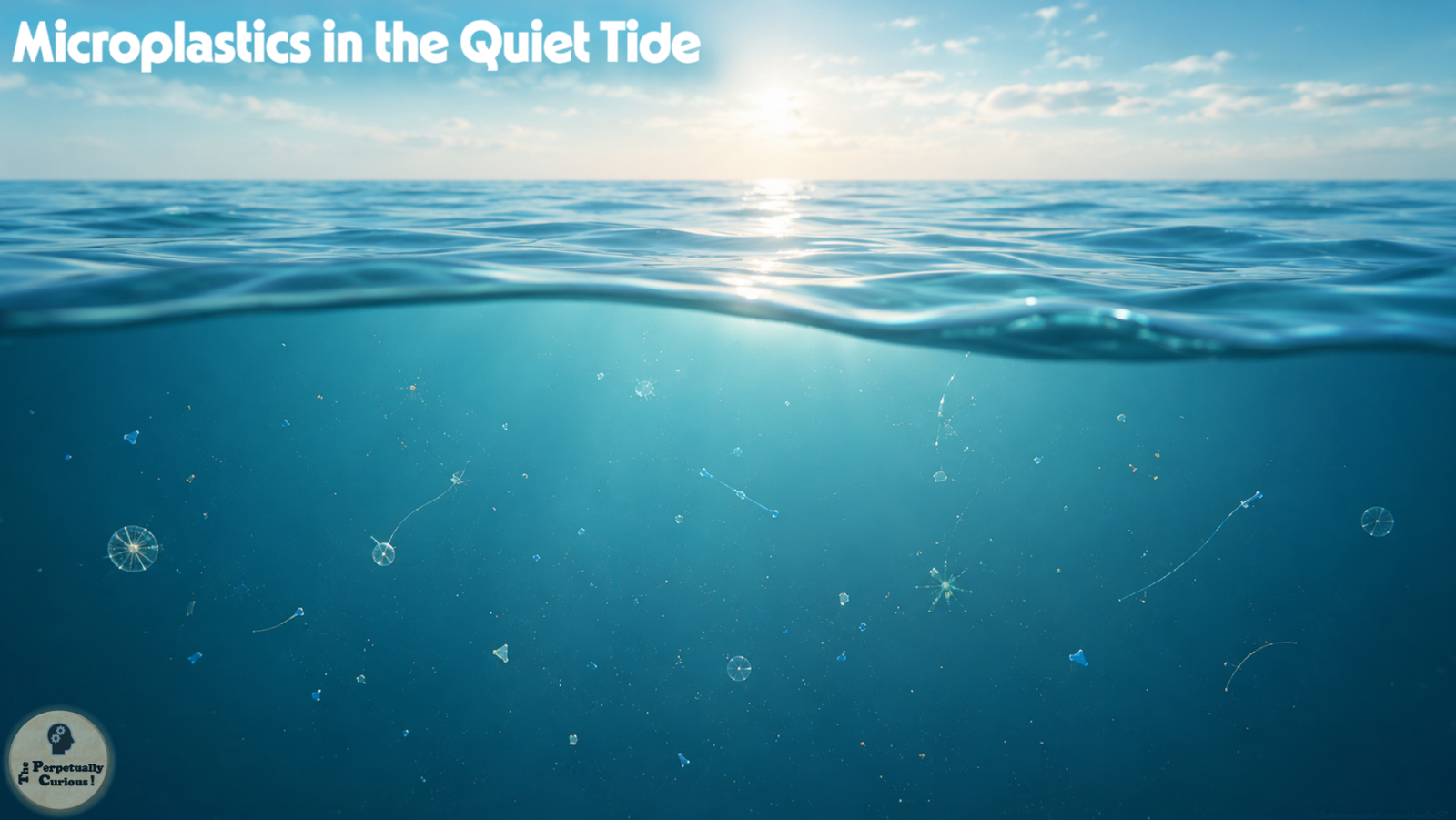
🌊 Microplastics in the Ocean: How Tiny Fragments Travel
Microplastics in the ocean are not only small pieces of plastic. They are mobile fragments, shaped by weathering, water movement, and the living systems they pass through.
- The Perpetually Curious! › Canonical › Environment & SustainabilityArticle
🔄 Tides of Plastic: Microplastic Pollution in the Oceans and Its Journey Back to Us
From section: Frequently Asked Questions+What are microplastics in the ocean? Microplastics are small plastic particles, typically smaller than about 0.2 inches (5 millimeters). They can form when larger plastic items break apart, or they can come from intentionally manufactured small particles, synthetic fibers, tire wear, coatings, and other sources.
- The Perpetually Curious! › Canonical › Planet EarthArticle
🌊 Where the Salt Stays: Why the Ocean Is Salty but Rivers and Most Lakes Are Fresh
From section: 🌊 The ocean is where many water journeys meetRivers carry dissolved ions from the continents into the sea. Groundwater discharges along coasts, windblown material settles onto the ocean surface, and seawater circulates through hot rock beneath the seafloor, where chemical reactions can add some substances and remove others. …
- The Perpetually Curious! › CanonicalGateway
🪐 K2-18 b: The Ocean World We Have Not Seen
One interpretation describes K2-18 b as a possible Hycean world, with a hydrogen-rich atmosphere above a global ocean. Other research finds that the same observations can be explained by a gas-rich mini-Neptune with no habitable surface. …
- The Perpetually Curious! › CanonicalGateway
🌊 One Ocean, Uneven Salt: Why Salinity Does Not Simply Even Out
The Atlantic-Pacific salinity difference is clear on global maps: on average, the Atlantic has higher surface salinity than the Pacific. Yet these are not sealed reservoirs. They are regions of one connected global ocean, and currents continually transport water between them.
- The Perpetually Curious! › Canonical › Environment & SustainabilityArticle
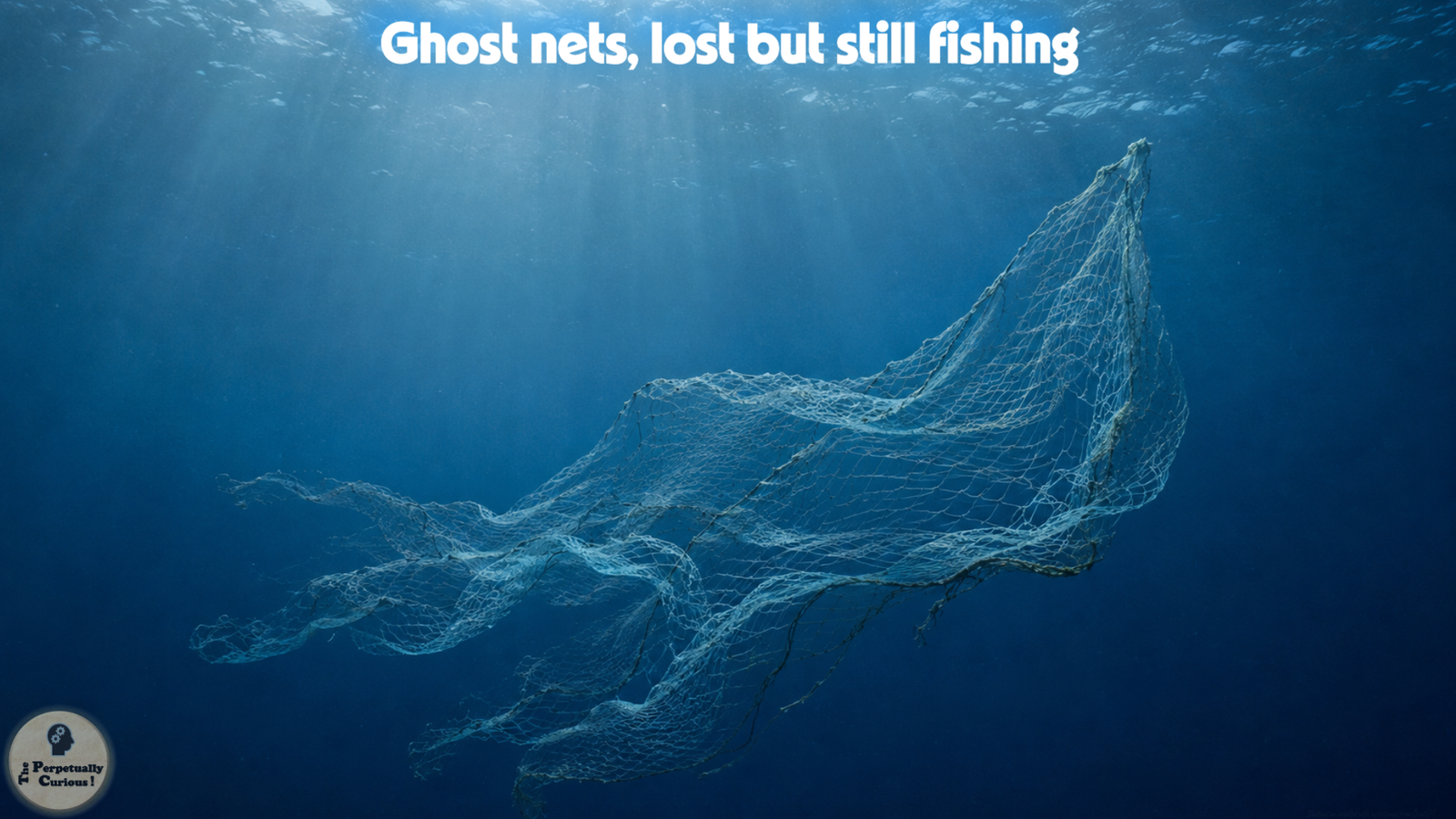
🕸️ Ghost Nets, Silent Drifters: How Lost Fishing Gear Haunts the Ocean
From section: 🌍 Ghost nets and the story of ocean plasticsLarge-scale surveys of floating debris have found that fishing gear can make up a substantial share of plastic mass in some parts of the ocean. In the Great Pacific Garbage Patch, one study estimated that fishing nets alone account for about 46 percent of the plastic mass by weight.
- The Perpetually Curious! › Canonical › Planet EarthArticle
🌐 How SONAR Uses Sound to Map the Hidden Ocean Depths
From section: 🐋 Listening to life in the oceanThis biological perspective connects back to the earlier discussion of sound propagation. The same physical principles that guide SONAR pulses also shape how animal sounds travel through the ocean, which provides a natural path toward understanding how SONAR technology developed over time.
- The Perpetually Curious! › Archives › Environment & SustainabilityArticle
🕸️ Ghost Nets: Silent Killers Threatening Our Oceans and Reefs
🌊 Beneath the calm surface of the ocean, a hidden danger can keep moving long after people lose sight of it: ghost nets. These abandoned, lost, or discarded fishing nets may drift through open water, settle on reefs, tangle with other debris, or remain suspended where marine…
- The Perpetually Curious! › Archives › Planet EarthArticle
🌊 Harbor Wave, Ocean Pulse: The Science of Tsunamis from Seafloor to Shore
Some ocean hazards announce themselves with wind, foam, and a rising sky. A tsunami often does not. Far from shore, it may pass as a long, subtle lift, more like a slow breath than a breaking wave. Even the word “wave” can mislead, because a tsunami is not simply the surface…
- The Perpetually Curious! › Canonical › Planet EarthArticle
🌏 When the Pacific Breathes Warm: El Niño and the Changing Rhythms of Rain
How can a change in the tropical Pacific alter the prospects of rain thousands of miles away? El Niño begins when unusually warm surface waters spread across the central and eastern equatorial Pacific and the ocean and atmosphere reorganize together.