Explore by topic, question, or idea. Find articles, reflections, videos, puzzles, and curiosity pathways gathered across the site.
Press Enter or select Search. A newly typed query starts globally; filters are applied only through the visible rail.
11 results for “mud color”
- The Perpetually Curious! › Canonical › Botanical WondersArticle
🍁 When Leaves Let Go: Why Autumn Colors Turn Red, Gold, and Brown
From section: 🍃 The green that begins to fadeDay length helps many trees keep seasonal time, while temperature, water availability, and species traits influence when the change begins and how it unfolds. Autumn color is one visible expression of plant timekeeping. As chlorophyll breaks down, its retreat makes another part of the leaf's palette easier to see.
- The Perpetually Curious! › Archives › Botanical WondersArticle
🎨 Nature's Color Code: Decoding the Secret Language of Vegetables
The purple carrot in a 17th-century Dutch painting holds a secret. Before orange became the standard, these violet roots were widely grown in European gardens.
- The Perpetually Curious! › Archives › Botanical WondersArticle
Golden, Red, and Blue: A Journey Through the Many Lives of Bananas 🍌
A banana often appears simple at first glance, a familiar curve of yellow fruit resting quietly on a kitchen counter. Yet this everyday presence conceals a world of colors, histories, and cultural meanings that stretch across continents and centuries.
- The Perpetually Curious! › Archives › Botanical WondersArticle
🎨 The Colorful World of Grapes: What Makes Each Variety Unique
From section: 🍇 Red, Green, or Black: What Sets Grapes Apart?Exploring these differences reveals how something as simple as color can hint at the hidden chemistry within.Read more »
- The Perpetually Curious! › Archives › Botanical WondersArticle
🌳🍂 Harmony of Hues: Painting the Landscape with Crimson and Gold
🍁 Have you ever wondered why many leaves do not simply fade in autumn, but instead ignite into crimson, gold, and amber while others settle quietly into softer browns?
- The Perpetually Curious! › Archives › Botanical WondersArticle
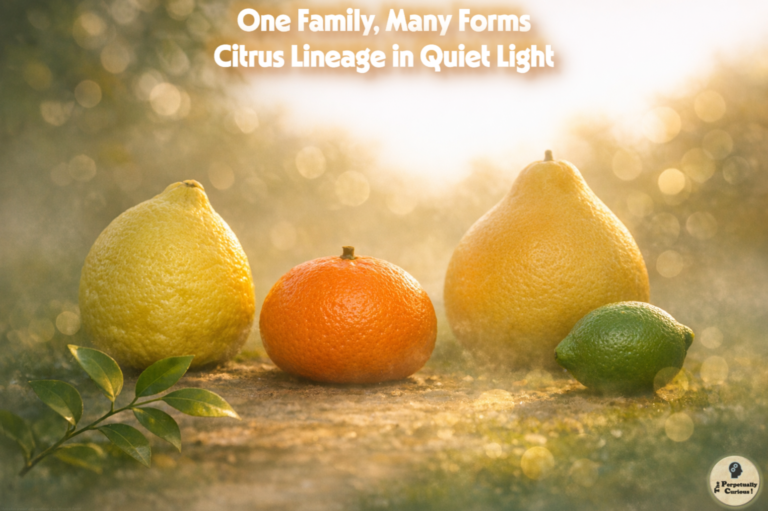
🍊 Citrus Family Tree: How Ancient Lineages Became Familiar Fruits
From section: Why familiar names can hide mixed ancestryThe broader main-site treatment follows these relationships much farther, including the citron-influenced paths toward lemons and limes, the more complicated position of sweet lime, regional South Indian citrus names, pollination, peel color, comparison tables, and a fuller set of reader questions.
- The Perpetually Curious! › Canonical › Botanical WondersArticle
🌱 Why Fruits Have Seeds: The Many Ways Plants Begin Again
From section: 🍒 Some fruits turn appetite into transportIn many fleshy fruits, ripening changes color, aroma, texture, acidity, and sugar content. These changes can make the fruit noticeable and rewarding to animals at roughly the time when its seeds are ready for release. …
- The Perpetually Curious! › Canonical › Botanical WondersArticle
🌱 Why Leaves Have Different Shapes: The Science Behind Nature’s Geometry
From section: 🌤️ Climate, biomes, and the global sculpting of leaf form… Maples, oaks, beeches, and chestnuts bear relatively large leaves during the growing season, then shed them in autumn in a cascade of autumn leaf color that marks the end of each year's photosynthetic investment.
- The Perpetually Curious! › Canonical › Botanical WondersArticle
🌿 Trees That Drink the Sky: How Certain Species Shape Water and Land in South India
From section: 🌌 A quiet reflection on shared landscapesSeasonal shifts in vegetation, including the transformations described in seasonal color change, offer a reminder that landscapes are shaped by cycles rather than fixed states, and that ecological patterns must be interpreted within these changing rhythms.
- The Perpetually Curious! › Canonical › Botanical WondersArticle
🍊 The Citrus Family Tree: Tracing the Roots of Oranges, Lemons, Limes, and Grapefruit
From section: Lemon and lime: two paths from the same ancestor.Although lemon and lime differ in color, aroma, and acidity, both trace their origins to citron. Lemon carries the influence of bitter orange, while many limes carry the influence of papeda. These different ancestral blends shape their flavor, rind texture, and culinary roles.