Explore by topic, question, or idea. Find articles, reflections, videos, puzzles, and curiosity pathways gathered across the site.
Press Enter or select Search. A newly typed query starts globally; filters are applied only through the visible rail.
55 results for “ocean salinity”
- The Perpetually Curious! › CanonicalGateway
🌊 One Ocean, Uneven Salt: Why Salinity Does Not Simply Even Out
The Atlantic-Pacific salinity difference is clear on global maps: on average, the Atlantic has higher surface salinity than the Pacific. Yet these are not sealed reservoirs. They are regions of one connected global ocean, and currents continually transport water between them.
- The Perpetually Curious! › Canonical › Planet EarthArticle
🌊 Where the Salt Stays: Why the Ocean Is Salty but Rivers and Most Lakes Are Fresh
From section: ⚗️ Seawater is not simply concentrated river waterThis selective processing explains why seawater is not simply a more concentrated version of river water. It also leads to the final part of the puzzle: if dissolved ions keep arriving, why does ocean salinity not rise without limit?
- The Perpetually Curious! › CanonicalGateway
🐟 Where Salt Sets the Limits: How Salinity Shapes Fish Survival and Distribution
… Temperature, oxygen, depth, currents, food, predators, competitors, and suitable spawning habitat also help determine where fish occur. There is no dependable rule that Atlantic species as a group prefer high salinity while Pacific or Indian Ocean species require their own basin-wide levels. …
- The Perpetually Curious! › Canonical › Environment & SustainabilityArticle
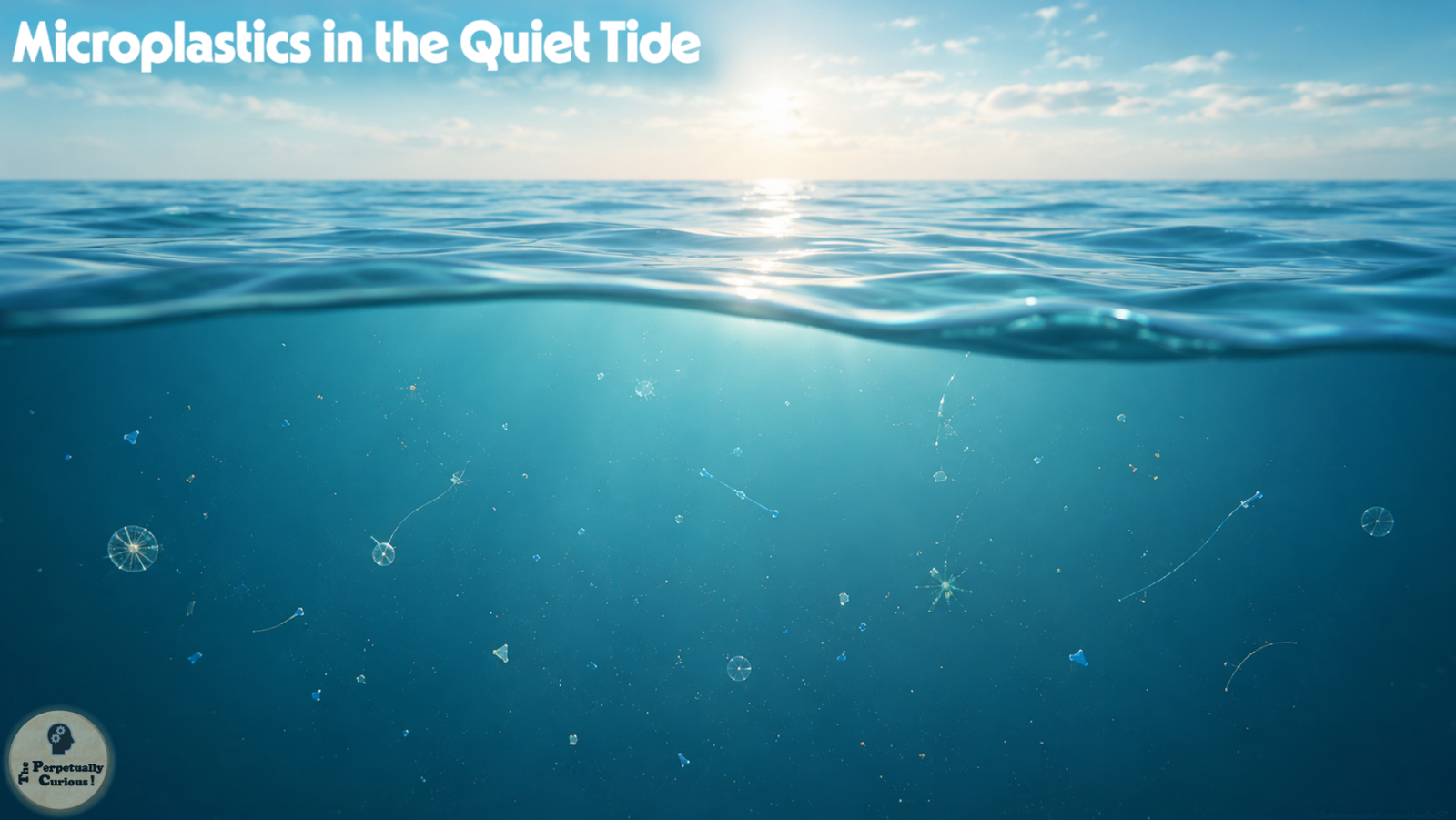
🔄 Tides of Plastic: Microplastic Pollution in the Oceans and Its Journey Back to Us
The ocean has always carried stories. It carries the weight of tides, the drift of plankton, and the quiet pulse of currents that circle the planet. Today, it carries something else as well. It carries countless fragments of human life that have become small enough to slip…
- The Perpetually Curious! › Archives › Environment & SustainabilityArticle
🌊 Microplastics in the Ocean: How Tiny Fragments Travel
From section: When the ocean sends fragments backWhen the ocean sends fragments back The loop becomes especially clear when ocean particles return toward human communities.
- The Perpetually Curious! › CanonicalGateway
🪐 K2-18 b: The Ocean World We Have Not Seen
One interpretation describes K2-18 b as a possible Hycean world, with a hydrogen-rich atmosphere above a global ocean. Other research finds that the same observations can be explained by a gas-rich mini-Neptune with no habitable surface. …
- The Perpetually Curious! › Canonical › Planet EarthArticle
🌐 How SONAR Uses Sound to Map the Hidden Ocean Depths
From section: Frequently Asked Questions+How fast does sound travel in seawater? In typical ocean conditions, sound travels at about 4,900 feet per second (about 1,500 meters per second). This value can vary with temperature, salinity, and depth.
- The Perpetually Curious! › Archives › Environment & SustainabilityArticle
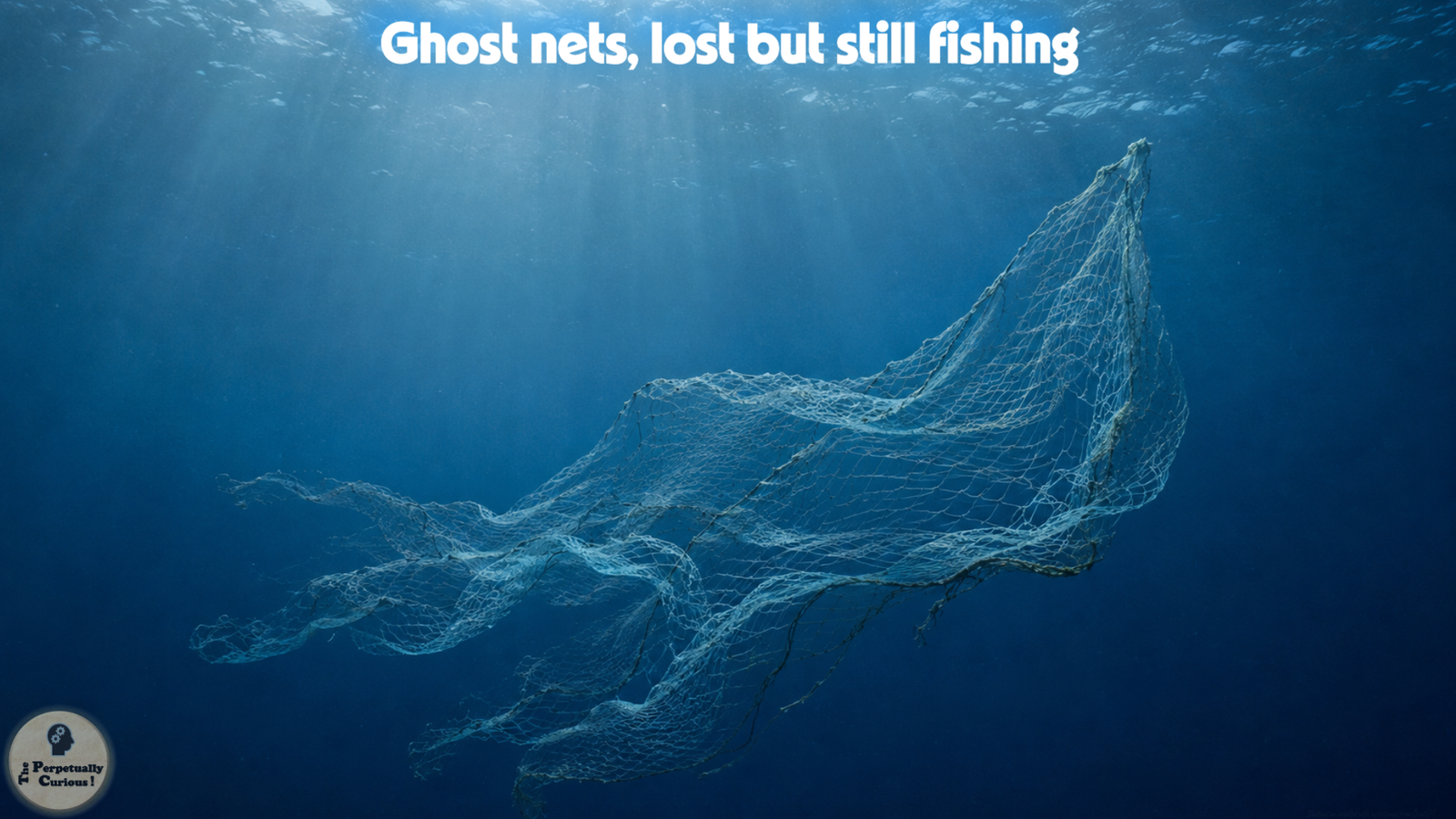
🕸️ Ghost Nets: Silent Killers Threatening Our Oceans and Reefs
🌊 Beneath the calm surface of the ocean, a hidden danger can keep moving long after people lose sight of it: ghost nets. These abandoned, lost, or discarded fishing nets may drift through open water, settle on reefs, tangle with other debris, or remain suspended where marine…
- The Perpetually Curious! › Archives › Planet EarthArticle
🌊 Harbor Wave, Ocean Pulse: The Science of Tsunamis from Seafloor to Shore
Some ocean hazards announce themselves with wind, foam, and a rising sky. A tsunami often does not. Far from shore, it may pass as a long, subtle lift, more like a slow breath than a breaking wave. Even the word “wave” can mislead, because a tsunami is not simply the surface…
- The Perpetually Curious! › Canonical › Environment & SustainabilityArticle
🕸️ Ghost Nets, Silent Drifters: How Lost Fishing Gear Haunts the Ocean
From section: 🌍 Ghost nets and the story of ocean plasticsLarge-scale surveys of floating debris have found that fishing gear can make up a substantial share of plastic mass in some parts of the ocean. In the Great Pacific Garbage Patch, one study estimated that fishing nets alone account for about 46 percent of the plastic mass by weight.