Explore by topic, question, or idea. Find articles, reflections, videos, puzzles, and curiosity pathways gathered across the site.
Press Enter or select Search. A newly typed query starts globally; filters are applied only through the visible rail.
19 results for “origins of month names calendar history”
- The Perpetually Curious! › Canonical › Cosmic ExplorationArticle
🌟 Brown Dwarfs: Between Giant Planets and the Smallest Stars
From section: 🌌 Formation, companions, and the galactic censusThe Galactic census matters, therefore, not merely as a count. Each well-characterized brown dwarf helps connect formation history, atmospheric change, mass, and age. Together, these objects reveal how densely and diversely the boundary between planets and stars is populated across cosmic time.
- The Perpetually Curious! › Canonical › Cosmic ExplorationArticle
🌌 The Hunt for the Invisible: Understanding Dark Matter Through Science’s Greatest Detective Story
From section: Frequently Asked Questions+… Dark energy is associated with the accelerated expansion of the universe and does not behave like matter concentrated in galactic halos. Their similar names reflect what remains unexplained, not a shared physical identity.
- The Perpetually Curious! › Canonical › Cosmic ExplorationArticle
🌍 When Earth First Took Shape: A Planet Born from Cosmic Dust
From section: 🌗 A world reshaped: The giant impact and the birth of the MoonThe leading scientific explanation for the Moon’s origin is the giant impact hypothesis. According to this model, a large protoplanet collided with the early Earth roughly 4.5 billion years ago, within the opening tens of millions of years of Earth’s history. This hypothetical impactor is conventionally called Theia.
- The Perpetually Curious! › Canonical › Cosmic ExplorationArticle
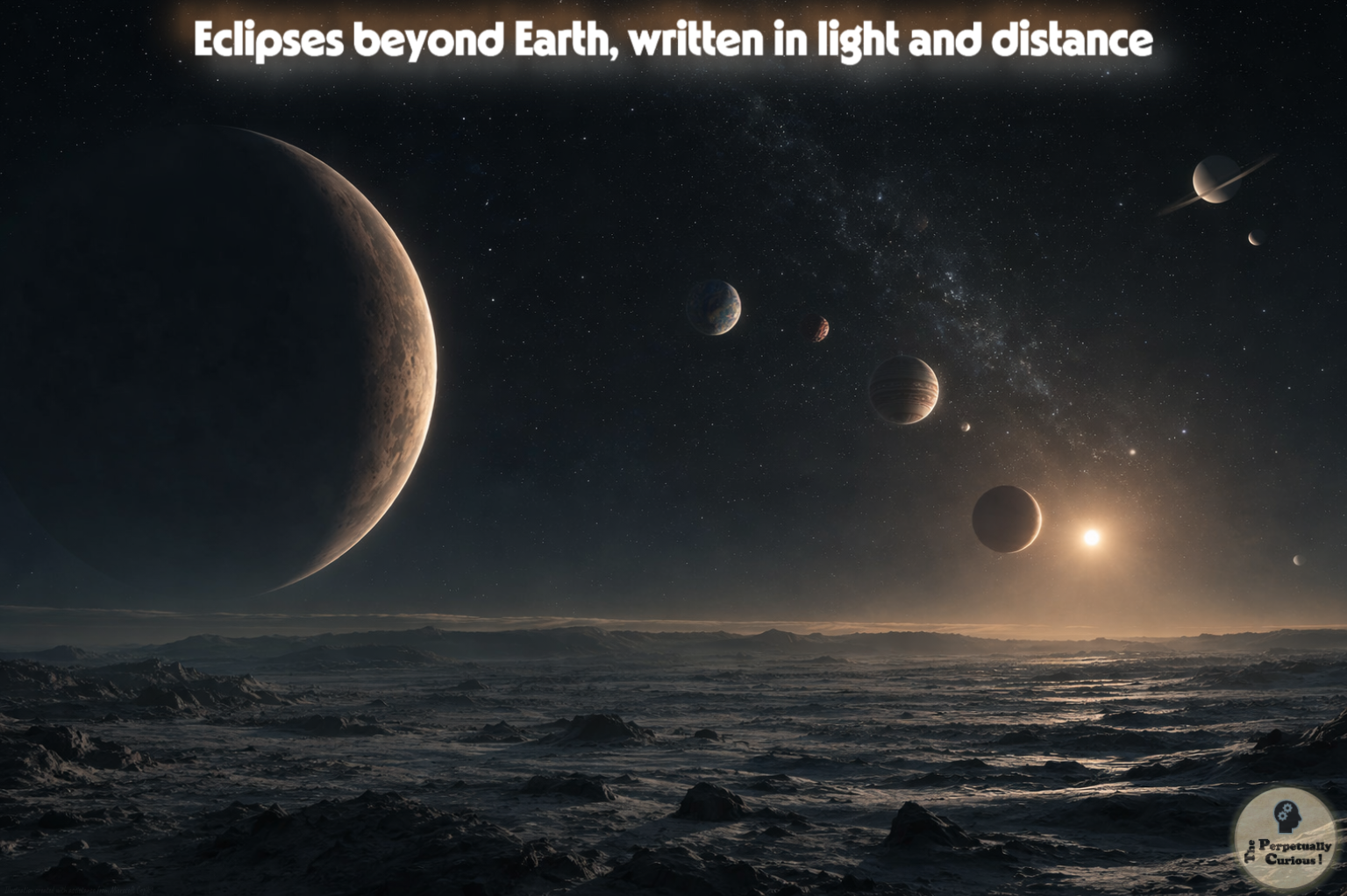
🌑 Shadows Across the Solar System: How Eclipses Unfold Beyond Earth
From section: 🌞 Solar eclipses across the Solar System… Multiple shadows can appear at once, creating a dynamic and visually striking scene. Double shadow transits occur roughly once or twice per month, and single shadow transits from individual moons are visible at least once a week. Triple transits are rare, with only a handful occurring each decade.
- The Perpetually Curious! › Archives › Cosmic ExplorationArticle
🔭 The Ten Largest Moons in Our Solar System: A Journey Through Worlds of Ice, Fire, and Hidden Oceans
The long tradition of naming these worlds after mythological figures reflects the cultural patterns embedded in planetary names, which often mirror the stories humans have projected onto the night sky.Read more »
- The Perpetually Curious! › Archives › Cosmic ExplorationArticle
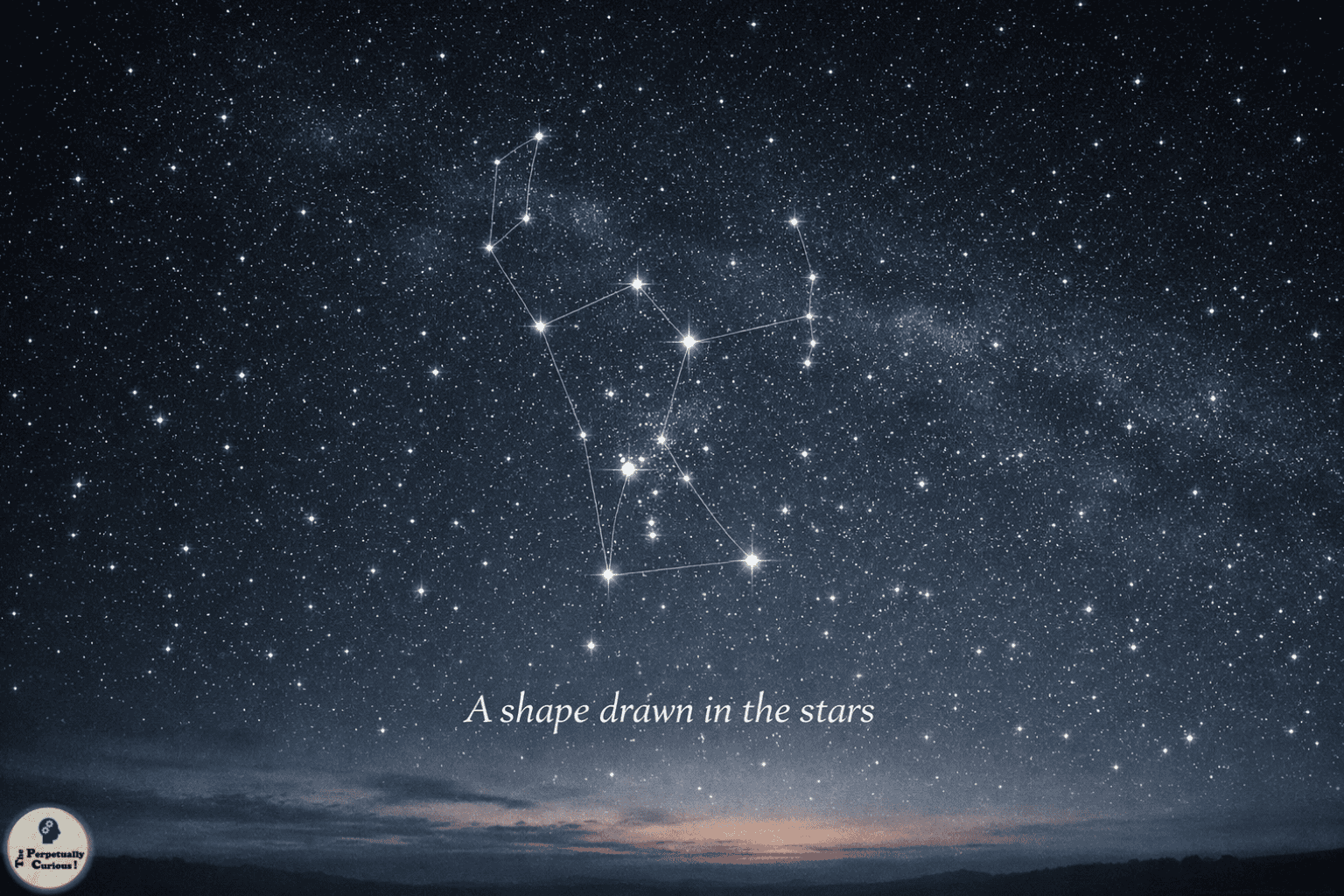
🌌 Constellations: How Star Patterns Help Us Find Our Way
From section: Why orientation needs memoryThese repeated appearances turned the heavens into a clock, calendar, and compass.
- The Perpetually Curious! › Archives › Cosmic ExplorationArticle
The Universe's Ancient Whisper: Decoding the Cosmic Microwave Background 🌌
From section: When Static Revealed Creation 📡Little did they know that this stubborn interference would soon reshape humanity's understanding of cosmic origins.
- The Perpetually Curious! › Archives › Cosmic ExplorationArticle
Where the Solar System Whispers Its Secrets: A Journey to the Kuiper Belt 🌌
Like a library written in ice, each world preserves a different chapter of our solar system's ancient history.Read more »
- The Perpetually Curious! › Archives › Cosmic ExplorationArticle
🌘 Eclipses Across the Solar System: When Shadows Travel
From section: A simple alignment, many possible shadowsTo see how this shadow logic plays out world by world, the main-site article follows the wider path through Martian moon transits, Jupiter’s moving shadow spots, Saturn’s ring shadows, Titan’s haze, Triton’s distant eclipses, and the observation history behind these rare alignments.