Explore by topic, question, or idea. Find articles, reflections, videos, puzzles, and curiosity pathways gathered across the site.
Press Enter or select Search. A newly typed query starts globally; filters are applied only through the visible rail.
54 results for “soil vs regolith”
- The Perpetually Curious! › Canonical › Planet EarthArticle
🌍 Why Mud Is Brown or Black: Where Earth Turns to Quiet Ink
From section: 🌍 When soil becomes waterlogged, it turns into mudMud begins as soil that has taken on more water than it can easily drain. In a field after rain, in a rice paddy, or along a tidal flat, the pores between grains fill with water and air is displaced. …
- The Perpetually Curious! › Archives › Botanical WondersArticle
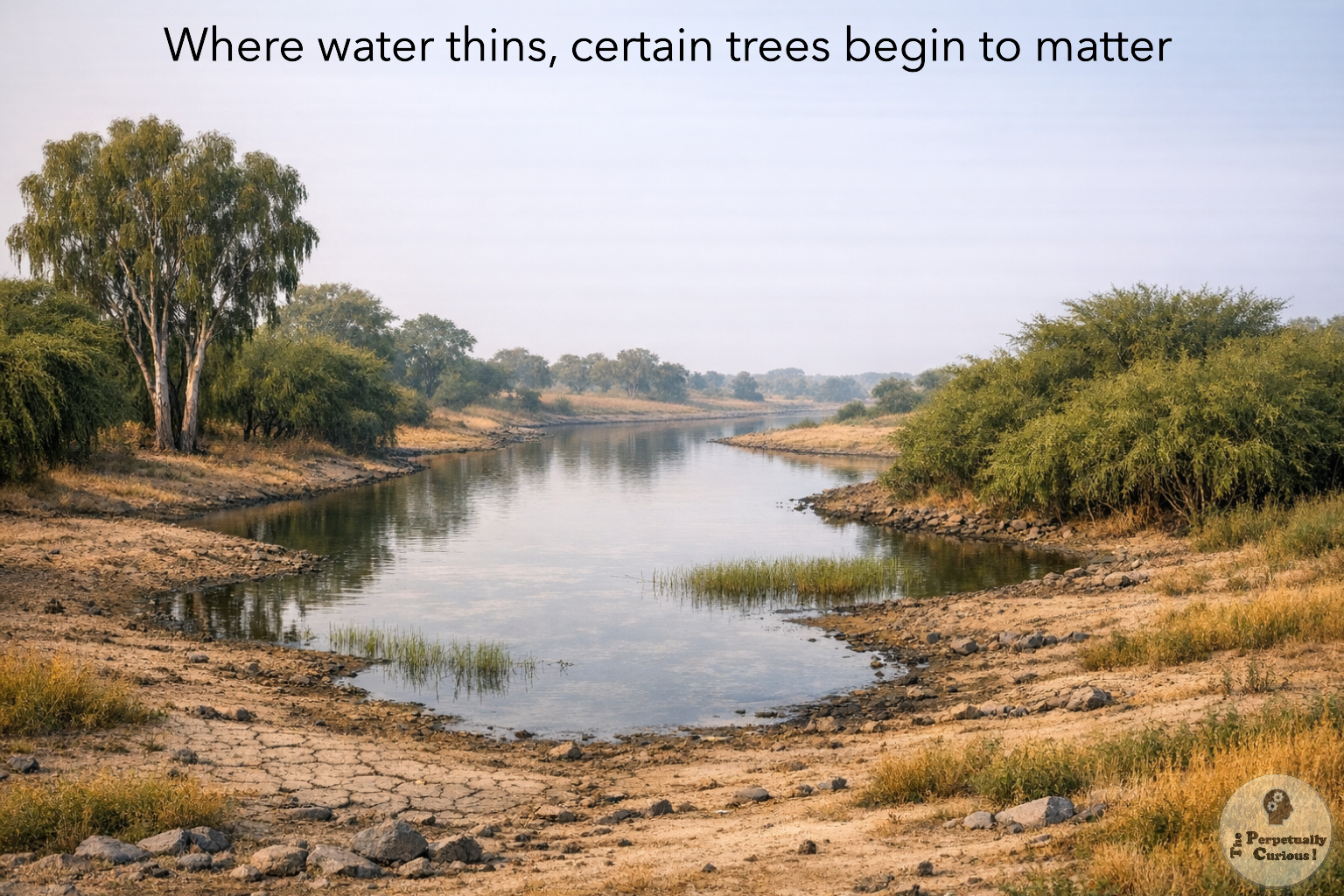
💧 Seasonal Ponds and Root Depth in South India
Seasonal ponds often look still from a distance, yet their edges can hold some of the most active negotiations in a dry landscape. In parts of South India, stored rainwater, shallow aquifers, dry soil, and plant roots meet in a narrow zone where each season leaves its mark.
- The Perpetually Curious! › Archives › Botanical WondersArticle
The Coffee Odyssey: A Bean's Scientific Journey from Soil to Soul ☕
The morning ritual of brewing coffee connects us to an ancient agricultural symphony that spans continents and centuries. Each aromatic sip represents the culmination of precise botanical processes, meticulous human craftsmanship, and transformative chemistry.
- The Perpetually Curious! › Canonical › Food & LifestyleArticle
☕ From Coffee Cherry to Cup: The Living Journey Behind Every Brew
From section: Frequently Asked Questions+Can used coffee grounds help garden soil? They can contribute organic matter when incorporated appropriately into compost. Heavy direct applications can have unwanted effects, and spent grounds are not a dependable way to make soil acidic.
- The Perpetually Curious! › Canonical › Botanical WondersArticle
🍁 When Leaves Let Go: Why Autumn Colors Turn Red, Gold, and Brown
From section: 🍂 What happens after the fall… Some insects shelter in the litter through colder months, while fungi, bacteria, and small invertebrates help break it down. Nutrients move through the soil ecosystem as that work proceeds, at rates shaped by leaf chemistry, moisture, temperature, and the organisms present. …
- The Perpetually Curious! › Canonical › Cosmic ExplorationArticle
🌍 When Worlds Pull: Gravity Across the Planets and What It Reveals About Them
From section: 🧭 What gravity means for the weight we feelThese values follow the same relationship and make the contrast between mass and weight easier to see. The behavior of loose material on the Moon, described in studies of lunar regolith, offers another example of how a low-gravity environment can affect the motion of surface material.
- The Perpetually Curious! › Canonical › Planet EarthArticle
🌊 Where the Salt Stays: Why the Ocean Is Salty but Rivers and Most Lakes Are Fresh
From section: ⛰️ Much of the salt begins with a journey through rock… Droplets can take up gases and particles from the air, and rainwater becomes mildly acidic as carbon dioxide dissolves into it. After the water reaches soil, it may encounter still more carbon dioxide released by roots and microorganisms.
- The Perpetually Curious! › Canonical › Planet EarthArticle
🌏 When the Pacific Breathes Warm: El Niño and the Changing Rhythms of Rain
From section: 🌱 Landscapes, water, and daily lifeLower seasonal rainfall also does not rule out intense individual downpours. When heavy rain exceeds the rate at which soil can absorb water or drainage systems can carry it away, rapid runoff and localized flooding may follow. …
- The Perpetually Curious! › Canonical › Environment & SustainabilityArticle
🌿 Liquid Trees: Microalgae Photobioreactors and the Quiet Art of Urban Breathing
From section: 🌱 A new kind of urban presence: what a liquid tree is… The visible green water makes an otherwise hidden cultivation process understandable in public space. A compact installation may also fit where limited soil, rooting space, or street infrastructure makes conventional tree planting difficult, while remaining fundamentally different from a living tree.
- The Perpetually Curious! › Canonical › Botanical WondersArticle
🌿 When One Tree Remembered a Greener Sahara: The Quiet Story of the Tree of Ténéré
From section: Frequently Asked Questions+… The tree survived by extending its roots deep into the ground, reaching hidden groundwater about 108 to 118 feet (33 to 36 meters) below the surface. Its story belongs to a wider pattern of roots and water, where plant survival in dry landscapes often depends on what lies far below the visible soil.