Explore by topic, question, or idea. Find articles, reflections, videos, puzzles, and curiosity pathways gathered across the site.
Press Enter or select Search. A newly typed query starts globally; filters are applied only through the visible rail.
24 results for “the science behind nature geometry”
- The Perpetually Curious! › Archives › Botanical WondersArticle
🎨 Nature's Color Code: Decoding the Secret Language of Vegetables
The purple carrot in a 17th-century Dutch painting holds a secret. Before orange became the standard, these violet roots were widely grown in European gardens.
- The Perpetually Curious! › Archives › Botanical WondersArticle
🌱 Grafting: Where Science and Art Take Root
🌿 What is grafting? Grafting is the practice of joining two plants so they grow as one. The upper part, the scion, carries buds or shoots, and the lower part, the rootstock, provides the foundation and root system. When their tissues align and heal, the two plants merge into a single organism.
- The Perpetually Curious! › Archives › Botanical WondersArticle
🌿 The Neem Tree: Nature’s Evergreen Healer
🌳 A Living Landmark The neem tree (Azadirachta indica) is an evergreen native to the Indian subcontinent, instantly recognizable by its wide, spreading canopy, rough gray bark, and delicate, serrated leaves. It typically grows 15–25 meters tall and can occasionally reach 30 meters.
- The Perpetually Curious! › Canonical › Botanical WondersArticle
🍁 When Leaves Let Go: Why Autumn Colors Turn Red, Gold, and Brown
One branch glows red while the tree beside it turns gold. Farther down the path, leaves have settled into russet brown. The same season has reached them all, yet each tree answers in its own colors.
- The Perpetually Curious! › Canonical › Botanical WondersArticle
🌿 Trees That Drink the Sky: How Certain Species Shape Water and Land in South India
From section: 🌌 A quiet reflection on shared landscapesThe presence of Prosopis juliflora, eucalyptus, acacia, Lantana, and Ipomoea in South Indian landscapes is part of a larger story about how species travel, adapt, and sometimes dominate. It is also a story about how communities respond, how science observes, and how policy attempts to balance different needs.
- The Perpetually Curious! › Archives › Botanical WondersArticle
🌳🍂 Harmony of Hues: Painting the Landscape with Crimson and Gold
🍁 Have you ever wondered why many leaves do not simply fade in autumn, but instead ignite into crimson, gold, and amber while others settle quietly into softer browns?
- The Perpetually Curious! › Canonical › Botanical WondersArticle
🌱 Why Fruits Have Seeds: The Many Ways Plants Begin Again
From section: 💡 Did You Know?🌸 Many orchids produce extremely small seeds with very little stored food. Their germination in nature commonly depends on compatible mycorrhizal fungi that supply resources to the developing orchid.
- The Perpetually Curious! › Canonical › Botanical WondersArticle
🌿 When One Tree Remembered a Greener Sahara: The Quiet Story of the Tree of Ténéré
From section: 🌍 From legend to landscape… The tree’s importance does not depend on proving that it inspired forests across Africa. It depends on something more grounded: the long climate history that left one acacia behind, the geology that held water far below the surface, and the human routes that made this solitary tree unforgettable.
- The Perpetually Curious! › Canonical › Botanical WondersArticle
🍃 Bael Tree: Ecology, Sacred Groves, and Cultural History
From section: 🌸 A gentle invitation to shareWe kindly invite you to share and spread the word. By passing this article along to friends, colleagues, and fellow nature enthusiasts, you help more people encounter the quiet story of the bael tree and the landscapes it inhabits. …
- The Perpetually Curious! › Archives › Botanical WondersArticle
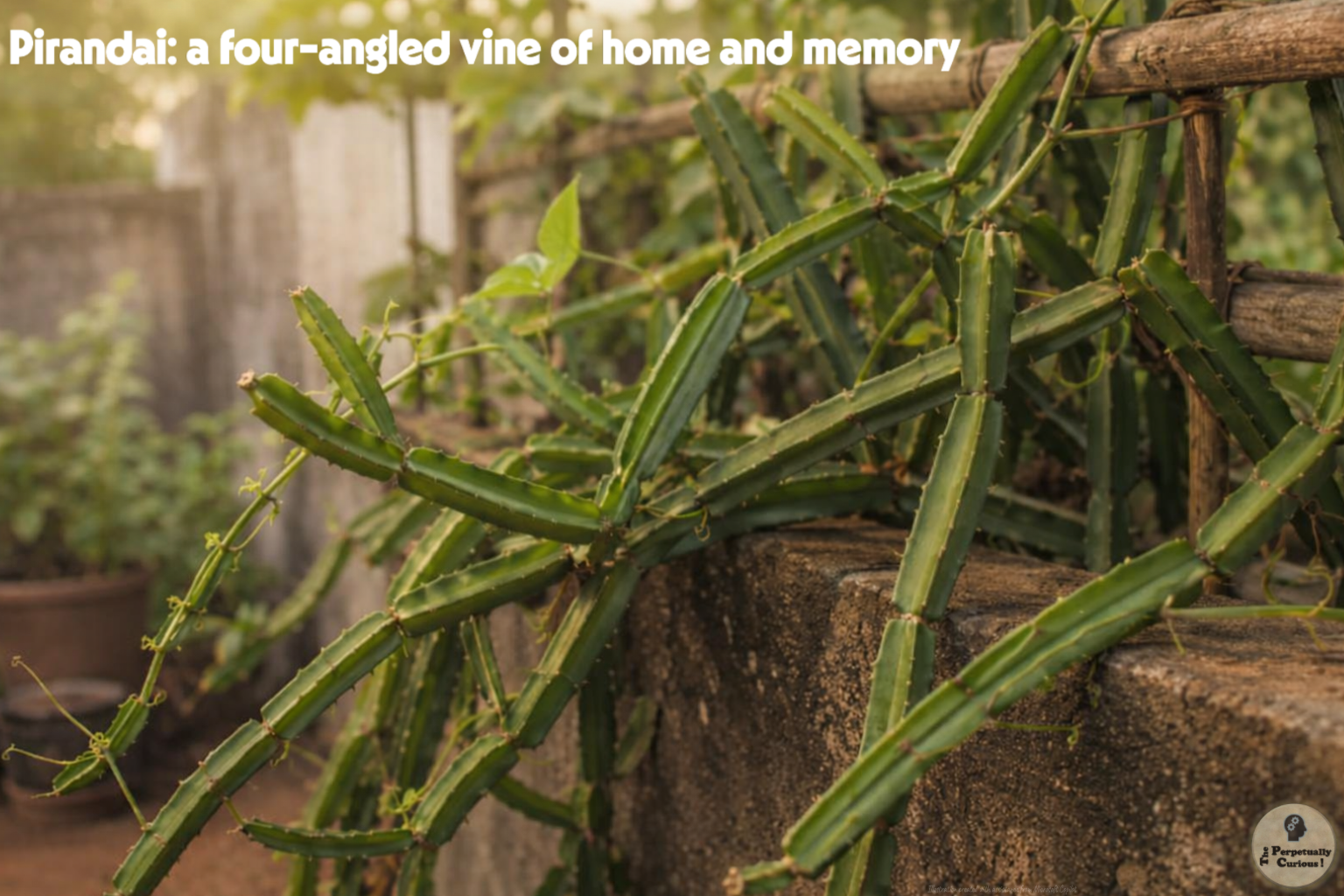
🌿 Pirandai: How a Four-Angled Vine Holds Memory and Water
From section: The geometry of a dry-land vineThe geometry of a dry-land vine Along a warm garden fence, Pirandai does not announce itself through large flowers or dramatic leaves.