Explore by topic, question, or idea. Find articles, reflections, videos, puzzles, and curiosity pathways gathered across the site.
Press Enter or select Search. A newly typed query starts globally; filters are applied only through the visible rail.
32 results for “where earth turns to quiet ink”
- The Perpetually Curious! › Canonical › Cosmic ExplorationArticle
🌍 When Earth First Took Shape: A Planet Born from Cosmic Dust
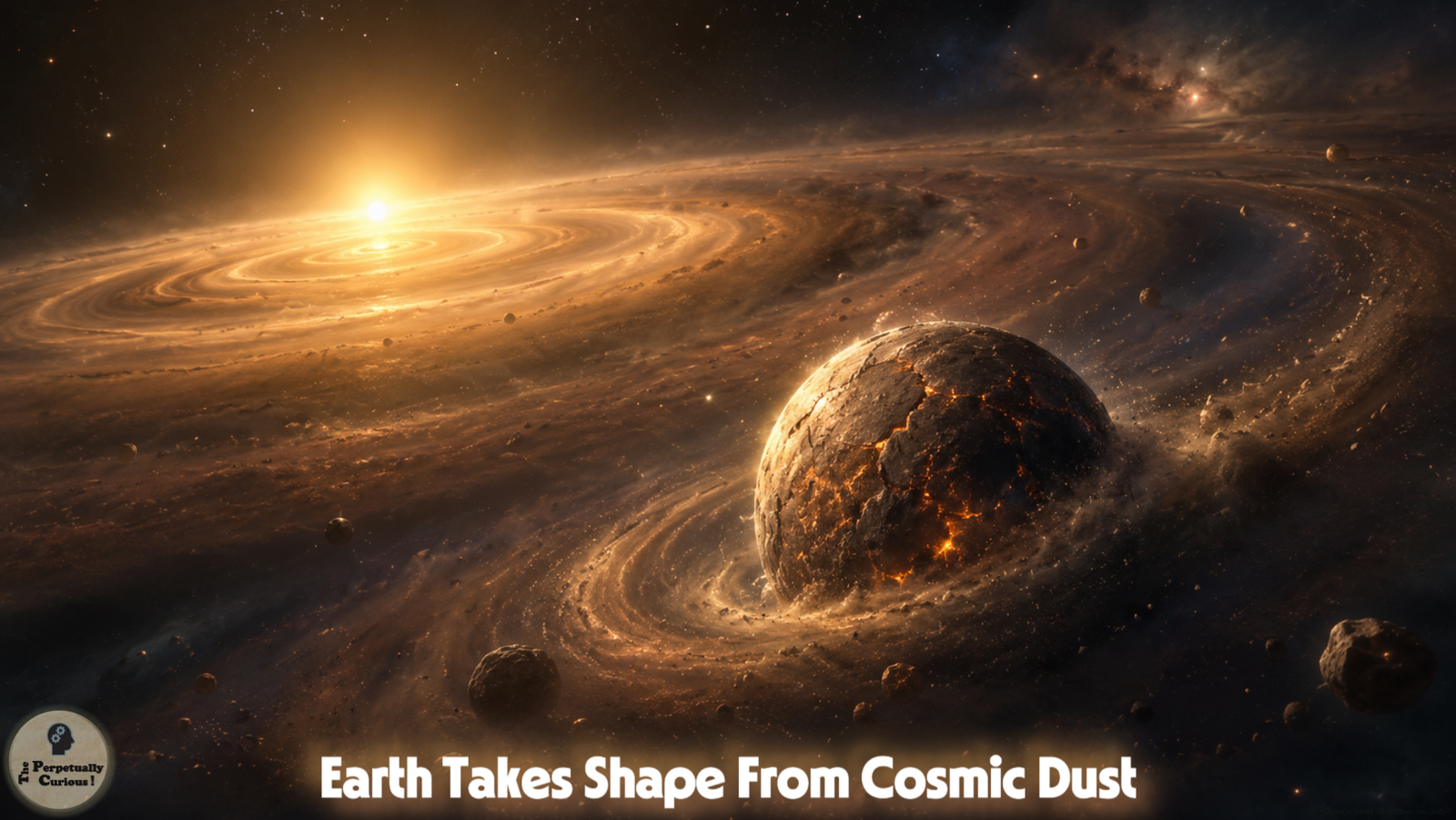
Earth’s story begins in a quiet arm of the Milky Way, where a drifting cloud of gas and dust moved through darkness. Over time, gravity drew part of this cloud inward, creating a rotating structure that grew denser and hotter as it contracted. At the center, heat and pressure…
- The Perpetually Curious! › Canonical › Cosmic ExplorationArticle
🛰️ When Fire Meets Air: How Spacecraft Reenter Earth’s Atmosphere
High above Earth’s landscapes, spacecraft trace arcs through a realm where air gradually thins toward the quiet of orbit. Launch carries them outward through Earth’s layered atmosphere, but return brings the same atmospheric envelope into a very different role.
- The Perpetually Curious! › Archives › Cosmic ExplorationArticle
🌍 Why Earth Has a Living Atmosphere
From section: 🔭 Opening the QuestionEarth’s atmosphere feels so natural that it is easy to forget how unusual it is.
- The Perpetually Curious! › Canonical › Cosmic ExplorationArticle
🌑 Shadows Across the Solar System: How Eclipses Unfold Beyond Earth
There is a moment on Earth when daylight softens, shadows stretch across familiar ground, and the Sun’s brilliance dims as if the world is holding its breath. Although this article is not about Earth’s eclipses, that moment offers a useful anchor. …
- The Perpetually Curious! › Canonical › Cosmic ExplorationArticle
🌌 Why Space Looks Dark in a Universe Filled with Light: Understanding the Quiet Cosmos
Light moves through the quiet of space and waits for a surface to answer it. The rest remains open and unlit, a depth that holds its silence.
- The Perpetually Curious! › Canonical › Cosmic ExplorationArticle
🌌 Why Space Feels Cold Among So Many Suns: The Quiet Physics of Cosmic Warmth
Space appears to hold a quiet paradox. Countless stars blaze at temperatures far beyond ordinary experience, yet the immense regions between them are often described as profoundly cold. The contrast becomes clearer once temperature is separated from the everyday sensation of cold air.
- The Perpetually Curious! › Archives › Cosmic ExplorationArticle
The Unlikely Astronauts: What Earth’s Toughest Survivors Teach Us About the Possibility of Life Elsewhere 🦠
For decades, our search for alien life focused on finding another Earth: a comfortable, temperate world with liquid water and gentle sunshine. But life, as we have discovered, finds a way in the most hostile environments imaginable.
- The Perpetually Curious! › Canonical › Cosmic ExplorationArticle
🌙 Quiet Worlds, Vast Stories: Some Lesser-Known Moons of Our Solar System
Most sky‑watchers can name a handful of large moons such as Ganymede, Titan, or Earth’s own Moon, yet scattered across the outer darkness are smaller, quieter companions that rarely appear in familiar summaries. These lesser-known moons do not dominate by size.
- The Perpetually Curious! › Canonical › Cosmic ExplorationArticle
✨ Constellations: Quiet Patterns, Shared Skies, and the Stories We Trace Together
On a clear night, the sky stretches outward in a quiet sweep of light, and the stars appear as scattered points that invite the human mind to connect them. Across generations, people have traced patterns among these distant suns, creating constellations that carry memory, orientation, and meaning.
- The Perpetually Curious! › Archives › Cosmic ExplorationArticle
🌍 How Earth Formed: The Slow Assembly of a Young Rocky World
Earth did not appear as a finished sphere in an otherwise complete Solar System. Its beginning was distributed across a rotating disk of gas, dust, rock, and metal around the newborn Sun.