Explore by topic, question, or idea. Find articles, reflections, videos, puzzles, and curiosity pathways gathered across the site.
Press Enter or select Search. A newly typed query starts globally; filters are applied only through the visible rail.
89 results for “why beaches carry sand”
- The Perpetually Curious! › Canonical › Planet EarthArticle
🌊 Where the Waves Leave Their Footprints: Why Beaches Carry Sand
… Waves arrive in steady succession, each one shaping the edge of the land as if writing and rewriting a story that has no final draft. Many visitors feel the softness of sand beneath their feet and wonder why beaches carry sand at all. …
- The Perpetually Curious! › Archives › Planet EarthArticle
🌊 Why Beaches Have Sand
Beaches often appear simple at first glance. They seem like a narrow place where land and water meet. Yet the presence of sand along so many coastlines is the result of long journeys, slow transformations, and the combined work of rivers, weather, and waves.
- The Perpetually Curious! › Archives › PhysicsArticle
⚗️ The Invisible Revolution: Understanding the Ancient Art and Modern Science of Glass Manufacturing
From section: Where Sand Becomes Transparent 🏛️Where Sand Becomes Transparent 🏛️ Glass surrounds us so completely that we rarely pause to consider its profound mystery.
- The Perpetually Curious! › Canonical › Botanical WondersArticle
🌲 When Trees Carry Time: Oldest Tree Species, Ancient Forests, and Sacred Trees
From section: 🌐 Four timelines of age: Biological, geological, individual, and culturalTaken together, these timelines show that age in nature is not a single number. Trees carry the memory of climates, continents, ecosystems, seasons, and cultures. Some endure as lineages. …
- The Perpetually Curious! › Canonical › Cosmic ExplorationArticle
🌌 Borrowing the Orbits of Giants: How Gravity Assists Carry Spacecraft into the Deep
From section: 🌌 Why Gravity Assists Matter for Cosmic Exploration… The technique is a reminder that careful understanding of physics can open doors that brute force alone cannot. The ability to communicate across these vast distances depends on radio waves, which carry signals between spacecraft and Earth and make it possible for these missions to return their discoveries home.
- The Perpetually Curious! › Canonical › Environment & SustainabilityArticle
🔄 Tides of Plastic: Microplastic Pollution in the Oceans and Its Journey Back to Us
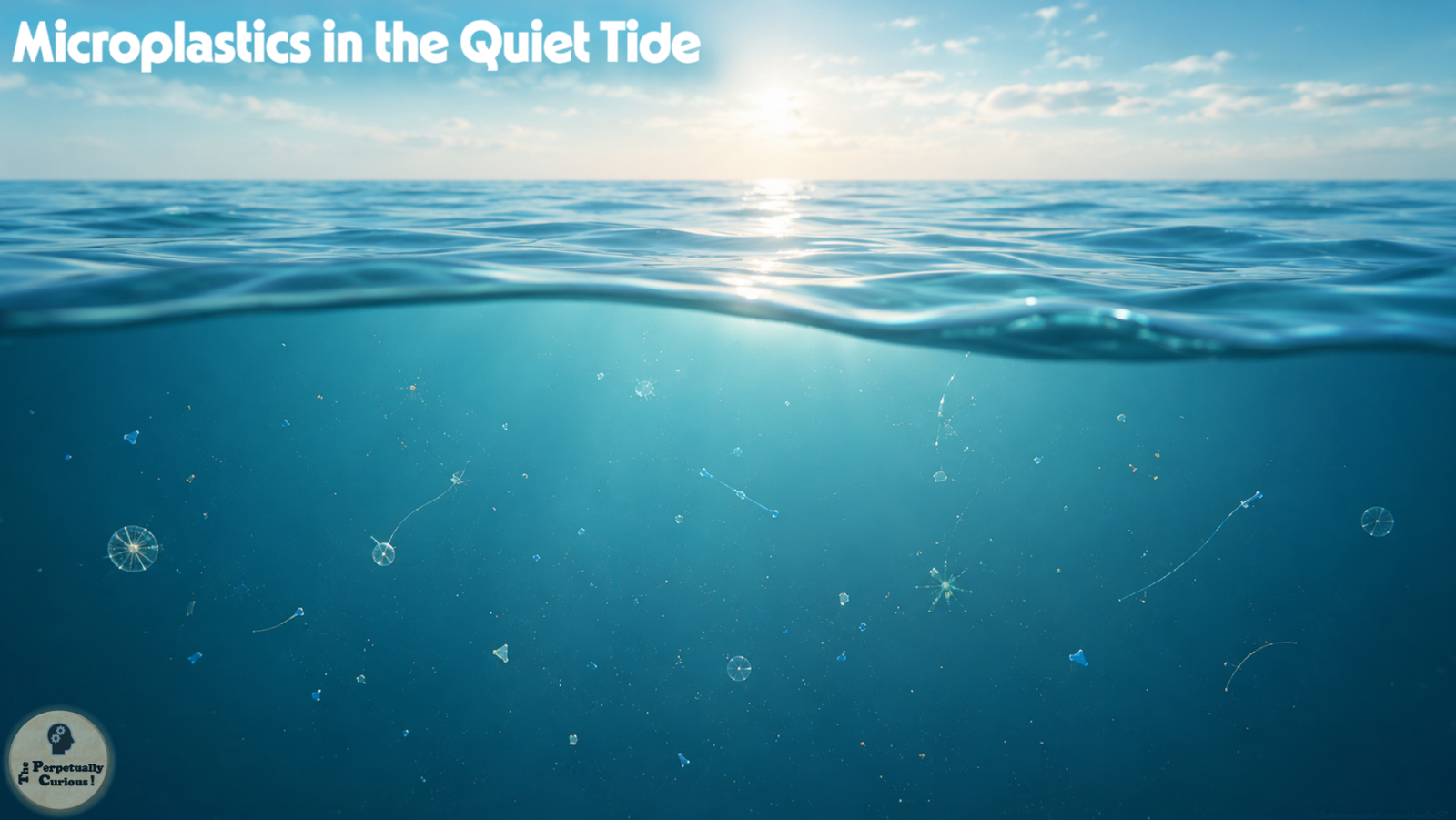
… Plastic fragments leave roads, rivers, shorelines, vessels, and cities, then enter waters that do not hold still. Currents carry them, waves mix them, organisms encounter them, and some eventually return to human communities through food, water, salt, and air. …
- The Perpetually Curious! › Canonical › Botanical WondersArticle
🌿 When One Tree Remembered a Greener Sahara: The Quiet Story of the Tree of Ténéré
From section: 🌍 From legend to landscapeStories of lone survivors often carry a natural appeal. They suggest that endurance in one place can hold meaning beyond itself, as if survival might ripple outward into a larger renewal. …
- The Perpetually Curious! › Canonical › Planet EarthArticle
🌍 Why Mud Is Brown or Black: Where Earth Turns to Quiet Ink
From section: 🧪 Mud, sand, and why their colors divergeMud and sand often coexist along coasts and rivers, yet they frequently differ in color. Sandy beaches are commonly light beige or pale yellow, while nearby mudflats may appear dark brown or black. This contrast arises from differences in grain size, composition, and the ability to hold water and organic matter.
- The Perpetually Curious! › Archives › Environment & SustainabilityArticle
🌊 Microplastics in the Ocean: How Tiny Fragments Travel
Once plastic reaches rivers, beaches, storm drains, or coastal waters, sunlight, abrasion, waves, and time can break larger items into particles smaller than about 5 millimeters.
- The Perpetually Curious! › Canonical › Planet EarthArticle
🌑 How Coal Is Formed: The Slow Birth of Black Stone Across Deep Time
From section: 🌿 Ancient swamps where coal beginsEventually, changes in rivers, sea level, or local climate caused these peat-rich swamps to be buried. Sediment from nearby rivers, coastal currents, or shallow seas covered the peat with layers of sand, silt, and clay. …