Explore by topic, question, or idea. Find articles, reflections, videos, puzzles, and curiosity pathways gathered across the site.
Press Enter or select Search. A newly typed query starts globally; filters are applied only through the visible rail.
10 results for “why it rains and how raindrops are born”
- The Perpetually Curious! › Canonical › Botanical WondersArticle
🌿 When One Tree Remembered a Greener Sahara: The Quiet Story of the Tree of Ténéré
In the stillness of the Ténéré, one tree once held its place against time, carrying the memory of older rains in its quiet reach toward hidden water. Its branches are gone, yet the presence remains, a gentle reminder that endurance can leave a trace even when the landscape forgets. …
- The Perpetually Curious! › Canonical › Botanical WondersArticle
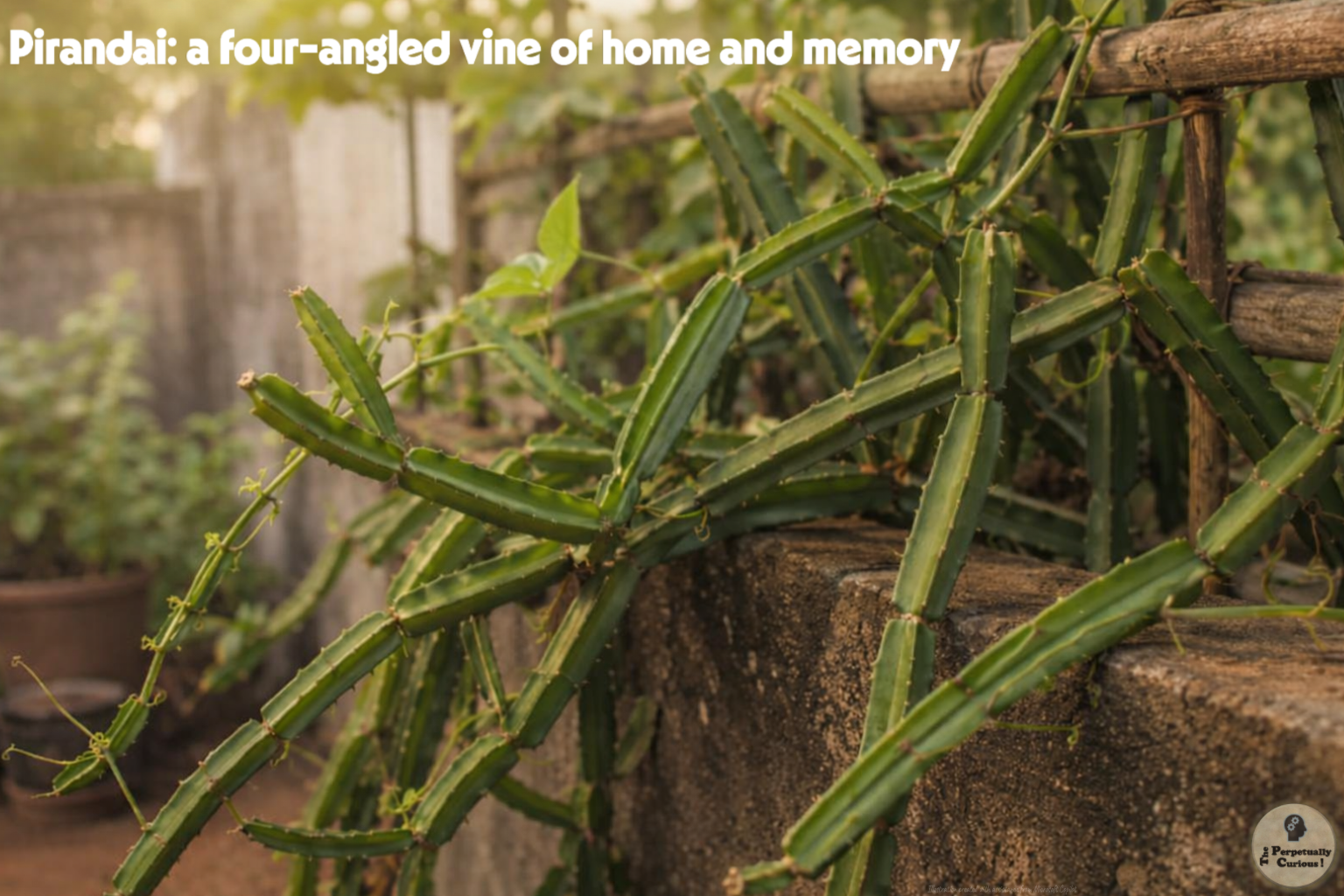
🍃 Pirandai (Cissus quadrangularis): Tradition, Botany, and Quiet Scientific Curiosity
From section: 💡 Did You Know🌾 Seasonal culinary rhythmsIn some regions, Pirandai is part of seasonal culinary traditions, with families preparing chutneys when the stems are most tender after the first rains.
- The Perpetually Curious! › Canonical › Botanical WondersArticle
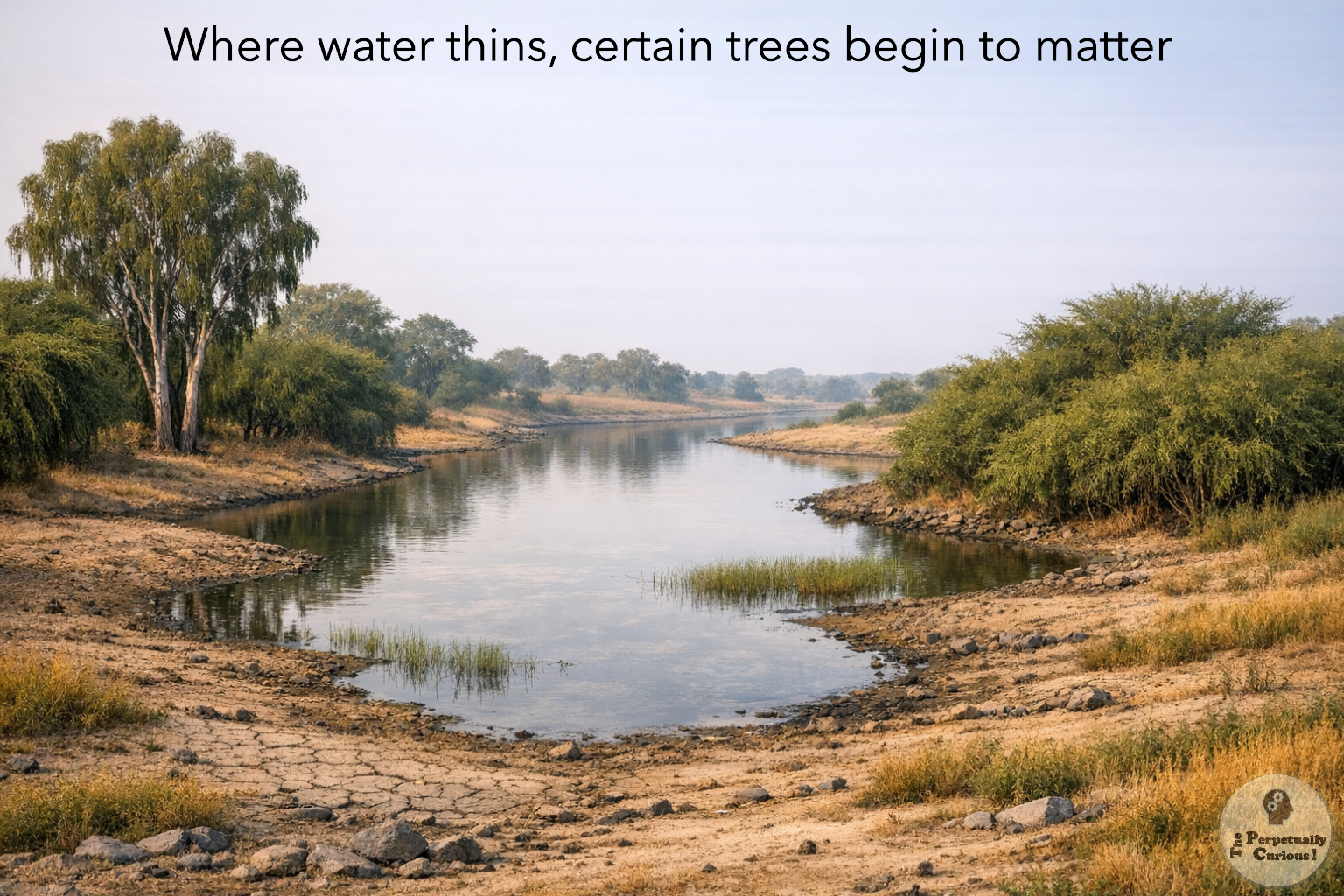
🌿 Trees That Drink the Sky: How Certain Species Shape Water and Land in South India
From section: 🌏 A landscape written in waterShallow aquifers in semi-arid regions recharge mainly during monsoon rains. They may rise quickly after heavy rainfall and decline steadily during the dry season. When deep-rooted species access these aquifers, they may influence how long water remains available for other plants and for human use.
- The Perpetually Curious! › Canonical › Botanical WondersArticle
🍁 When Leaves Let Go: Why Autumn Colors Turn Red, Gold, and Brown
One branch glows red while the tree beside it turns gold. Farther down the path, leaves have settled into russet brown. The same season has reached them all, yet each tree answers in its own colors.
- The Perpetually Curious! › Canonical › Botanical WondersArticle
🌱 Why Fruits Have Seeds: The Many Ways Plants Begin Again
Set a tomato beside a peach, an avocado, a strawberry, and a seedless grape, and the familiar fruit bowl begins to look like a collection of contradictions. The tomato holds many small, tender seeds. The peach appears to guard one seed inside a stone. The avocado invests in a single large seed.
- The Perpetually Curious! › Canonical › Botanical WondersArticle
🌱 Why Leaves Have Different Shapes: The Science Behind Nature’s Geometry
Leaves appear as simple silhouettes against the sky, yet each outline is the visible trace of a long conversation between genes, climate, and physics. A maple’s palmate blade, an oak lobe, a peepal heart, and the fine scales of arborvitae are not decorative accidents.
- The Perpetually Curious! › Archives › Botanical WondersArticle
Rubber Production Explained: From Tree Latex to Durable Elasticity 🌿
From Milky Latex to Elastic Resilience, and the Quiet Science Behind It A tire hums over rain-dark pavement. A rubber band stretches, and returns. A gasket holds pressure where metal meets metal. A glove yields to motion without tearing.
- The Perpetually Curious! › Archives › Botanical WondersArticle
The Riverbank Architect: Discovering the Remarkable Arjuna Tree 🌊
Stand beneath an ancient Arjuna tree during monsoon season and you'll understand why riverside communities have revered these giants for millennia. Water droplets cascade from leaves that shimmer like green glass, while the smooth bark releases a subtle earthy fragrance after rain.
- The Perpetually Curious! › Archives › Botanical WondersArticle
🌿 Pirandai: How a Four-Angled Vine Holds Memory and Water
The geometry of a dry-land vine Along a warm garden fence, Pirandai does not announce itself through large flowers or dramatic leaves. It first catches attention through the strange discipline of its stem.
- The Perpetually Curious! › Archives › Botanical WondersArticle
💧 Seasonal Ponds and Root Depth in South India
Seasonal ponds often look still from a distance, yet their edges can hold some of the most active negotiations in a dry landscape. In parts of South India, stored rainwater, shallow aquifers, dry soil, and plant roots meet in a narrow zone where each season leaves its mark.