Explore by topic, question, or idea. Find articles, reflections, videos, puzzles, and curiosity pathways gathered across the site.
Press Enter or select Search. A newly typed query starts globally; filters are applied only through the visible rail.
22 results for “why space looks dark”
- The Perpetually Curious! › Canonical › Cosmic ExplorationArticle
🌌 Why Space Looks Dark in a Universe Filled with Light: Understanding the Quiet Cosmos
From section: Frequently Asked Questions+Why does space look black even when the Sun is shining nearby? Space looks black because there is no thick atmosphere to scatter sunlight into all directions. Sunlight travels in straight lines, and unless it strikes an object or a cloud of particles, it does not create a visible glow. …
- The Perpetually Curious! › Canonical › Cosmic ExplorationArticle
🌌 Why Space Feels Cold Among So Many Suns: The Quiet Physics of Cosmic Warmth
From section: ☀️ Radiation, absorption, and why darkness does not mean cold… A surface in direct sunlight can reach a high temperature while the sky behind it remains visually dark. The reasons why space looks dark concern how visible light reaches an observer, not whether a nearby object is absorbing enough radiant energy to become warm.
- The Perpetually Curious! › Canonical › Cosmic ExplorationArticle
🌌 The Hunt for the Invisible: Understanding Dark Matter Through Science’s Greatest Detective Story
From section: 🎭 Living within the visible minorityPerhaps that is what makes the subject so enduring. Dark matter is not merely something hidden in a distant corner of space. It is a reminder that the universe can reveal the shape of an answer long before it yields the thing itself.
- The Perpetually Curious! › Archives › Cosmic ExplorationArticle
🌌 The Hunt for the Invisible: Understanding Dark Matter Through Science's Greatest Detective Story
The universe is keeping a secret from us. About 85 percent of all the matter that exists remains stubbornly invisible, refusing to interact with light yet shaping everything we see. This invisible substance, which scientists call dark matter, represents one of the most profound…
- The Perpetually Curious! › Archives › Cosmic ExplorationArticle
🌞 The Solar Wind: When the Sun Breathes Across Space
Though invisible to our eyes, this cosmic current shapes Earth’s environment, drives space weather, and even fuels storms that can disrupt technology on Earth, and it is why space‑weather forecasters watch the Sun every day.
- The Perpetually Curious! › Archives › Cosmic ExplorationArticle
Cosmic Eyes: How Humanity's Space Telescopes Unveil the Universe's Hidden Realms 🔭
Space telescopes changed everything, granting us new senses to perceive the invisible universe.
- The Perpetually Curious! › Canonical › Cosmic ExplorationArticle
🌙 Quiet Worlds, Vast Stories: Some Lesser-Known Moons of Our Solar System
From section: 🌊 Enceladus: The small moon that breathes ice… Despite its modest size, it has become one of the most scientifically important moons in the solar system. Its south polar region hosts long fractures, often called tiger stripes, from which plumes of water vapor and ice particles erupt into space.
- The Perpetually Curious! › Canonical › Cosmic ExplorationArticle
🌌 Borrowing the Orbits of Giants: How Gravity Assists Carry Spacecraft into the Deep
On certain nights, the planets appear as quiet lanterns suspended in the dark, drifting along their ancient paths. To the eye, they seem serene and still. Yet each one is a massive world in motion, circling the Sun with tremendous momentum. For spacecraft, these worlds are not only destinations.
- The Perpetually Curious! › Archives › Cosmic ExplorationArticle
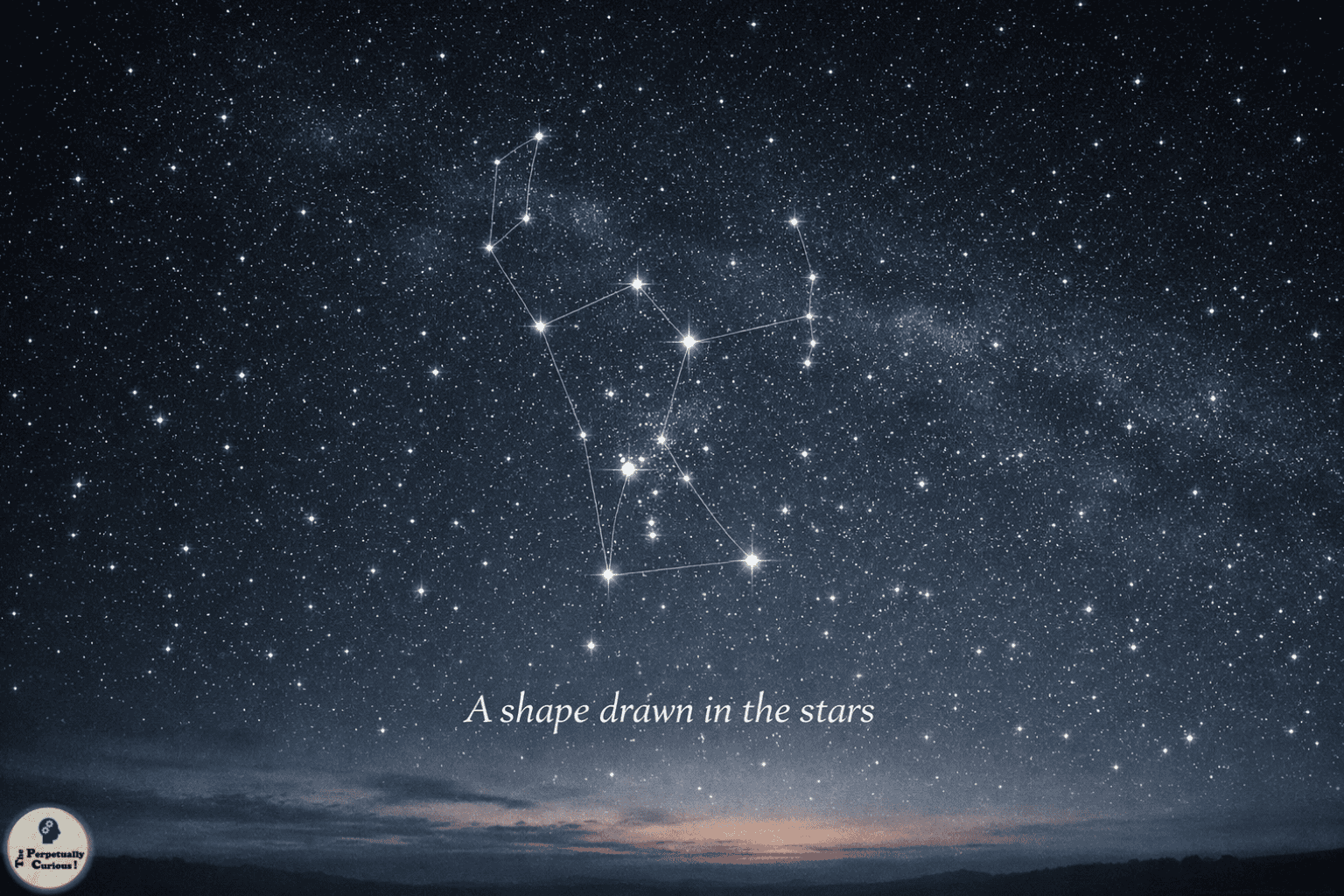
🌌 Constellations: How Star Patterns Help Us Find Our Way
From section: When scattered stars become a mapThat neighboring question of why the sky can appear dark while the universe is filled with light is followed in why space looks dark, where the focus shifts from remembered patterns to visibility itself.
- The Perpetually Curious! › Canonical › Cosmic ExplorationArticle
The Cosmic Recipe: Understanding the Physical Criteria for Star Formation 🌟
From section: 💡 Did You Know🌫️ A protostar can be nearly invisible in ordinary light even while it brightens from within. Dust absorbs much of its visible radiation and reradiates that energy at infrared and submillimeter wavelengths, which is why modern observatories can reveal stellar birth inside clouds that look dark to human eyes.