Explore by topic, question, or idea. Find articles, reflections, videos, puzzles, and curiosity pathways gathered across the site.
Press Enter or select Search. A newly typed query starts globally; filters are applied only through the visible rail.
60 results for “brachistochrone distance”
- The Perpetually Curious! › Archives › Wilderness & Homestead CreaturesArticle
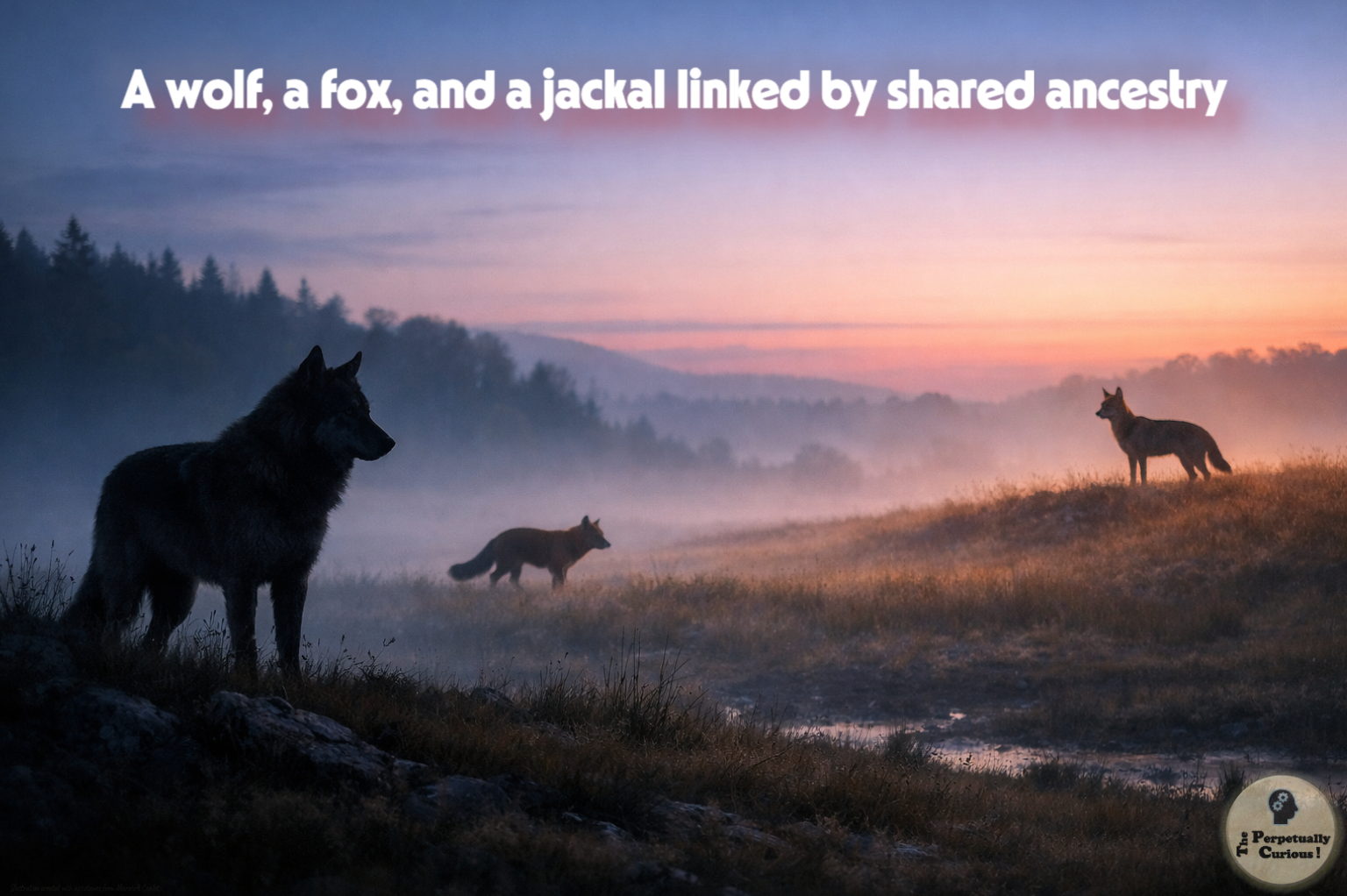
🐾 Wolves, Foxes, and Jackals: One Family, Many Survival Paths
Place a wolf, a fox, and a jackal in the same imagined landscape and the differences appear first. One seems built for distance and group movement. One carries the quick precision of a small hunter at the edge of cover. One belongs to a world of open scrub, watchful pauses, and flexible opportunity.
- The Perpetually Curious! › Archives › Botanical WondersArticle
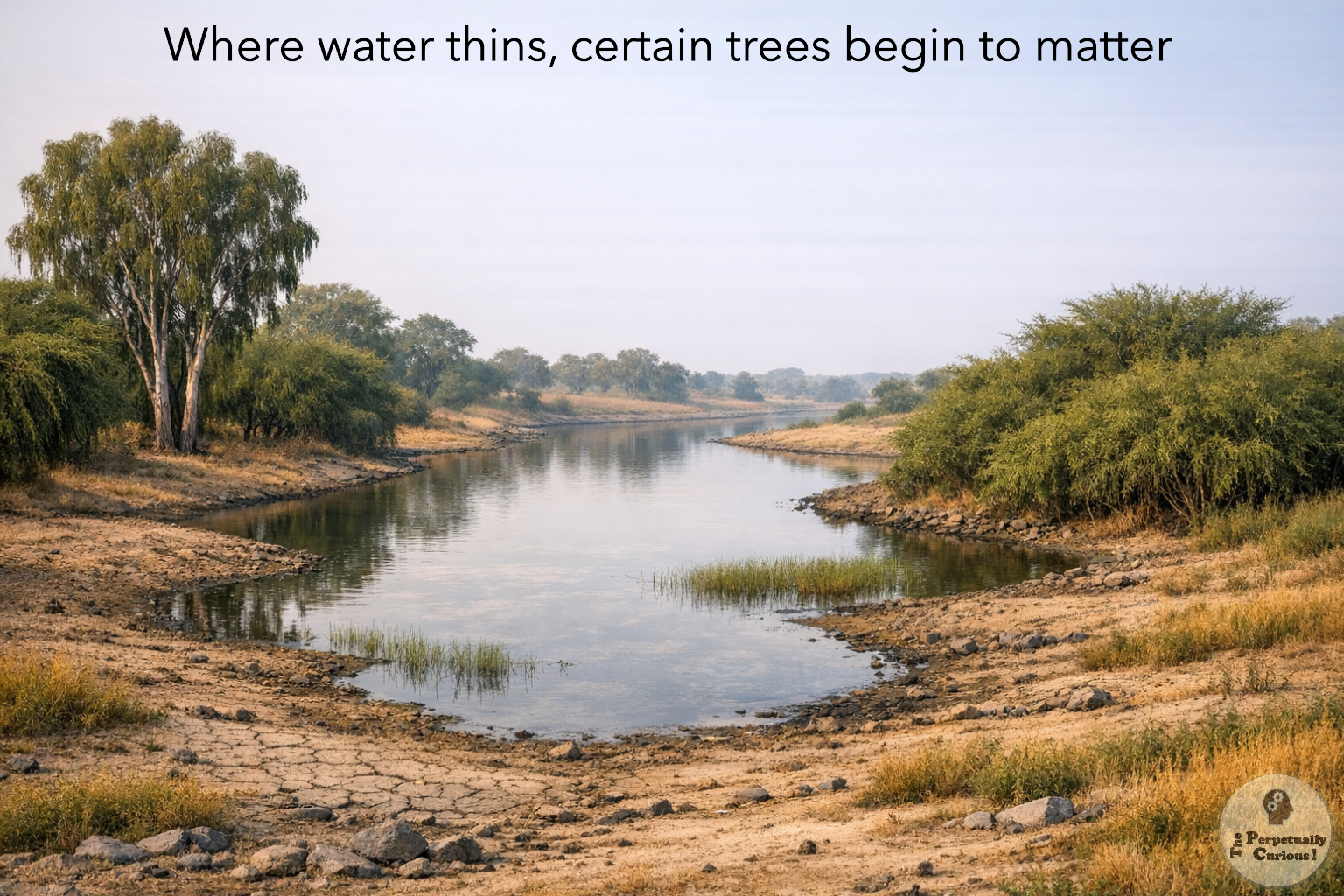
💧 Seasonal Ponds and Root Depth in South India
Seasonal ponds often look still from a distance, yet their edges can hold some of the most active negotiations in a dry landscape. In parts of South India, stored rainwater, shallow aquifers, dry soil, and plant roots meet in a narrow zone where each season leaves its mark.
- The Perpetually Curious! › Canonical › Cosmic ExplorationArticle
🌌 Why Space Looks Dark in a Universe Filled with Light: Understanding the Quiet Cosmos
From section: 🌫️ A universe that is not empty, yet profoundly sparse… Even if the space between stars is mostly transparent, one might still expect that every line of sight would eventually end on the surface of a star. To understand why this does not happen, it is helpful to consider distance and how brightness changes with it.
- The Perpetually Curious! › Canonical › Planet EarthArticle
🌧️ When Clouds Let Go: Why It Rains and How Raindrops Are Born
From section: Frequently Asked Questions+Does rain always come from tall clouds? No. Low, layered clouds can produce drizzle or light, persistent rain. Deeper clouds are more commonly associated with heavy showers and thunderstorms because they provide greater vertical distance and more varied conditions for droplets and ice particles to grow.
- The Perpetually Curious! › Canonical › PhysicsArticle
🌟 When Light Learns to Answer Back: The Quiet Science of Mirrors
From section: 💡 Did You Know🪐 Venus is not mirror-like in the ordinary glass-and-metal sense, but its dense cloud layers reflect sunlight strongly. That high reflectivity helps explain planetary brightness, where cloud cover, distance, and viewing geometry affect how bright a world appears.
- The Perpetually Curious! › Canonical › Cosmic ExplorationArticle
🌍 When Earth First Took Shape: A Planet Born from Cosmic Dust
From section: Frequently Asked Questions+Why did Earth keep its water while Venus and Mars did not? Earth’s distance from the Sun, planetary gravity, atmospheric chemistry, geologic cycling, and long-term atmospheric retention all helped it keep liquid water more successfully than Venus or Mars. …
- The Perpetually Curious! › Canonical › Planet EarthArticle
🌇 When the Sky Becomes a Painting: Why Clouds Glow Red and Orange at Sunset on Earth
From section: 🌍 Earth’s rotation and the illusion of a sinking Sun… Instead, Earth rotates on its axis, and an observer’s location turns away from the direction of the Sun. This rotation creates the apparent descent of the Sun, even though the Earth–Sun distance remains essentially unchanged throughout the day and the Sun’s light continues to reach Earth with the same steady source.
- The Perpetually Curious! › Canonical › Wilderness & Homestead CreaturesArticle
🐘 Minds Like Quiet Rivers: The Intelligence of Elephants
From section: 🌍 Intelligence shaped by landscape and time… These movements unfold within the broader patterns of African and Asian ecosystems, where distance, seasonality, and terrain shape the decisions animals make across generations. Elephant intelligence, viewed this way, is woven into the ecosystems and temporal rhythms that have shaped it across time.
- The Perpetually Curious! › Canonical › Wilderness & Homestead CreaturesArticle
🌍 African Wild Dogs: Painted Wolves of the Savanna
From section: 🐾 African wild dog appearance and adaptationsAfrican wild dogs, also known as painted wolves, carry the scientific name Lycaon pictus, which means “painted wolf” and refers to the species’ mottled coat. These patterns are unique to each individual and may help pack members recognize one another at a distance. …
- The Perpetually Curious! › Canonical › Biology & HealthArticle
☀️ Sunlight, Skin, and the Quiet Alchemy of Vitamin D
From section: 🌌 Where a star meets living skinSeen at its widest scale, cutaneous vitamin D synthesis connects events separated by immense distance and biological scale. Photons emitted by the Sun travel about 93 million miles (150 million kilometers) before reaching Earth. …