Explore by topic, question, or idea. Find articles, reflections, videos, puzzles, and curiosity pathways gathered across the site.
Press Enter or select Search. A newly typed query starts globally; filters are applied only through the visible rail.
26 results for “down light”
- The Perpetually Curious! › Archives › Planet EarthArticle
The Science of Snow Whiteness: A Journey Through Light and Ice ❄️
From section: Introduction ❄️This transformation from the clarity of simple ice to the collective whiteness of snowfall reveals fundamental principles about how light interacts with matter.
- The Perpetually Curious! › Archives › Planet EarthArticle
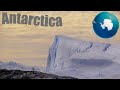
❄️ Antarctica: Southernmost Continent’s Frozen Symphony of Silence and Light
From section: Where Silence Breathes and Light Dances: Antarctica's Living SymphonyAt the edge of our planet lies Antarctica, Earth's southernmost frontier, sculpted by ice, silence, and light; desolate yet breathtaking, mysterious yet alive.
- The Perpetually Curious! › Canonical › Planet EarthArticle
🌫️ Mist Over Ancient Ridges: The Great Smoky Mountains as a Living, Breathing World
The Great Smoky Mountains rise in soft blue layers along the border of Tennessee and North Carolina, a landscape that often appears to exhale. Morning light may reveal a veil of mist suspended between ridges, while evening shadows gather in the folds of ancient valleys.
- The Perpetually Curious! › Canonical › Planet EarthArticle
🌇 When the Sky Becomes a Painting: Why Clouds Glow Red and Orange at Sunset on Earth
From section: 🌅 The long journey of sunset lightAlong this extended journey, the shorter wavelengths are scattered more strongly and are gradually removed from the direct beam. The transmitted light becomes progressively richer in the longer wavelengths that survive the trip.
- The Perpetually Curious! › Canonical › Planet EarthArticle
🌊 Where the Waves Leave Their Footprints: Why Beaches Carry Sand
The shore holds the memory of distant mountains carried grain by grain to the edge of the sea. Each wave lifts the past into motion and sets it down again in a quiet rhythm that never repeats itself. In this meeting of land and water, every grain rests for a moment in the long story of the Earth.
- The Perpetually Curious! › Canonical › Planet EarthArticle
🌍🌑 Where Two Soils Part Ways: Earth, Moon, and the Stories Written in Dust
The Earth keeps its stories in living soil that shifts and breathes, while the Moon holds its history in dust shaped by silence and light. Between them lies a record of two worlds that began together yet grew apart. In their grains and shadows, the long memory of their shared origin still waits in quiet patience.
- The Perpetually Curious! › Canonical › Planet EarthArticle
🌐 How SONAR Uses Sound to Map the Hidden Ocean Depths
Beneath the surface, sound becomes a traveler, carrying stories through shifting layers of depth and distance. In its echoes, the ocean reveals shapes, histories, and quiet truths that light can never reach.
- The Perpetually Curious! › Canonical › Planet EarthArticle
🌍 Why Mud Is Brown or Black: Where Earth Turns to Quiet Ink
The earth settles into its darker tones where water lingers and light moves slowly through the quiet layers below. In these shaded places, iron, clay, and time leave their soft record of change. The surface holds the moment, while the depths keep their patient ink.
- The Perpetually Curious! › Archives › Planet EarthArticle
When Nature's Fury Spirals: Understanding the Science Behind Nor'easters 🌊
Few weather phenomena capture the raw power of nature quite like a nor'easter bearing down on the Eastern Seaboard. These massive storm systems, born from the collision of opposing air masses over the Atlantic, represent some of the most complex and fascinating atmospheric dynamics on Earth.
- The Perpetually Curious! › Archives › Planet EarthArticle
Where Earth's Temperate Logic Ends: Understanding the Arctic Circle 🌐
The Arctic Circle marks more than a line on our maps. At approximately 66.5 degrees north latitude (about 66°30′ N), this invisible boundary transforms how our planet receives light, how ecosystems function, and how humans experience the passage of time itself.