Explore by topic, question, or idea. Find articles, reflections, videos, puzzles, and curiosity pathways gathered across the site.
Press Enter or select Search. A newly typed query starts globally; filters are applied only through the visible rail.
124 results for “fall learning colors”
- The Perpetually Curious! › Canonical › Biology & HealthArticle
🌫️ The Quiet Maps in Our Hands: Why Palm Lines Form and What They Reveal About Development, Movement, and Meaning
A small geography rests within the hand, shaped long before memory.The lines rise and fall like quiet traces of movement held in the skin.They remain as a soft reminder of how the body learns to fold and unfold through time.
- The Perpetually Curious! › Canonical › Cosmic ExplorationArticle
🌌 Why Space Feels Cold Among So Many Suns: The Quiet Physics of Cosmic Warmth
From section: 🌞 Near stars and planets: hot surfaces, cold shadowsNear the lunar equator, exposed surfaces can rise above approximately 250 °F (121 °C) in daylight and fall to about −208 °F (−133 °C) after nightfall. Deep within permanently shadowed polar craters, temperatures can drop below −410 °F (−246 °C). …
- The Perpetually Curious! › Canonical › Planet EarthArticle
🌌 Sky in Slow Layers: Understanding Earth’s Atmospheric Structure
From section: 🌠 Mesosphere: the cold frontier where meteors flare… Temperature generally decreases with altitude through this layer. Near the mesopause, it can fall to about minus 130 degrees Fahrenheit (minus 90 degrees Celsius), making this typically the coldest region of Earth’s atmosphere.
- The Perpetually Curious! › Canonical › Cosmic ExplorationArticle
🌑 Shadows Across the Solar System: How Eclipses Unfold Beyond Earth
From section: 🌞 Solar eclipses across the Solar SystemThe way Titan’s atmosphere filters sunlight parallels the behavior of an atmosphere on Earth, although the resulting colors differ.
- The Perpetually Curious! › Archives › Environment & SustainabilityArticle
From Rainforest Floor to Landfill Core: How Nature's Decomposers Are Learning to Eat Our Plastic Problem 🍄
In 2011, undergraduate students trudging through Ecuador's rainforest made an accidental discovery that would reshape our approach to plastic waste. Their equipment bag, supposedly sealed against moisture, had become lunch for an unexpected guest.
- The Perpetually Curious! › Archives › Planet EarthArticle
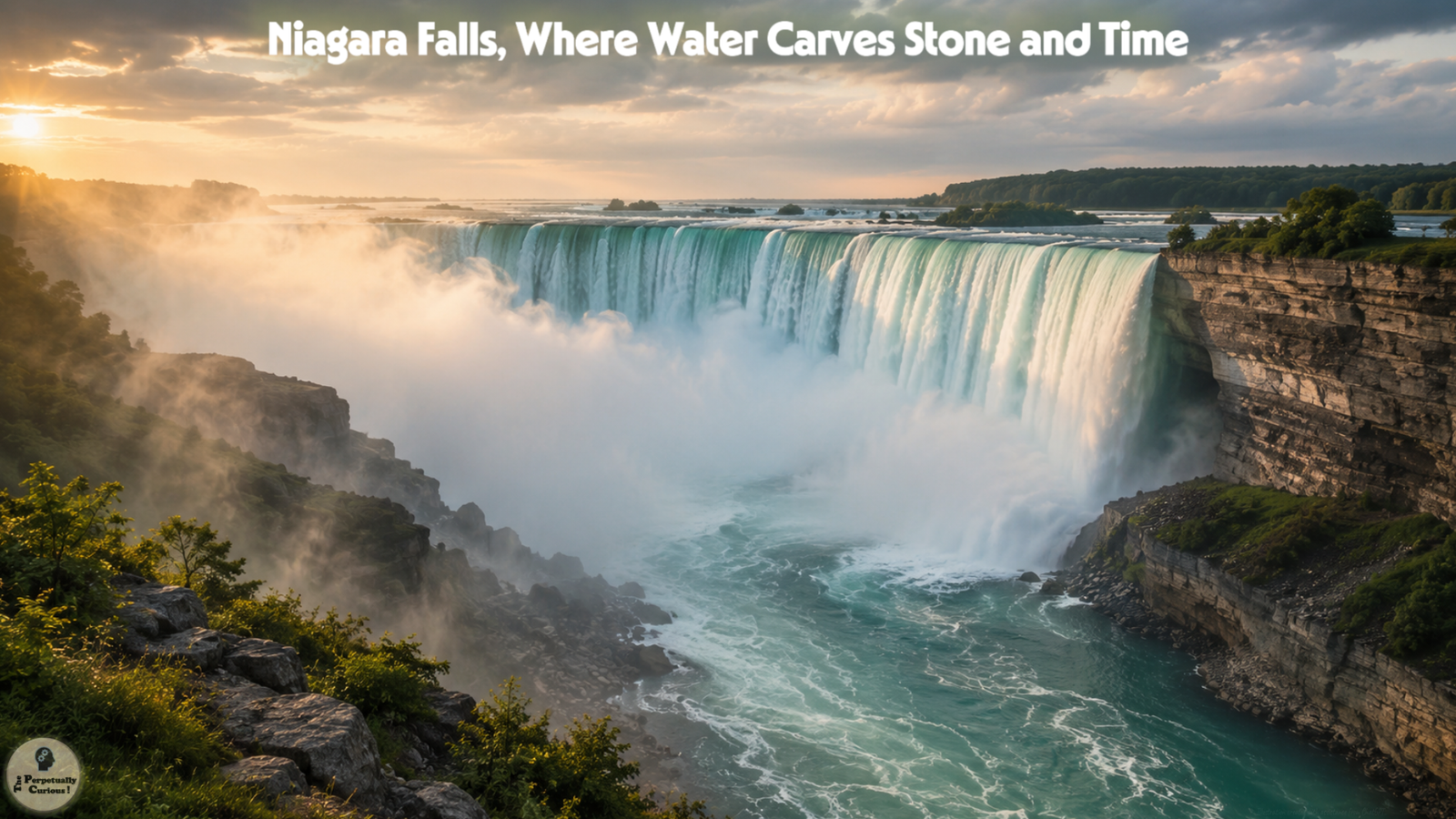
🌊 Niagara Falls Facts: How Water Turns Stone Into Time
When Niagara Falls first appears through its mist, it can feel like a single spectacular drop. But the falls are better understood as a place where a much larger water system briefly becomes visible. The water is not arriving from nowhere.
- The Perpetually Curious! › Archives › Wilderness & Homestead CreaturesArticle
🐝 Two Wasp Approaches to Securing the Next Generation: Builders vs. Infiltrators in Nature
📖 Introduction Wasps are among the most versatile predators in the insect world, and their methods for raising young are as varied as their shapes and colors.
- The Perpetually Curious! › Archives › Botanical WondersArticle
🎨 The Colorful World of Grapes: What Makes Each Variety Unique
🍇 Red, Green, or Black: What Sets Grapes Apart? Grapes have long captured our attention with their vibrant colors and diverse flavors. Yet beyond their appearance lies a fascinating story of plant chemistry and nutrition.
- The Perpetually Curious! › Canonical › NatureArticle
🌅 The Quiet Geometry of Dawn: How Early Morning Light Shapes the Landscape
Dawn lifts the darkness gently, allowing the familiar to appear as if seen for the first time. Shapes gather, colors wait, and the air holds a quiet clarity that feels both fragile and complete. It is a moment that asks nothing and offers everything.
- The Perpetually Curious! › Canonical › Engineering & TechnologyArticle
🖋️ Printing Ink: The Science and Living History Behind the Printed Page
From section: 🎨 What ink is made of: The foundation of color and formThe vivid colors pigments produce arise from their electronic structure and, in many cases, from crystal form and particle properties that influence which wavelengths of light are absorbed, reflected, or scattered, a behavior rooted in the same principles that make each element chemically distinct, as explored …