Explore by topic, question, or idea. Find articles, reflections, videos, puzzles, and curiosity pathways gathered across the site.
Press Enter or select Search. A newly typed query starts globally; filters are applied only through the visible rail.
174 results for “how brain form”
- The Perpetually Curious! › Archives › Planet EarthArticle
🏔️ Mount Kailash: Why a Sacred Summit Is Circled, Not Climbed
In a sparse plateau landscape, form and distance can turn geology into a landmark.
- The Perpetually Curious! › Archives › Botanical WondersArticle
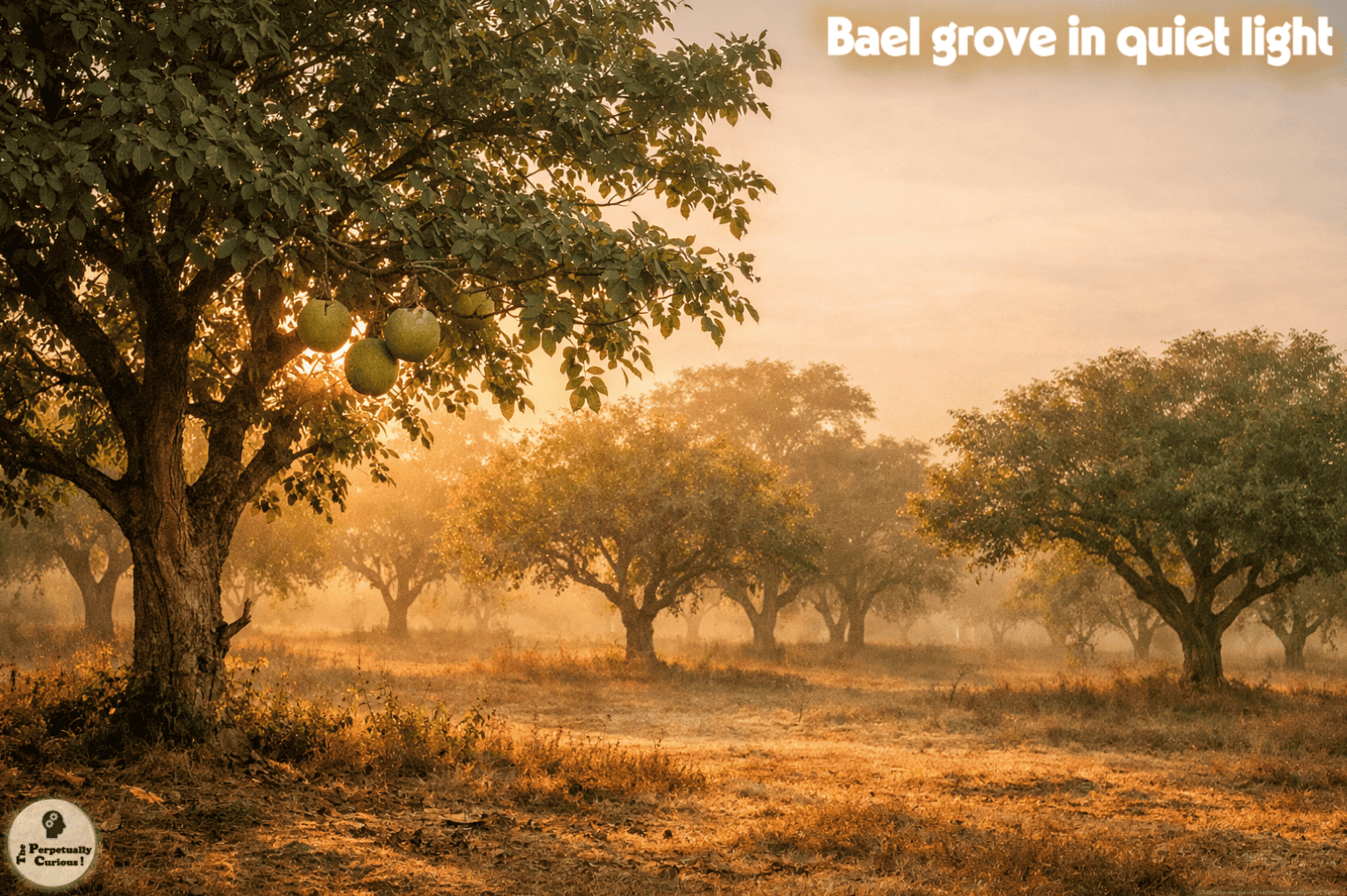
🍃 Bael Tree: Quiet Resilience in Leaf and Fruit
From section: A fruit built for patienceThe three leaflets have been interpreted in multiple ways across traditions, but the larger point is clear: the tree’s physical form helped shape its symbolic life.
- The Perpetually Curious! › CanonicalGateway
🔦 Where Light Goes: Why a Shadow Is Not a Reflection
… Rays arriving together remain geometrically organized enough for the eye to reconstruct a recognizable scene. That distinction is central to how mirrors form images.
- The Perpetually Curious! › CanonicalReading
Privacy Policy
From section: Personal information and contact formIf you choose to contact us using the contact form, you voluntarily provide your name, email address, and any information you include in your message so we can read and respond. Your message is delivered to us by email.
- The Perpetually Curious! › CanonicalGateway
🐾 Wilderness & Homestead Creatures | ▶️ Videos
From section: 🎬 Featured long-form storiesSome creature questions invite a slower watch. These long-form pieces move beyond the shorter series format into behavior, anatomy, evolution, physics, ecology, and natural history.
- The Perpetually Curious! › ArchivesGateway
TPC8‑QH‑CHEM‑004 🧪 Chemistry | 🔢 Periodic Table of Elements I
From section: 4️⃣ Which group of elements is known as highly reactive nonmetals that form salts with metals?Electronegativity decreases Electronegativity increases Electronegativity stays the same Electronegativity becomes zero 4️⃣ Which group of elements is known as highly reactive nonmetals that form salts with metals?
- The Perpetually Curious! › Archives › Wilderness & Homestead CreaturesArticle
🐝🌸 Pollinators: The Silent Architects of Our Food and Ecosystems
🐝🦋🦇🐦 About one in every three bites of food we eat exists thanks to pollinators. Here is why they are essential to both ecosystems and economies. 🌸 Introduction Pollination is a fundamental biological process in the sexual reproduction of flowering plants.
- The Perpetually Curious! › Archives › Cosmic ExplorationArticle
The Asteroid Belt: Ancient Fragments of Our Solar System's Story 🌌
On New Year's Day 1801, Italian astronomer Giuseppe Piazzi made a discovery that would transform our understanding of the solar system. While searching for a suspected planet between Mars and Jupiter, he found something else entirely: the first of millions of rocky fragments…
- The Perpetually Curious! › CanonicalGateway
About Us
From section: What curiosity looks like here… The form follows the question, with enough context to illuminate the subject without making the experience unnecessarily heavy.
- The Perpetually Curious! › CanonicalGateway
🐘 Three Species, Two Continents: How African and Asian Elephants Differ at a Glance
No single feature works perfectly in every individual. Ears, forehead, back profile, trunk tip, tusks, and overall build work best as a pattern of clues. The shared elephant silhouette therefore belongs to three living species with distinct evolutionary histories, each expressed in small differences in form.