Explore by topic, question, or idea. Find articles, reflections, videos, puzzles, and curiosity pathways gathered across the site.
Press Enter or select Search. A newly typed query starts globally; filters are applied only through the visible rail.
139 results for “lunar regolith the moon ancient chronicle written in dust”
- The Perpetually Curious! › Canonical › Planet EarthArticle
🌌 Sky in Slow Layers: Understanding Earth’s Atmospheric Structure
From section: Frequently Asked Questions+Does the Moon have atmospheric layers? The Moon has an extremely tenuous exosphere rather than a substantial layered atmosphere like Earth’s. Its lack of dense air, liquid water, and biological activity also helps explain why its lunar regolith differs so strongly from terrestrial soil.
- The Perpetually Curious! › Canonical › PhysicsArticle
🌟 When Light Learns to Answer Back: The Quiet Science of Mirrors
From section: 💡 Did You Know📡 Retroreflectors, which send light back toward its source, are used on the Moon. They allow scientists to measure the distance between Earth and the lunar surface with remarkable precision.
- The Perpetually Curious! › Canonical › Planet EarthArticle
🌊 Niagara Falls, Where Thundering Waters Shape Time
Niagara Falls is a place where water, stone, air, and memory converge. The roar that rises from the gorge carries the weight of ancient seas, vanished glaciers, and the long, patient work of erosion.
- The Perpetually Curious! › Canonical › Planet EarthArticle
🌧️ When Earth Begins to Breathe: Why Rain Smells the Way It Does
From section: 🌎 A planet-wide phenomenon with local variationsComparing Earth soils with extraterrestrial materials highlights why petrichor is unique to our planet, and this contrast becomes clearer when examining lunar regolith. …
- The Perpetually Curious! › Canonical › Cosmic ExplorationArticle
🌑 Shadows Across the Solar System: How Eclipses Unfold Beyond Earth
From section: 🌔 When moons enter shadow: lunar eclipses across the Solar SystemLunar eclipses occur when a moon enters the shadow cast by its planet. In contrast to solar eclipses, where a moon blocks sunlight, these events reverse the geometry. The planet becomes the object that casts the shadow, and the moon becomes the surface where that shadow falls.
- The Perpetually Curious! › Archives › Food & LifestyleArticle
🏺 The Ancient Art of Fermentation: A Global Journey Through Cultured Foods
Introduction: Where Time Transforms Taste ⏰ Fermentation represents one of humanity's oldest biotechnologies, predating written history and spanning every inhabited continent.
- The Perpetually Curious! › Archives › Cosmic ExplorationArticle
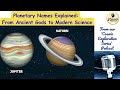
🌌 Planetary Names Explained: From Ancient Gods to Modern Science
💡 Have you ever wondered why the planets in our solar system bear such distinctive names? From swift Mercury to majestic Jupiter, these names reflect ancient traditions that connect cultural understanding with the science of the skies. Read more »
- The Perpetually Curious! › Archives › History, Arts, and CultureArticle
📅 A Cultural Journey Through the Week: Tracing the Ancient Origins of the Seven Days
📅 Each day of the week connects us to ancient civilizations and celestial wonders, bound to the stories and beliefs cherished in cultures whose traditions shaped our language and history. 🌞 Sunday: The Day of the Sun Golden rays announce the start of the week.
- The Perpetually Curious! › Archives › Cosmic ExplorationArticle
The Asteroid Belt: Ancient Fragments of Our Solar System's Story 🌌
On New Year's Day 1801, Italian astronomer Giuseppe Piazzi made a discovery that would transform our understanding of the solar system. While searching for a suspected planet between Mars and Jupiter, he found something else entirely: the first of millions of rocky fragments…
- The Perpetually Curious! › Canonical › Cosmic ExplorationArticle
🌌 Why Space Looks Dark in a Universe Filled with Light: Understanding the Quiet Cosmos
From section: Frequently Asked Questions+Why does a sunlit surface look bright on the Moon while the sky stays black, but on Earth the sky becomes bright too? Sunlight reveals the lunar surface because it strikes solid matter, while the surrounding sky stays dark because there is no atmosphere to scatter that light. …