Explore by topic, question, or idea. Find articles, reflections, videos, puzzles, and curiosity pathways gathered across the site.
Press Enter or select Search. A newly typed query starts globally; filters are applied only through the visible rail.
29 results for “lunar regolith the moon ancient chronicle written in dust”
- The Perpetually Curious! › Archives › Cosmic ExplorationArticle
Lunar Regolith: The Moon's Ancient Chronicle Written in Dust 🌙
From section: Opening Reflection ✨This is lunar regolith, the Moon's enigmatic blanket of dust and rock fragments that has captivated scientists since the Apollo missions first brought 842 pounds (381.7 kilograms) of samples home.
- The Perpetually Curious! › Archives › Cosmic ExplorationArticle
🌔 Lunar Eclipses: Earth’s Shadow on the Moon
🌕➡️🔴 The Allure of a Lunar Eclipse: Earth’s Shadow Play in the Night Sky Among the many wonders of the night sky, few spectacles are as enchanting as a lunar eclipse. On these special nights, our familiar Moon is transformed, slipping into Earth’s shadow.
- The Perpetually Curious! › Archives › Cosmic ExplorationArticle
The Moon's Ancient Dance: Understanding Lunar Phases Through Science and Story 🌙
From the thinnest crescents to the bright fullness that lights entire nights, the Moon’s changing face is not a mystery of motion on the surface, but a steady consequence of how sunlight meets a moving world.
- The Perpetually Curious! › Canonical › Cosmic ExplorationArticle
🌍 When Earth First Took Shape: A Planet Born from Cosmic Dust
From section: 🌗 A world reshaped: The giant impact and the birth of the MoonThe Moon’s later surface record also preserves a stark contrast between lunar regolith and Earth soil, because the Moon lacks the same atmosphere, water cycle, and biological weathering that continually reshape Earth’s surface. …
- The Perpetually Curious! › Canonical › Cosmic ExplorationArticle
🌙 Quiet Worlds, Vast Stories: Some Lesser-Known Moons of Our Solar System
From section: Frequently Asked Questions+… Surface darkness can result from accumulated dust, radiation‑processed material, or the gradual settling of fine particles over time. This process is comparable to the slow buildup of ancient material described in studies of lunar regolith, which helps explain how airless bodies preserve surface layers.
- The Perpetually Curious! › Canonical › Cosmic ExplorationArticle
🌌 The Universe’s Ancient Whisper: Decoding the Cosmic Microwave Background
A gentle shimmer still moves across the sky, carrying the memory of a young universe finding its first calm.The same ancient light drifts through every quiet night, patient and unchanged.In its faint warmth, the earliest story continues to pass over us, steady and unhurried.
- The Perpetually Curious! › Canonical › Cosmic ExplorationArticle
🌍 When Worlds Pull: Gravity Across the Planets and What It Reveals About Them
From section: 🧭 What gravity means for the weight we feelThese values follow the same relationship and make the contrast between mass and weight easier to see. The behavior of loose material on the Moon, described in studies of lunar regolith, offers another example of how a low-gravity environment can affect the motion of surface material.
- The Perpetually Curious! › Canonical › Cosmic ExplorationArticle
🌌 Why Space Feels Cold Among So Many Suns: The Quiet Physics of Cosmic Warmth
From section: 🌞 Near stars and planets: hot surfaces, cold shadows… The Moon’s lunar regolith is also a poor thermal conductor, limiting the movement of heat into and through the ground and concentrating the strongest temperature changes near the surface.
- The Perpetually Curious! › Canonical › Cosmic ExplorationArticle
🌑 Shadows Across the Solar System: How Eclipses Unfold Beyond Earth
From section: 🌔 When moons enter shadow: lunar eclipses across the Solar SystemLunar eclipses occur when a moon enters the shadow cast by its planet. In contrast to solar eclipses, where a moon blocks sunlight, these events reverse the geometry. The planet becomes the object that casts the shadow, and the moon becomes the surface where that shadow falls.
- The Perpetually Curious! › Archives › Cosmic ExplorationArticle
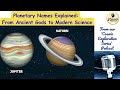
🌌 Planetary Names Explained: From Ancient Gods to Modern Science
💡 Have you ever wondered why the planets in our solar system bear such distinctive names? From swift Mercury to majestic Jupiter, these names reflect ancient traditions that connect cultural understanding with the science of the skies. Read more »