Explore by topic, question, or idea. Find articles, reflections, videos, puzzles, and curiosity pathways gathered across the site.
Press Enter or select Search. A newly typed query starts globally; filters are applied only through the visible rail.
33 results for “petrichor how first rain lifts earth hidden scent”
- The Perpetually Curious! › Canonical › Cosmic ExplorationArticle
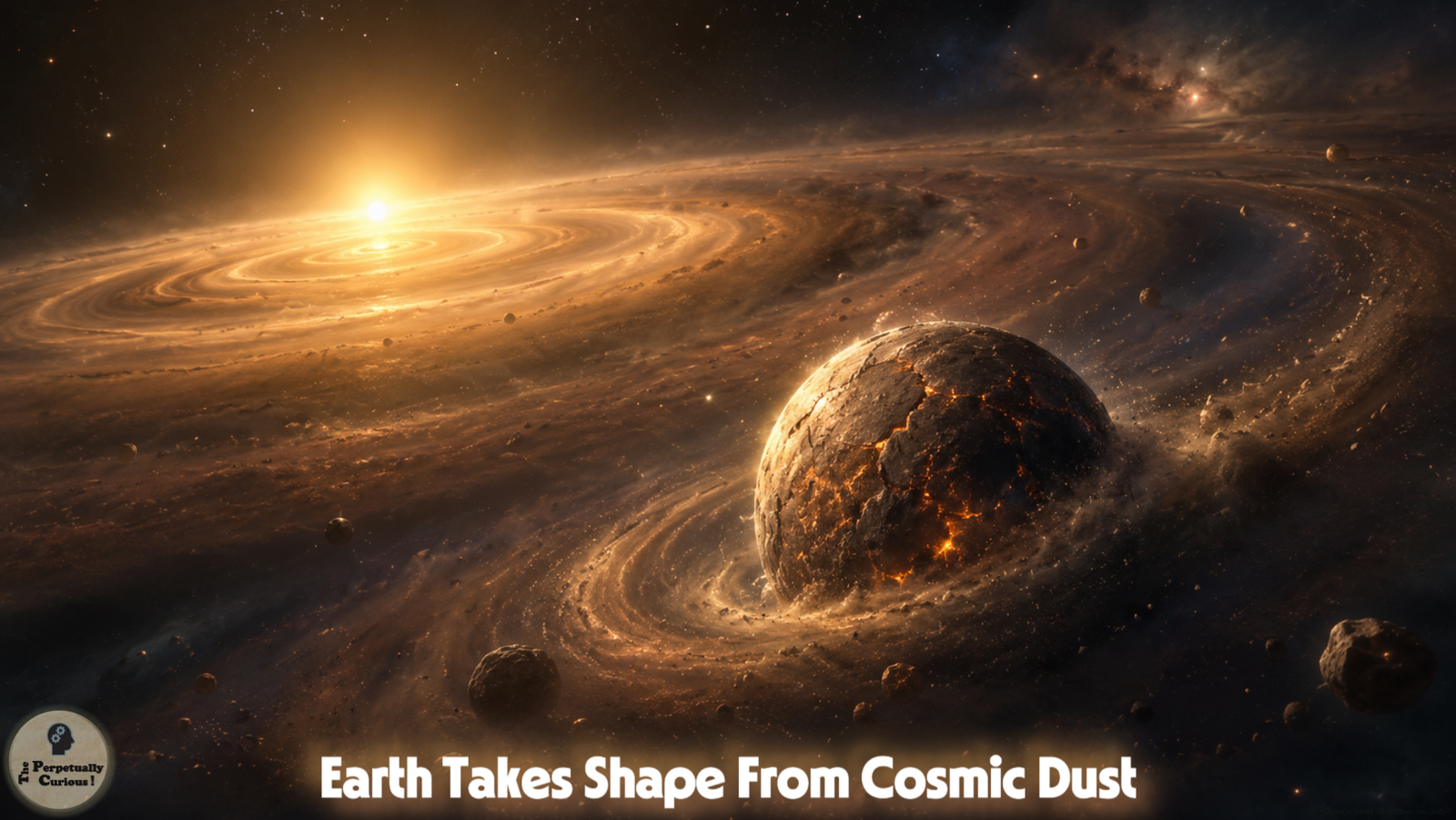
🌍 When Earth First Took Shape: A Planet Born from Cosmic Dust
From section: 🌟 The Sun’s age and Earth’s place in the Solar System… It is about 4.57 billion years old, while Earth formed slightly later, about 4.54 billion years ago. This places Earth close to the beginning of the Solar System’s story, but not at the very first moment of that story.
- The Perpetually Curious! › Archives › Cosmic ExplorationArticle
🌍 Why Earth Has a Living Atmosphere
From section: 🔭 Opening the QuestionEarth’s atmosphere feels so natural that it is easy to forget how unusual it is.
- The Perpetually Curious! › Canonical › Cosmic ExplorationArticle
🛰️ When Fire Meets Air: How Spacecraft Reenter Earth’s Atmosphere
… The journey begins with ascent, reaches its turning point in orbit, and continues through deorbit, hypersonic entry, and the quieter final stages of landing. The atmosphere that supports weather and life becomes the medium through which spacecraft return safely to Earth. …
- The Perpetually Curious! › Archives › Cosmic ExplorationArticle
The Unlikely Astronauts: What Earth’s Toughest Survivors Teach Us About the Possibility of Life Elsewhere 🦠
For decades, our search for alien life focused on finding another Earth: a comfortable, temperate world with liquid water and gentle sunshine. But life, as we have discovered, finds a way in the most hostile environments imaginable.
- The Perpetually Curious! › Archives › Cosmic ExplorationArticle
🌍 How Earth Formed: The Slow Assembly of a Young Rocky World
From section: When Gravity Began to Amplify GrowthOn the scale of a galactic year, roughly 230 million Earth years, most of Earth’s assembly occupied only an early portion of its first orbit around the Milky Way.
- The Perpetually Curious! › Canonical › Cosmic ExplorationArticle
🌑 Shadows Across the Solar System: How Eclipses Unfold Beyond Earth
There is a moment on Earth when daylight softens, shadows stretch across familiar ground, and the Sun’s brilliance dims as if the world is holding its breath. Although this article is not about Earth’s eclipses, that moment offers a useful anchor.
- The Perpetually Curious! › Archives › Cosmic ExplorationArticle
🌔 Lunar Eclipses: Earth’s Shadow on the Moon
🌕➡️🔴 The Allure of a Lunar Eclipse: Earth’s Shadow Play in the Night Sky Among the many wonders of the night sky, few spectacles are as enchanting as a lunar eclipse. On these special nights, our familiar Moon is transformed, slipping into Earth’s shadow.
- The Perpetually Curious! › Canonical › Cosmic ExplorationArticle
🌙 Quiet Worlds, Vast Stories: Some Lesser-Known Moons of Our Solar System
Most sky‑watchers can name a handful of large moons such as Ganymede, Titan, or Earth’s own Moon, yet scattered across the outer darkness are smaller, quieter companions that rarely appear in familiar summaries. These lesser-known moons do not dominate by size. …
- The Perpetually Curious! › Canonical › Cosmic ExplorationArticle
🌌 The Universe’s Ancient Whisper: Decoding the Cosmic Microwave Background
That light did not emerge at the first instant of the Big Bang. It began its free journey when the universe was about 380,000 years old, then crossed expanding space for almost 13.8 billion years. …
- The Perpetually Curious! › Canonical › Cosmic ExplorationArticle
🌌 Why Space Looks Dark in a Universe Filled with Light: Understanding the Quiet Cosmos
From section: ✨ How light becomes visibleThis contrast between a room filled with air and a region of near vacuum is the first clue. It hints that the darkness of space is not an absence of light, but the beginning of a deeper story about what, if anything, occupies the vast stretches between the stars.