Explore by topic, question, or idea. Find articles, reflections, videos, puzzles, and curiosity pathways gathered across the site.
Press Enter or select Search. A newly typed query starts globally; filters are applied only through the visible rail.
134 results for “scars that speak shark survival stories etched in skin”
- The Perpetually Curious! › Archives › Wilderness & Homestead CreaturesArticle
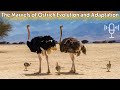
𓅦 The Marvels of Ostrich Evolution and Adaptation
These giants represent one of the most successful survival stories in African wildlife.
- The Perpetually Curious! › Canonical › Cosmic ExplorationArticle
🌍 When Earth First Took Shape: A Planet Born from Cosmic Dust
From section: 🌌 Looking back at a quiet beginning: A reflective closingAt the same time, there is room for humility. Details of the giant impact, the timing of the earliest oceans, the nature of the first atmosphere, and the survival of Earth’s oldest records remain subjects of ongoing research. …
- The Perpetually Curious! › Archives › Cosmic ExplorationArticle
Cosmic Eyes: How Humanity's Space Telescopes Unveil the Universe's Hidden Realms 🔭
The universe radiates stories across wavelengths our eyes cannot detect. From radio whispers to gamma-ray shouts, cosmic phenomena broadcast their secrets through an electromagnetic spectrum far broader than the narrow rainbow of human vision.
- The Perpetually Curious! › Archives › PhysicsArticle
🌫️ How Radar Listens to the Sky: The Quiet Science Behind the Sweep
A radar dish turning slowly against the horizon often feels like a quiet sentinel, listening for stories carried on invisible waves. Although the technology is rooted in physics and engineering, its practice has a quiet elegance, as radar sends brief pulses of energy into the…
- The Perpetually Curious! › Archives › Biology & HealthArticle
When Dreams Feel More Real Than Morning: The Science and Mystery of Our Sleeping Mind 🌙
You wake with your heart racing, certain you just spoke with your grandmother who passed away years ago. She stood in your childhood kitchen, wearing that familiar blue apron, but when she opened her mouth to speak, no words came.
- The Perpetually Curious! › Archives › ChemistryArticle
The Periodic Table’s Tribute to Scientific Legends ⚗️⚛️✨
🔢 (Periodic Table Series, Part 2) When you think of the periodic table, do you see a cold grid of elements, or a collection of human stories? This article explores how scientists are honored within that grid, their names embedded in the language of matter. Read more »
- The Perpetually Curious! › Archives › History, Arts, and CultureArticle
⏳ Through the Ages: The Naming of the Months in Our Calendar 📅
💡 Did you know that the names of our months are like a time capsule, preserving stories from ancient civilizations? Each one carries echoes of gods, festivals, emperors, and cultural exchanges that shaped human history. Let’s delve into their intriguing origins together.
- The Perpetually Curious! › Archives › History, Arts, and CultureArticle
📅 A Cultural Journey Through the Week: Tracing the Ancient Origins of the Seven Days
📅 Each day of the week connects us to ancient civilizations and celestial wonders, bound to the stories and beliefs cherished in cultures whose traditions shaped our language and history. 🌞 Sunday: The Day of the Sun Golden rays announce the start of the week.
- The Perpetually Curious! › Canonical › Biology & HealthArticle
🧠 The Neural Symphony: How Neurons, Glia, and Networks Shape Human Experience
From section: 🧩 The neurotransmitter paradox: why simple stories persistSimple chemical stories are attractive because they offer a clean equation: dopamine equals pleasure, serotonin equals happiness, oxytocin equals love. Each contains a fragment of real biology, but each becomes misleading when the fragment is treated as the whole.
- The Perpetually Curious! › Archives › Wilderness & Homestead CreaturesArticle
🐌 Nature's Time Travelers: The Extraordinary Art of Snail Estivation
In March 1850, William Baird, a shell expert at the British Museum, noticed something peculiar about a desert snail in the mollusk collection. The specimen from Egypt, collected four years earlier and presumed dead, showed signs beneath its sealed shell opening (its epiphragm).