Explore by topic, question, or idea. Find articles, reflections, videos, puzzles, and curiosity pathways gathered across the site.
Press Enter or select Search. A newly typed query starts globally; filters are applied only through the visible rail.
20 results for “seasonal ponds and root depth in south india”
- The Perpetually Curious! › Canonical › Planet EarthArticle
🌊 How Nor’easters Form: When the Coast Becomes a Storm Engine
From section: Frequently Asked Questions+Why do deciduous trees shed their leaves? For many trees in cold seasonal climates, shedding broad leaves helps reduce winter water loss and the cost of maintaining vulnerable foliage. Nutrient recovery before leaf fall lets the tree retain part of its earlier investment. …
- The Perpetually Curious! › Canonical › Planet EarthArticle
🌌 Sky in Slow Layers: Understanding Earth’s Atmospheric Structure
From section: 🛡️ Stratosphere: the calm realm of the ozone shield… These clouds provide surfaces for reactions that transform chlorine- and bromine-containing compounds into more reactive forms. When sunlight returns to the polar stratosphere, those reactions can contribute to rapid seasonal ozone loss, especially over Antarctica.
- The Perpetually Curious! › Canonical › Planet EarthArticle
🌑 How Coal Is Formed: The Slow Birth of Black Stone Across Deep Time
From section: ⏳ Burial, pressure, and the process of coalificationCoalification does not follow one fixed depth ladder everywhere. The rank that develops depends on burial depth, maximum temperature, geothermal gradient, basin history, tectonic setting, and time. For that reason, depth and temperature ranges are best understood as broad guides rather than universal thresholds.
- The Perpetually Curious! › Canonical › Planet EarthArticle
🌊 Where the Salt Stays: Why the Ocean Is Salty but Rivers and Most Lakes Are Fresh
A river can begin as rain on a mountainside, run across stone, gather in a lake, and eventually meet the sea. Along the way, the water may look clear and taste fresh. Yet the ocean at the end of that journey is unmistakably salty.
- The Perpetually Curious! › Archives › Planet EarthArticle
❄️ Antarctica: Southernmost Continent’s Frozen Symphony of Silence and Light
From section: ❓ FAQ… Yes, but visits are strictly regulated under the Antarctic Treaty System. Most tourists arrive via expedition cruise ships from South America. Recent seasons have seen visitor numbers ranging from tens of thousands to over 100,000 annually. …
- The Perpetually Curious! › Archives › Planet EarthArticle
🌊 Underwater Sound: How Echoes Measure Distance
From the surface, the sea can look like a broad sheet of blue, but its hidden spaces are easier to sense with sound than with sight. Underwater sound moves as pressure waves, crossing water far more effectively than ordinary vision can cross depth.
- The Perpetually Curious! › Archives › Planet EarthArticle
When Nature's Fury Spirals: Understanding the Science Behind Nor'easters 🌊
Few weather phenomena capture the raw power of nature quite like a nor'easter bearing down on the Eastern Seaboard. These massive storm systems, born from the collision of opposing air masses over the Atlantic, represent some of the most complex and fascinating atmospheric dynamics on Earth.
- The Perpetually Curious! › Archives › Planet EarthArticle
🌍 Why Mud Is Brown or Black: What Wet Soil Reveals
A wet patch of ground can look ordinary until its color begins to speak. Brown mud on a path, gray mud beside a pond, and black mud in a marsh are not simply different degrees of dirtiness.
- The Perpetually Curious! › Archives › Planet EarthArticle
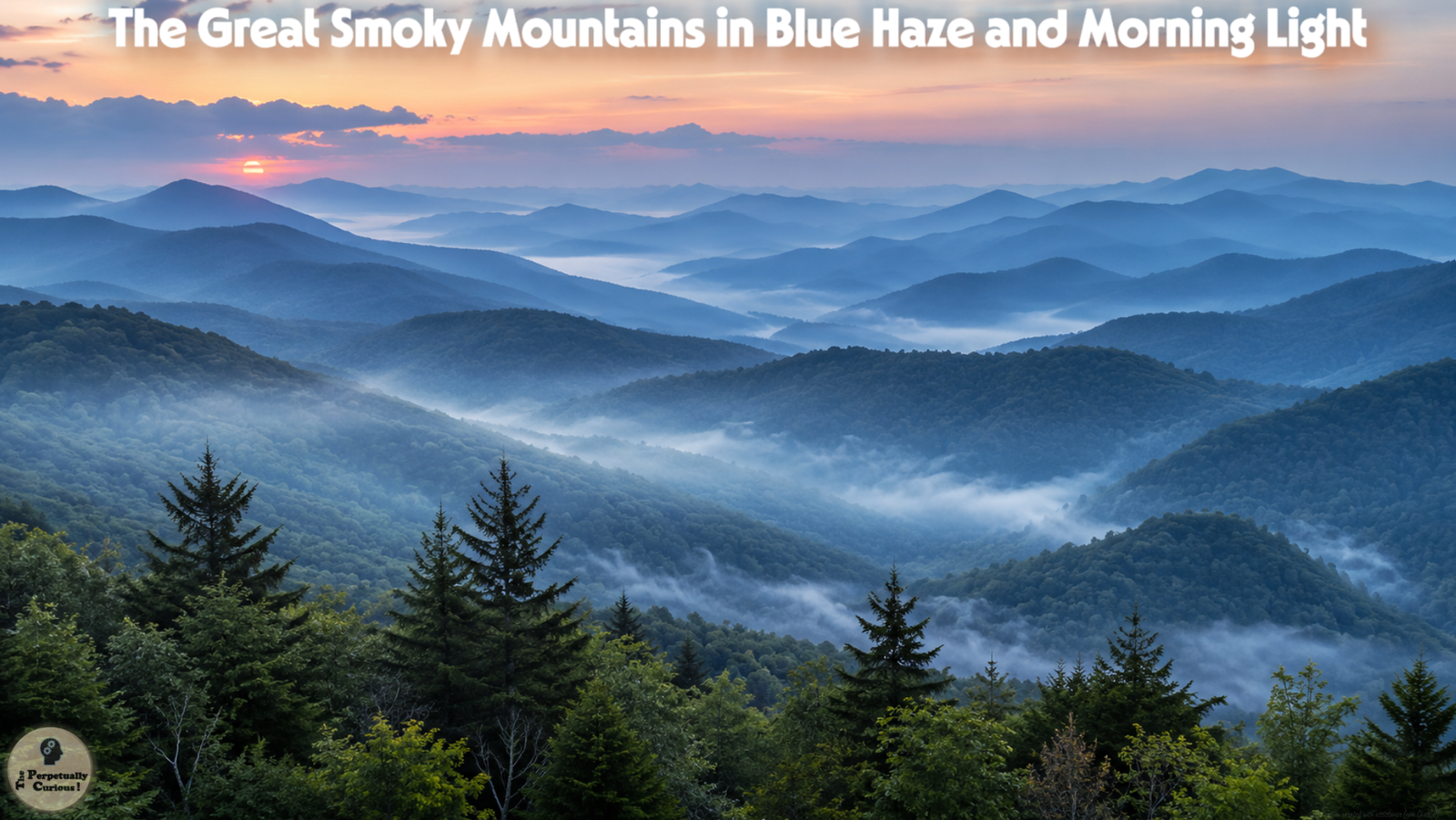
🌫️ Why the Great Smoky Mountains Fade into Blue Haze
From section: Why the ridges look blueAir pollution can add another whitish layer, reducing clarity and sometimes weakening the characteristic blue depth.
- The Perpetually Curious! › Archives › Planet EarthArticle
🌊 Why Beaches Have Sand
For readers who want the full explanation of how weathering, rivers, and coastal energy work together, the complete article on the main site follows this journey in much greater depth.