Explore by topic, question, or idea. Find articles, reflections, videos, puzzles, and curiosity pathways gathered across the site.
Press Enter or select Search. A newly typed query starts globally; filters are applied only through the visible rail.
40 results for “sky in slow layers understanding earth atmospheric structure”
- The Perpetually Curious! › Canonical › Cosmic ExplorationArticle
🛰️ When Fire Meets Air: How Spacecraft Reenter Earth’s Atmosphere
From section: 🚀 Leaving Earth and rising through thinning airThe spacecraft continues through the troposphere, stratosphere, mesosphere, and thermosphere. These layers are distinguished by their temperature structure, but the vehicle does not encounter them as sharply separated shells. …
- The Perpetually Curious! › Canonical › Cosmic ExplorationArticle
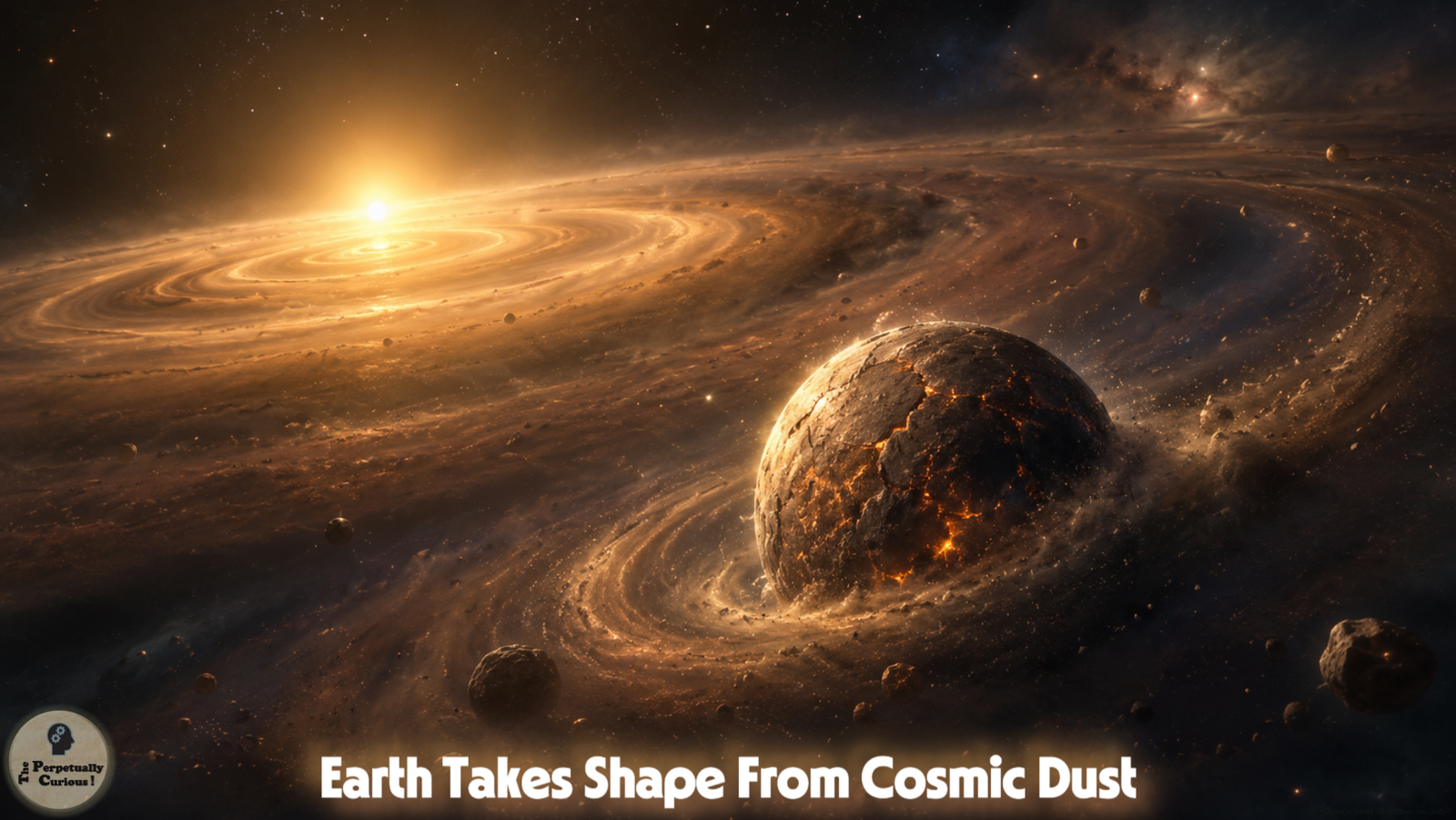
🌍 When Earth First Took Shape: A Planet Born from Cosmic Dust
From section: 🌋 Fire within: Differentiation and the shaping of Earth’s interior… This separation, known as differentiation and sometimes described as the iron catastrophe in some models, helped produce Earth’s layered structure: a dense metallic core, a silicate mantle, and a developing crust.
- The Perpetually Curious! › Archives › Cosmic ExplorationArticle
🌍 Why Earth Has a Living Atmosphere
From section: 🔭 Opening the QuestionThe question of why Earth has a stable, temperate, long‑lived atmosphere opens into a chain of ideas that stretch from the earliest days of the Solar System to the slow work of oceans, rocks, and living organisms.Read more »
- The Perpetually Curious! › Canonical › Cosmic ExplorationArticle
🌑 Shadows Across the Solar System: How Eclipses Unfold Beyond Earth
This article explores both solar and lunar eclipses beyond Earth, giving each equal strength. It follows a dual‑path structure that mirrors the symmetry of the events themselves, revealing how the same celestial geometry creates diverse and sometimes surprising shadow phenomena across the Solar System.
- The Perpetually Curious! › Canonical › Cosmic ExplorationArticle
🌌 Why Space Looks Dark in a Universe Filled with Light: Understanding the Quiet Cosmos
From section: 🚀 Sunlight, astronauts, and a black skyImages from spacecraft and from the surface of the Moon often show a striking combination: intensely bright sunlight on surfaces and a deep black sky above. This visual contrast can feel surprising, because on Earth, a bright sky usually accompanies bright sunlight. …
- The Perpetually Curious! › Canonical › Cosmic ExplorationArticle
🌙 Quiet Worlds, Vast Stories: Some Lesser-Known Moons of Our Solar System
Most sky‑watchers can name a handful of large moons such as Ganymede, Titan, or Earth’s own Moon, yet scattered across the outer darkness are smaller, quieter companions that rarely appear in familiar summaries. These lesser-known moons do not dominate by size.
- The Perpetually Curious! › Archives › Cosmic ExplorationArticle
🌌 When Worlds Shine: Why Some Planets Outglow Others in Our Night Sky
The night sky often feels calm and timeless, yet the brightness of the planets tells a dynamic story of light, distance, geometry, and illumination. When Venus blazes in the evening or morning sky, it can appear almost unreal, while Mars, Jupiter, and Saturn each take turns as…
- The Perpetually Curious! › Canonical › Cosmic ExplorationArticle
The Cosmic Recipe: Understanding the Physical Criteria for Star Formation 🌟
From section: 🌠 Share the cosmic wonderWe invite you to share this stellar journey with space enthusiasts, students, and curious minds. A deeper understanding of how stars form can change the way a familiar night sky is seen, turning each point of light into the visible outcome of a long and intricate physical transformation.
- The Perpetually Curious! › Archives › Cosmic ExplorationArticle
🌍 How Earth Formed: The Slow Assembly of a Young Rocky World
Earth did not appear as a finished sphere in an otherwise complete Solar System. Its beginning was distributed across a rotating disk of gas, dust, rock, and metal around the newborn Sun.
- The Perpetually Curious! › Canonical › Cosmic ExplorationArticle
🌌 Borrowing the Orbits of Giants: How Gravity Assists Carry Spacecraft into the Deep
… Each encounter becomes a brief exchange of momentum and light, a moment when the sky opens a little farther.Through these borrowed arcs, the solar system reveals itself as a place of gentle guidance as much as distant destinations.